
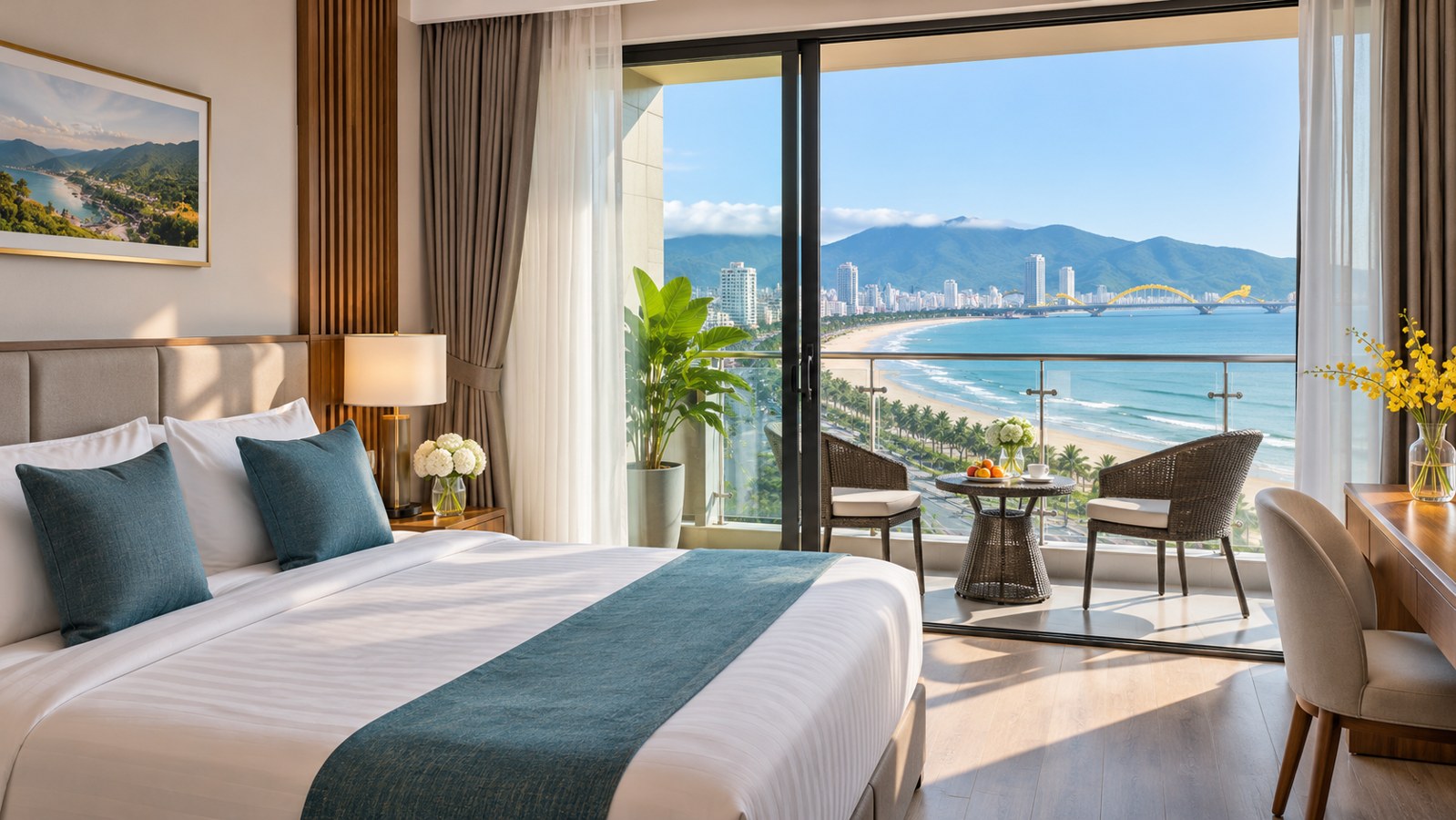
An oceanfront room is the category to check first if you want the sea directly ahead. An ocean view room can look toward the water from an angle, and a partial sea view can be a good choice if you mainly want a glimpse of the coast from the balcony. In Da Nang, the hotel sets the category names. Check how your chosen property describes the view and where in the room you can see it. Then compare what the category costs and how often you will use the view during the trip.
A useful example is TMS Hotel Da Nang Beach. It publishes a Premier Suite Ocean Front with direct sea views and a balcony. Its Premier Suite Partial Ocean is described as looking toward the mountain landscape and part of the ocean, also with a balcony. The category names tell you where to start at that property. For a similar label at another hotel, look at its own category photos and description before assuming the same orientation or amount of visible water.
Read the category name as a starting point
| Room label | What to investigate | When it may work well |
|---|---|---|
| Oceanfront or sea-facing | Whether the main window looks straight toward the water, and what sits between the room and the shore | Watching the coast regularly from inside the room or while sitting on the balcony |
| Ocean view or sea view | Which part of the room has the view, how sideways it is, and whether there are buildings in the foreground | A clear view of the water matters, with some flexibility about the angle |
| Partial ocean or side sea view | Where you must stand or sit to see water, and what makes up the rest of the view | Time in the room is limited, or you like a view that mixes mountain, city and sea |
| Beachfront hotel, room view unspecified | The actual room category, building and window direction | The location and route to the beach matter more than what you see from the room |
| Balcony category, view unspecified | Whether the balcony is private and whether the sea is visible from a seated position | You want somewhere to sit outdoors, regardless of the view |
A property can be beachfront while selling rooms that face the city, another building or a courtyard. In the other direction, a room can have a direct sea view from across a road. Keep hotel location and room orientation as separate comparisons. The Da Nang beachfront hotels guide covers the broader question of getting from the lobby to the beach, including the difference between a property at the sand and one across the coastal road.
Decide where you expect to enjoy the view
Think of two moments when the view would matter. A traveler who imagines seeing the sunrise from bed needs the window to be visible from that side of the room. A couple who wants to drink coffee outside needs chairs, a usable balcony and a sightline from a seated position. A family with someone napping during the day may care more about a sofa beside a large window. These requirements can be quite different even when all three groups search for an ocean view.
If you expect to read or have breakfast indoors, pay attention to the angle between the window and the room furniture. A view photograph taken against the glass tells you less than one taken from a chair or from near the bed. If the room has a narrow side window, you may be able to see the water only while standing in one spot. Requesting one normal-angle photo from the place you expect to sit can answer the question more clearly than a larger gallery.
For a room shared by several people, check whether daily arrangements will block the window or balcony. A rollaway bed, child's cot or large suitcase may take the same space the marketing photo leaves empty. If the balcony has only one chair, ask what is actually provided for your category. A high-floor room with a large window may be a better match than a small balcony if the group wants to sit together indoors.
Ask for photos from the room category
Open only the gallery attached to the exact category, then look for repeating furniture, window shapes and angles. A hotel may use pictures of the rooftop, lobby and best suites throughout its booking page. A wide photograph of the beach in the main gallery shows the setting and may have been taken somewhere else. Look for pictures that connect the interior of your room to the outside view in the same frame.
Ask for a sample photo from a representative room and whether every room in the category has a similar orientation. A corner unit may show water through two windows even when the rest of the category has one. A photograph taken from a high floor may show more than a similarly named room lower down. If the property can confirm the direction but cannot promise a floor, compare the price using the least appealing room that still fits the category description. This is especially useful when you cannot change the reservation after booking.
When looking at an image, note the foreground as well as the horizon. Other buildings can interrupt the view, a balcony wall may block a seated guest's line of sight, and trees or awnings can hide the sand on a lower floor. A side-facing room might show a wider view in one direction while feeling more enclosed from inside. If you like that mountain-and-sea angle, it can be worth choosing deliberately rather than paying more for a straight view you rarely use.
Separate floor, balcony and direction on the booking
A high-floor preference is often recorded separately from the category. Ask whether the floor is included in the rate, subject to assignment at check-in, or simply noted as a preference. If it matters, ask the hotel to confirm a floor range and an orientation together. A high floor facing a side street still gives a different view from a lower room facing the water. Compare floor and angle as two separate details.
Likewise, a room with an ocean view may have a window without an outdoor space. If you want to go outside, confirm the balcony itself. Ask if it has chairs and how many people can use it at once. For a family, check how the door locks and whether the layout lets an adult supervise children from inside. The balcony is worth paying for when it supports a specific routine, such as coffee after a sunrise walk or a quiet hour during a midafternoon break.
A room can face directly toward the beach and still be unsuitable for someone who sleeps lightly. Ask about road noise, balcony doors and whether a particular orientation is exposed to a busy street or venue. This is particularly relevant on the central coast, where a sea-facing window can also face a coastal road. Some travelers prefer to use the balcony during the day and close the doors at night. If you plan to keep the window open, ask the hotel how the room is set up and consider the location as seriously as the view.
Compare an oceanfront room with a partial sea view
Price both categories for the exact same dates, occupancy and booking terms. If breakfast, refundability or bedding differ, ask for another quote on comparable terms. Otherwise you may be paying more for conditions that are bundled with the room and attributing the entire difference to the view. Calculate the difference for the full stay because even a modest change per night can affect a longer trip.
For a short stay that includes several early excursions, a partial view may give you everything you are around to enjoy. If you plan slow mornings, a direct sea-facing window or balcony can be part of the holiday. Ask what time you will use it. You may want an early look out before the room heats up, a view while working at the desk or an evening place to sit. The most attractive category in a photograph is worth the difference when it gives you something you will actually use.
Consider whether to upgrade every night or plan the trip around a few nights by the sea. Changing rooms midway can be inconvenient because you need to pack, wait for the next room and get the luggage moved. If you already intend to split a longer trip between the city and the coast, choose the sea-facing room for the coastal segment. If you are staying at one hotel for two nights, an upgrade for both or neither can make the trip simpler than arranging a room move just for the view.
Different settings around My Khe and Non Nuoc
Around central My Khe, check whether the view crosses a public road and how close the next building is to the side of the hotel. The foreground can include an active road, trees, beach facilities and the promenade. These can be part of an appealing city-and-beach view. If you want a quieter balcony setting, compare room position and recent information about activity on the street. For actual beach time, map the crossing separately rather than judging it from the height of your room.
In the southern resort corridor, a room may look across gardens, a pool or other parts of the property before the water becomes visible. A garden in the foreground can make the room feel private while obscuring the sand at ground level. Check where the room building is and whether you value a short walk to the beach or a view from the room more. Those two goals can point to different rooms within the same resort. See the My Khe and Non Nuoc comparison for the wider neighborhood decision.
For a party booking multiple rooms, consider who needs the view and which rooms must be near each other. If adults need to be in a particular arrangement with children, verify the configuration first and then ask which views are offered for compatible rooms. Choosing the best sea-facing category independently for each party may make connecting or nearby rooms more difficult. One shared room with a usable sitting area and another room in a simpler category can work when the group mainly enjoys the view together.
Check the promises that appear in the reservation
Save the exact room name, view description and any confirmation the hotel provides. If a platform translates or abbreviates the category, send the name and booking number to the property and ask which room type it sees. Explain the view you need in plain terms, such as “directly visible from the indoor seating area” or “visible from the balcony without leaning over the side.” A written answer gives you a useful reference at check-in when two categories sound similar.
If the property offers an upgrade on arrival, ask to see the room or a representative photo before paying the difference. Confirm whether the change applies to every night, whether it changes the bedding and whether any earlier rate benefits still apply. If you decide to stay in the original category, you can still ask for the quieter side or a preferable floor where available. Make the decision based on the exact room and quote, rather than the word “upgrade” alone.
For reservations with inflexible terms, decide how much uncertainty you can accept before buying. If the hotel confirms a named category but cannot confirm what you see from bed, assess whether that detail is essential. If it is, choose a property that can answer more precisely or a rate you can change. If you only care that there is some sea in the view, the descriptions and representative photo may be enough.
A message to send before booking
“We are looking at [exact room name] for [dates]. We would like to see the sea from [the bed/indoor seating area/seated on the balcony]. Can you confirm whether the view is direct or partial in every room in this category? Is there a private balcony with chairs, and does the rate guarantee a floor range? If possible, could you send a current photo taken from inside this room type?”
Keep the reply with the booking and compare it against the rooms you can afford for those dates. Start with the view you would genuinely use, assess the route to the shore separately and check that essential features appear in the room confirmation. If the area is still undecided, use Where to Stay in Da Nang before comparing a final set of rooms.


