
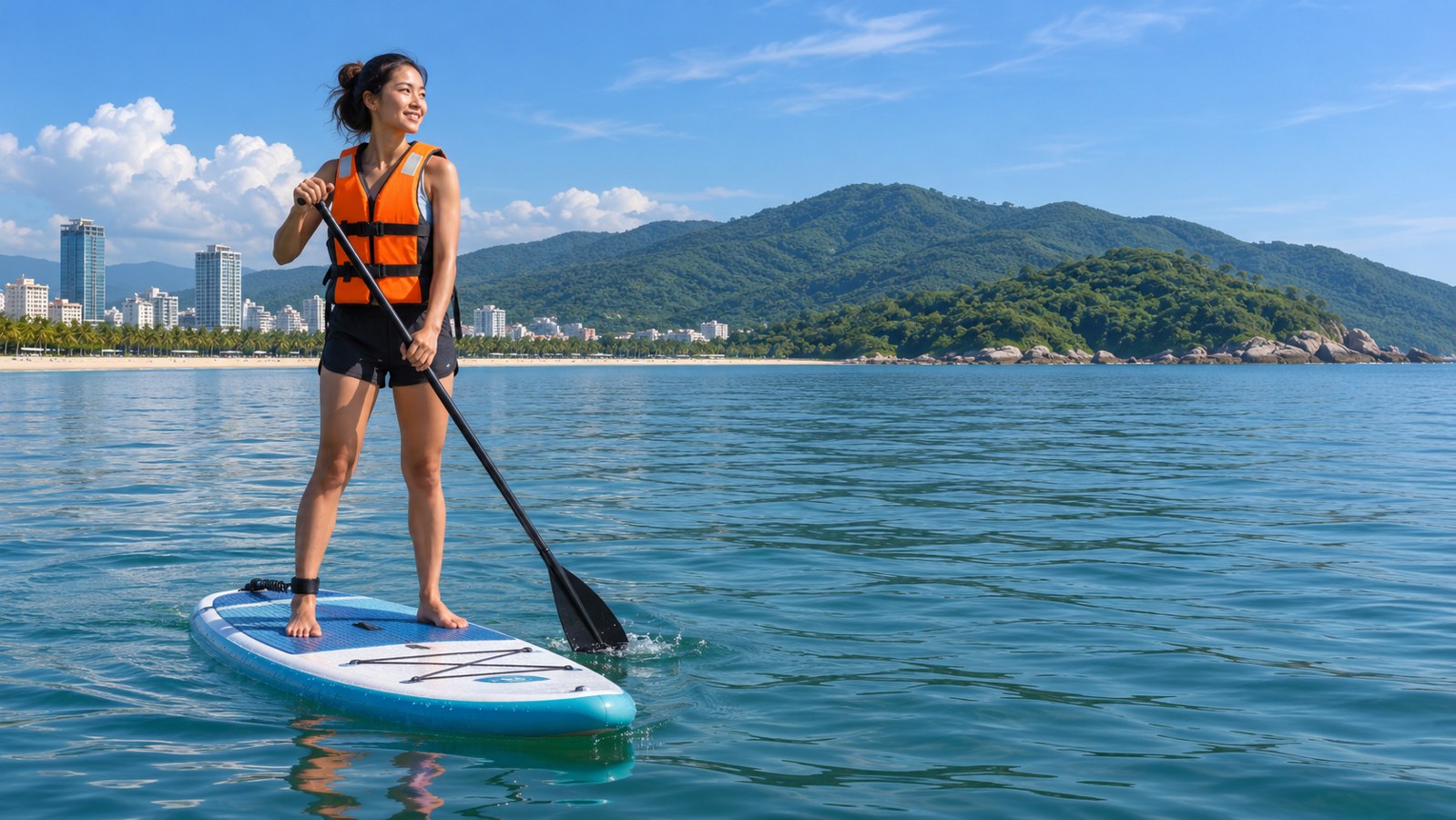
For a first stand-up paddleboarding session in Da Nang, contact an instructor and ask where they expect to launch on your date. Man Thai Beach, on the coast toward Son Tra, is a useful starting point for the search. Da Nang tourism has publicised an organised SUP event there, and a local operator lists Man Thai as a meeting area for SUP. Neither detail establishes that the same launch is suitable or open every day. Confirm the exact meeting point, local instructions and an instructor's current assessment before you go onto the water.
If you already paddle, ask a rental provider to identify the permitted launch and the limits of the area. Da Nang authorities have advised against sea SUP in bad weather or rough water and identified swimming zones and coral protection areas to stay out of. Read the current signs and follow staff instructions. A rental offer, a flat-looking sea or an image of another paddler offshore does not establish that a location is appropriate for you.
Decide what you want to book
| Booking type | Who may prefer it | What to confirm |
|---|---|---|
| Introductory lesson | First-time paddlers who want help with equipment and local conditions | Instructor, group size, briefing, how closely they accompany you and what happens if conditions change |
| Guided outing for experienced paddlers | Visitors who can paddle but are unfamiliar with the local launch and limits | Permitted route, turnaround plan and experience expected |
| Board rental | Independent paddlers who can assess conditions and handle the equipment | Launch and return point, flotation equipment, provider contact and cancellation terms |
| A coastal morning without water activity | Travelers with different interests or a booking cancelled for conditions | A nearby walk, park meeting point and breakfast alternative |
An introductory lesson is usually the clearer starting point when you have never paddled at sea. Ask whether the instructor will be with you on the water or whether the quote is simply for equipment and a conversation on shore. Confirm the number of participants per instructor. A group of friends who have all paddled before may choose a short guided outing. If some people are first-timers, select the option that serves their experience rather than letting the more confident group members set the pace.
Use the activity description to find out what the session includes. A photographer, pickup service or refreshments may be useful, but a board that fits and close support matter more when learning. If the operator describes a sunrise session, ask whether the booking depends on visibility and weather. You are buying an opportunity to paddle under suitable conditions, and those conditions should take priority over an exact photograph or time of day.
Confirm the actual Man Thai meeting point
Man Thai is a coastal area, and different businesses or organised events can use different points along it. Ask for an address or pin on the correct side of the coastal road. Clarify whether the instructor meets you on the sand, on the promenade or at a shop. If staff bring equipment down from another place, ask where you should wait until they arrive. Save the meeting point and the contact method offline so you can find it before daylight or when mobile service is slow.
Give the driver the actual meeting point and tell them which direction you are coming from. Ask the operator about a permitted drop-off and where you can wait away from moving vehicles. If you are walking from nearby accommodation, check the entire route from the room to the point where you meet the instructor. There may be a crossing or a busy approach even when the map distance looks short. An easy return from the beach matters when you are carrying wet gear or meeting someone later for breakfast.
Check whether the instructor plans to use the same point for getting in and getting out. A lesson that stays close to its starting place can be easier to manage with a travel companion who is staying on shore. If the route uses different endpoints, ask how people and gear return to the start. The pickup arrangement should work even if the session ends early. If the proposed launch changes overnight, get a fresh meeting pin and check travel time before leaving.
Make the conditions part of the reservation
Paddleboarding is sensitive to wind and local sea conditions. The RNLI recommends checking conditions and avoiding offshore winds, which can push a board away from land. Ask the instructor how they decide when to go, what time they send that decision and whether you can move the booking if conditions are unsuitable. Avoid treating a fixed booking time as a reason to launch. A legitimate lesson can be shortened, relocated within permitted areas or cancelled when it would be inappropriate to proceed.
A beach can look calm from the road while wind is stronger away from shore. A run of soft waves close to the sand does not tell you what will happen when you try to return. Ask for the instructor's assessment at the exact launch and pay attention to conditions and posted directions on the day. If your group is uncertain or the instructor cannot explain how they will check the water, choose a land-based morning or another date. This can be a normal outcome for a sea activity.
Ask whether different participants will face different access or eligibility requirements. Tell the provider about swimming confidence and relevant equipment or assistance needs. Beginners should avoid assuming they can join because another family member or friend is comfortable in the water. If the operator cannot provide suitable instruction and flotation equipment for someone, make a separate shore plan for that person. A good booking leaves enough flexibility for people to decide whether to participate after receiving the briefing.
Check the equipment and the briefing
Ask whether the operator supplies a suitable personal flotation device, and confirm that it will be fitted before departure. A paddleboard is easier to manage when equipment is appropriate to the participant and the conditions. Let the instructor choose the board and adjust the paddle for the lesson. Ask them to explain what to do if you fall, get separated, become tired or need to end your session. Make sure everyone can understand the directions and knows where the permitted activity area ends.
Ask the instructor about any leash it chooses for the specific environment and follow their instructions and relevant local rules. Leash requirements and choices depend on conditions and the venue. A photo of a board tells you little about the whole safety setup. For an independent rental, ask how the operator confirms fit and explains local hazards before you leave. If you are unfamiliar with the location, seek on-water support instead of using a short rental handover as a substitute for a lesson.
Find out what you will do with dry belongings. Some operators meet directly on the beach and may have limited storage. Ask about keys or small bags before bringing a lot of gear. Keep anything needed for the return ride in an arrangement that remains usable after you have been in the water. If a non-paddling companion is keeping bags, agree on where they will wait and when to expect you. Bring only what you can manage at the launch rather than assuming there is a changing room or staffed locker next to it.
Compare the total price and weather terms
Ask for the rate for the entire group and the time spent with an instructor. Clarify whether changing, board setup and the beach briefing are part of the advertised session time. They are a useful part of a lesson, especially on your first visit. If you compare a one-hour lesson with a longer offer, check the structure rather than assuming both give the same amount of time with support on the water. Ask whether the price includes any transfers or only the activity at the beach.
A rental quote may charge for each board and for an agreed time block. Confirm the condition and return terms before taking equipment. If the operator cancels because it judges the conditions unsuitable, ask whether it offers a refund, credit or rescheduling. Check the procedure if you decide not to enter the water after the beach briefing. The best terms for a visitor on a short stay may be different from a local resident who can use a credit on another weekend.
Plan the rest of the morning without relying on the booking going ahead. If you are visiting for only two days, choose a flexible slot and keep another option nearby. You might use the East Sea Park sunrise walk when the group still wants an early coastal activity. If you need breakfast or a car immediately after the lesson, leave time to change and get back to the road. That makes the morning usable even if the launch or finishing time moves.
Make a plan for people who want to stay on shore
Name a place to wait that is easy to reach and stays appropriate as light and conditions change. A café with confirmed hours, a public seating area or another known spot can serve the purpose. Tell the companions whether the activity will start and finish in the same place. If they are caring for bags, arrange one meeting time and a way to share any change. For a family, a short walk and breakfast can be a complete morning for those who do not paddle.
If someone wants to watch from the beach, ask the operator which areas observers may use. Keep clear of the launch and avoid standing where participants need to handle boards. Set a separate plan after the session so that the instructor can finish equipment return before everyone moves on. For nearby public approaches, see the Pham Van Dong Beach entrance guide. It covers a separate beach area and is useful for shore planning, while the SUP operator should confirm the launch for your actual booking.
Send one clear booking request
“We are [group size] and would like a beginner SUP lesson on [date]. Our experience is [details]. Please confirm the actual launch, instructor arrangement, flotation equipment, total price and what happens if wind or sea conditions are unsuitable. Where should our driver drop us off, and what time will you decide whether the session can run?”
Keep the response and check it before leaving your accommodation. On arrival, confirm the route and where the session will end. If the conditions, equipment or support do not match the plan, use the shore alternative. A good first experience is a short session suited to the participants and their launch, followed by an easy return to the rest of the day.


