
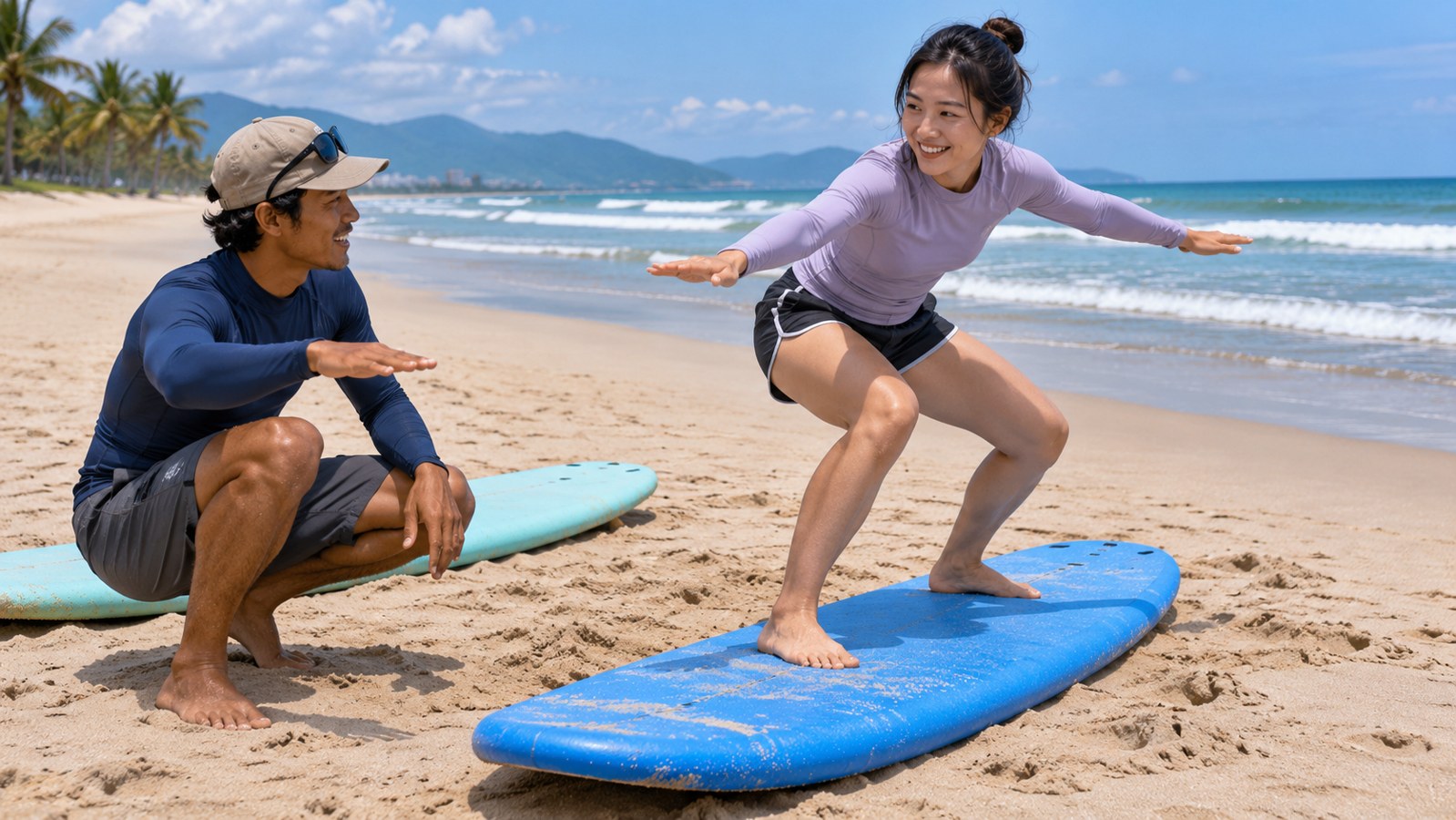
Start with a beginner lesson at My Khe Beach if you want to try surfing in Da Nang. Compare the instructor's attention, the size of the group and the time spent learning in suitable conditions. The name My Khe covers a broad beachfront, so get a precise meeting point for the session. Ask how the school decides whether the waves are appropriate for your level and what happens if it cancels or proposes a later time.
Da Nang's tourism portal has listed lessons at My Khe, and current providers advertising beginner instruction include Epic Surf School, Coco Surf Danang, Wave Riders and Da Nang Outdoor Adventures. Treat them as examples to compare rather than a ranking. Their formats, meeting points and inclusions can differ. Some sell a short introductory lesson. Others combine teaching and later board access. Read the terms for the specific product before comparing prices.
Work out what you want from the lesson
| Your situation | Format to investigate | First question to ask |
|---|---|---|
| You have never surfed | A coached beginner session with suitable equipment | How many students will share one instructor and how close does the instructor stay? |
| You want more individual feedback | A private lesson or a very small group | Is the instructor reserved just for you or your party? |
| Several adults want to try together | A private group or a small class | Will everyone get equipment that fits and support suited to their level? |
| You are travelling with a child or hesitant participant | A provider that confirms eligibility and explains how it adapts the session | What swimming ability, age and equipment fit are required? |
| You have surfed before but are new to My Khe | A coached assessment or local lesson | Where does the school meet and how will it choose an area appropriate for your experience? |
For a first session, a simple goal is enough. You might want to understand the equipment and beach briefing, spend some supported time in the water and learn whether you want a second lesson. You do not need to accept a promise about standing up on a wave to justify booking. Amount of individual attention matters more than marketing about how quickly you will progress. A school should be able to explain what it can offer if a participant's confidence is different from what they expected.
A private group can be useful when the group has a common pace or a limited time. If the participants have very different needs, ask whether one instructor can work with everyone or whether you should reserve separate sessions. A traveler who mainly wants someone to explain the local conditions can request an introduction rather than committing to a long package. Tell the school what you hope to get out of the first lesson and see whether its response actually addresses that aim.
Confirm the time and meeting point
My Khe is a coastal reference, not a single beach entrance. A school may meet at a shop inland, beside a particular hotel or at a signed point on the sand. Ask for the location on the correct side of the coastal road and get a name you can show a driver. If you are walking from a hotel, check the crossing and how long it takes to reach the meeting point. A nearby hotel does not necessarily have direct access to the specific stretch the lesson will use.
Find out when you need to arrive and whether changing or equipment fitting happens before the advertised start. For early morning sessions, confirm that staff will be there and ask where you should wait. If changing facilities are limited, plan to arrive ready for the beach and bring a dry change for afterward. Ask where to leave valuables and whether you can bring a small bag. See the My Khe Beach guide for the wider coastal layout and for planning the part of the morning after the lesson.
Ask how the provider will tell you if the spot or start time changes. A trip starting from the riverside may require more travel time than walking from a property near the sand. If you have a tour or hotel pickup afterward, set a buffer rather than reserving it immediately at your expected lesson finish. Agree on a place to meet your companions whether the session runs or moves. That can make the early part of the day useful without waiting for a new route while everyone is ready to leave.
Compare the equipment and actual coaching time
Ask what the school provides for the specific lesson. A suitable beginner board, leash and instructor guidance are more relevant than a list of optional extras. Some providers advertise soft boards for beginners. Ask whether the school will match the board to your size and experience. If a rash vest is supplied, confirm whether there are suitable sizes. If you have your own gear, check what the instructor wants you to bring and whether the lesson is priced the same either way.
Read the description for time on shore and time with an instructor. A short beach briefing, equipment fitting and supported water time all serve a purpose. A product that includes two additional hours of board access after one hour of coaching is structured differently from a longer coached session. Decide whether you expect to use independent time and check conditions and the school's advice before doing so. A rental extension is useful only if you are prepared to use it under suitable conditions.
Separate photos and video from the core lesson. Ask whether they are included, optional or handled by a separate person. For a first session, ask the instructor about their approach to watching and correcting each beginner. If the class has enough time for one-to-one feedback while others take turns, the advertised duration may work well. If most of the session is independent waiting, a smaller class may make better use of a limited morning. The number on the booking page tells you less than how that time is divided.
Ask who decides whether the water is suitable
Weather, swell, wind, local currents and beach directions all matter. Ask when the school assesses the current conditions and whether beginners will use a different time or area from stronger surfers. Follow posted safety instructions and any restrictions on the day. An inviting beach photo or an advertised surf season does not establish that a lesson can use the water at a specific hour. If a provider moves or cancels the lesson for conditions, build another activity into the morning.
Tell the school about your actual swimming experience and comfort in open water. Ask clearly what ability is required for the planned session. If the school cannot accommodate a participant, do not pressure that person to join because others booked together. Discuss what they can do ashore and whether a shorter or different activity is available. A cautious choice on the day can preserve the trip for people who want another chance to try.
Listen to the beach briefing and ask for clarification before entering. Know the limits the instructor wants the group to use and how to signal if you want to stop. Stay with the group and keep clear of other beach users according to signs and the instructor's guidance. This article helps you book and evaluate a lesson. Let the instructor explain the skills and procedures needed at that particular beach. If current conditions or the level of supervision make you uncomfortable, stay ashore.
Get the booking and cancellation terms together
Ask for a total by attendee and by group. Confirm the duration, stated lesson language and the exact number of people in the session. If you need a morning start or a private teacher, get those details before paying. Clarify whether any deposit is refundable and what happens when the provider changes the plan because conditions are unsuitable. A credit for a later date may be useful for a long stay and less useful on a single free morning before departure.
Ask what happens if the instructor assesses the water as unsuitable only after you arrive. Find out whether you can move the booking to another day, opt for a different activity or request a refund under the provider's terms. Make sure each member of the group knows when the decision will be communicated. If you need to cancel for your own reasons, check that rule separately. Different cancellation situations may have different deadlines or consequences.
When comparing a class with a board rental, remember that the teaching and equipment handover are separate services. A rental can be suitable for a traveler who is already comfortable evaluating the beach and riding at that level. For a first session, choose based on the support you want and the knowledge the instructor brings about local conditions. If you book an extra rental block, confirm where to return the board and whether that time begins when instruction ends or at another fixed time.
Plan the rest of the morning
Choose one simple activity afterward. Breakfast near the beach can work if you have time to change and reach a confirmed place. If you are going back to the hotel before a day trip, leave room for showering, walking and collecting bags. Ask the school if a companion can observe from a public area or whether you should agree on a different landmark. A child or older companion waiting on shore may need seating or a shorter appointment window than you originally imagined.
If the lesson is cancelled, you can still use the beachfront without going into the water. A short walk, coffee or an early breakfast is easy to arrange when the group knows where it will meet. For a named walking plan farther along the coast, see the East Sea Park sunrise walk. If you are specifically planning another beach outing, the Pham Van Dong Beach entrance guide covers access and facilities in that separate area.
A second lesson is easiest to book after the first has shown what you want to practise. Leave enough flexibility to check with the instructor about another time and a location suitable for your progress. A group that enjoyed the first session but finished tired may prefer a rest day before trying again. If you are visiting for a short time, treat one well-run introduction as a complete experience rather than measuring success by how many hours you stayed out.
A question to send to the school
“We are [group size] and looking for a first surf lesson on [date]. Our swimming and surfing experience is [details]. Where exactly do we meet, how many students share one instructor, and what equipment is included? Please quote the total for the coached time and tell us how you handle conditions that are unsuitable for beginners.”
Save the location and reply. On the day, confirm the instructor, equipment fit and the current beach instructions before the group commits to entering. A suitable lesson offers time to understand the activity and get feedback under conditions that match the people learning.


