
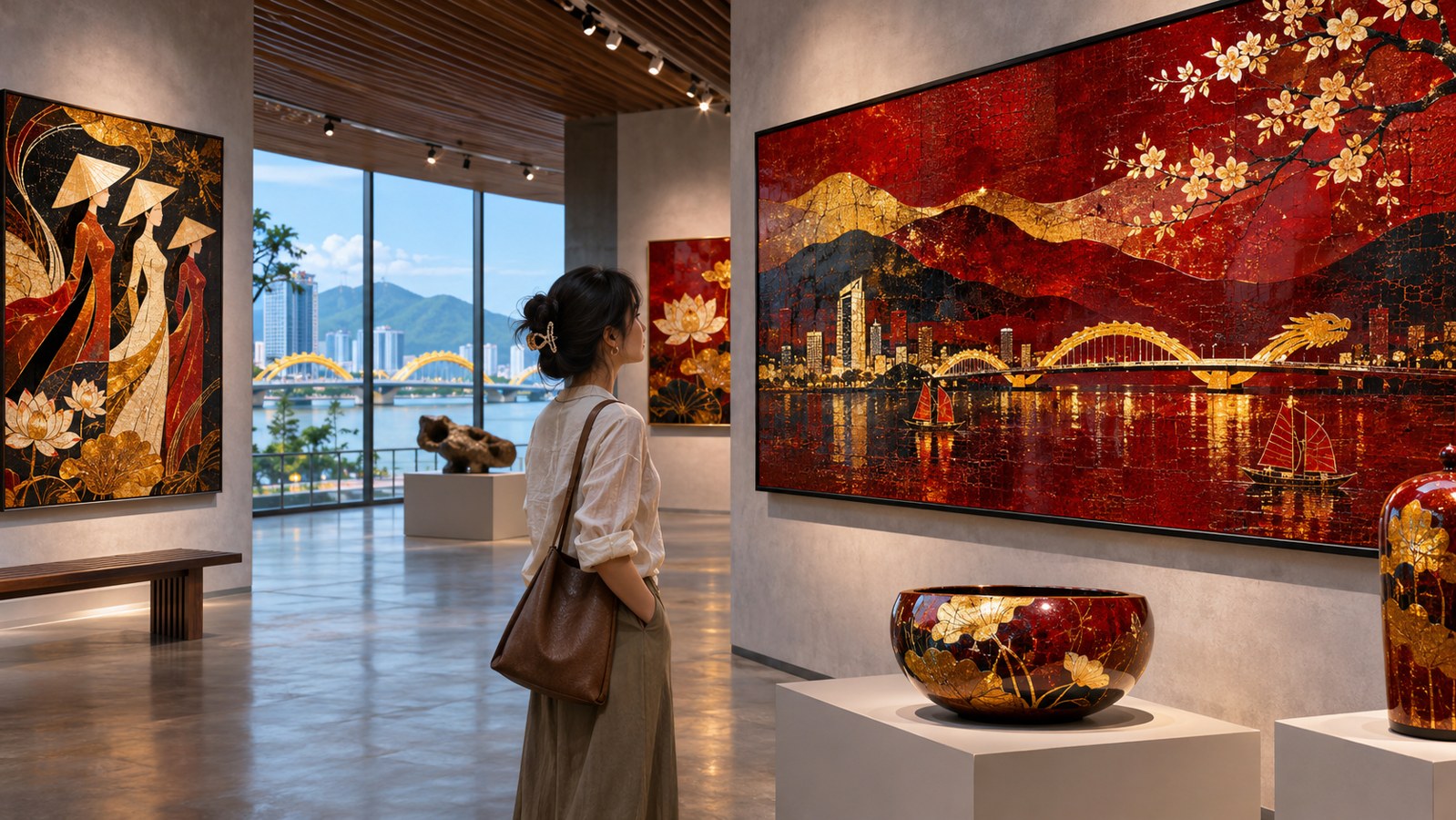
Use the entrance at 78 Lê Duẩn Street for Da Nang Fine Arts Museum and go to its modern art displays early in the visit. In about an hour, you can look closely at several works in different materials, spend time with one collection upstairs and leave a few minutes for the current exhibition near the entrance. The museum lists 08:00–17:00 daily as its usual opening hours. Check last admission, current ticket terms and any temporary programme before going.
The museum's description puts modern fine art on the second floor, with works including oil painting, lacquer, silk, graphics and sculpture. Its upper-floor description includes named artist collections and regional folk art or traditional craft displays. The first floor is used in part for temporary and educational activities. Check the gallery plan on arrival because the works on display and the use of individual rooms can change. You can follow the route by interest even if one room is unavailable.
Find the correct museum
| What you want to see | Place to enter | A useful approach |
|---|---|---|
| Modern Vietnamese fine art and regional craft collections | Da Nang Fine Arts Museum at 78 Lê Duẩn | Start with the main art displays, then choose one upstairs collection |
| A specific temporary exhibition or workshop | Check the announced address and the session details | Ask whether it is part of ordinary museum admission or requires registration |
| Da Nang's history and urban development | Da Nang Museum's main history site at 31 Trần Phú | Use a separate route based on the historical galleries |
| Cham sculpture and the region's archaeological art | Museum of Cham Sculpture | Use that museum's own address and gallery plan |
Da Nang's museum organisation now describes several sites. Say “Bảo tàng Mỹ thuật Đà Nẵng, 78 Lê Duẩn” to a driver or hotel desk if you are coming for the art galleries. If an event title uses the general Da Nang Museum name, read the venue line before booking a ride. The city history museum guide covers the site at Tran Phu and its historic Bach Dang frontage. If you want to do both in one day, budget visits and transport separately.
For arrival by foot, map the whole route from wherever you are starting the visit. A central address can be straightforward to reach even when the final crossings or pavement take a little time. If you are booking a car, share the street number and confirm where you can get out. Ask in advance about the usable entrance and route between floors if you need step-free access. The visit can still work when you concentrate on one section, so decide which gallery matters most before arriving.
Use the first ten minutes to choose what to see
Look for a gallery plan and note any temporary exhibition or visitor programme. Ask which rooms are currently open and where the stairs or lift are located. If a temporary show is your main reason for coming, begin there. Otherwise use the first floor to orient yourself and leave the exhibition until the end. This saves your best attention for the rooms you particularly want to see and gives you somewhere nearby to spend any remaining time before you leave.
If you are interested in a guided explanation, check whether it is available at your hour and in a language you prefer. The museum's published information describes interpretation hours separately from general opening hours. A short self-guided visit works even if interpretation is unavailable. Choose a theme on the way in, such as how different materials show color, how artists represent the local landscape or how figurative work looks beside abstract work. A single question is enough to give the hour some shape.
Ask about photography, bags and the use of phones if any of those matter to your group. Follow the rules displayed in each room. They can differ for an exhibition with loans or film material. For a group visit, agree on a meeting point near the entrance before splitting up. That matters more than trying to stay together while one person reads each label and another wants to move on quickly.
Spend about 25 minutes with modern art
Choose three works in different media rather than trying to see every painting at the same speed. If lacquer, silk and oil are all on view, start with one example of each. Look first from a little distance, then move closer where the gallery allows so you can see how the surface changes. Read the label after you have looked for a moment. That order gives you a chance to notice the material, composition or focus before being told what the work represents.
For lacquer, watch how the room light interacts with the surface as you change position. An overall view can show the shape of the composition, while a closer look can reveal the way edges and color fields relate. For silk or other relatively subtle surfaces, take enough time to see the quieter transitions. With oil, look at where texture, layers or brushwork are easiest to notice. Use labels to confirm the medium rather than inferring it solely from appearance.
Try comparing two works that show a similar subject in different ways. A portrait might use sharply defined lines in one piece and broader color areas in another. A landscape can put the horizon in a very different place depending on what the artist wants you to notice. Ask which detail draws your eye first and whether that changes as you move closer. These questions work even when the labels are short or someone in your group prefers to look rather than read.
If sculpture or graphic work is more interesting to you, centre the route on that instead. Follow the space around a sculpture only where the display permits it, then check how the shape reads from another viewpoint. For a print or other graphic work, begin with line and contrast. Pick a piece that you would like to remember rather than trying to catalogue a whole room. On a one-hour visit, spending several minutes with a work is a valid use of time.
Give one upper-floor collection 15 to 20 minutes
The museum's published descriptions identify works by Lê Công Thành, the Houei Collection donated by Japanese collector Toyokichi Itoh and displays of regional folk art and traditional crafts among upper-floor subjects. Another collection description includes work by Lê Bá Đảng. Check which rooms and works are on view on your date. Choose one subject you are drawn to and give it enough time to look at two or three pieces in relation to one another.
If you pick the sculpture display, start with a work you can see from a comfortable position and consider how it occupies space. Look at the silhouette and the relation between solid areas and gaps. For a named collection, read the introductory panel to learn why the works are grouped together. Then choose a piece you can compare with something downstairs. If folk art or craft draws you in, examine material, scale and intended use if the label provides it. That gives you a more specific comparison than treating everything in the room as one style.
Visitors with children can try a short looking activity while following gallery rules. Ask each person to pick a color or shape that appears in more than one work, or to describe the same artwork in one sentence. Do not assume that the children's experience area is operating a workshop every day. Ask whether a session is scheduled, what ages it serves and whether it takes longer than the hour you have. If the children enjoy the activity, consider returning for a separate visit rather than rushing the exhibition and the workshop in one block.
Keep a short record of the visit
If photography is allowed, record the artist and work title along with any picture you want to keep. In a room where photos are unavailable, write down the material and one detail you noticed instead. This helps separate similar works and makes it easier to revisit a particular artist later. Visiting with someone else, trade notes about one object rather than comparing how many rooms you finished. One visitor may notice the composition and another the surface or color. Together those observations can give you a fuller memory of a short visit without turning it into a survey of everything on the walls.
Finish with the temporary display or revisit one work
Use the remaining time for the current exhibition near the entrance if you are interested and it is open. Choose a few works or read the introductory panel rather than trying to cover a whole second show before leaving. If a theme in the main gallery was more interesting, go back to the piece you most wanted to see again, provided you can still exit on time. A second look can reveal a detail you missed while getting oriented at the beginning.
For a group with different preferences, split the last few minutes. Someone may want to see a temporary display while another prefers to wait near the exit or spend longer with a particular piece. Agree on where to meet and leave time to collect anything held by the museum. If someone has a fixed pickup, give the driver the exact street number. Decide whether the party will finish together at the exit or meet at the next place so that no one has to hurry past a gallery they came to see.
Put the visit into a downtown itinerary
A one-hour visit can work before lunch, on a warm afternoon break or as the start of a longer museum outing. If you are visiting another museum afterward, check each site's last admission and allow for the street journey. You can make the two visits more distinct by choosing a question about the city's development at the history museum and one about materials or artists at the Fine Arts Museum. For a collection focused on Cham sculpture, use the Museum of Cham Sculpture guide to plan that visit separately.
If the museum is your indoor activity on a rainy day, arrange the outdoor pieces around a short transfer or a break nearby. Check the weather before committing to a long walk from a hotel or another attraction. A coffee stop before or after the museum can be enough to complete the outing if you do not want a second venue. See the Da Nang rainy-day activities guide for other indoor options if your visit needs to change.
For a group interested in a specific announced exhibition, budget additional time and make that show the priority. Check the dates and any required booking, which can differ from ordinary gallery admission. Use remaining time for a main collection according to what's open. If your goal is simply to get a first impression of local art, take the one-hour route: choose the modern galleries first, look closely at one upstairs collection and leave time to finish at the entrance.


