
Introduction
For decades, travelers arriving in Vietnam often set their sights on Hanoi’s centuries-old streets or Ho Chi Minh City’s relentless energy. Yet in recent years, another destination has quietly emerged as one of Southeast Asia’s most compelling places to visit: Da Nang.
Stretching along the central coast of Vietnam, Da Nang offers a rare combination of natural beauty, urban sophistication, cultural heritage, and accessibility. Within a single day, visitors can watch the sun rise over a pristine beach, hike through limestone mountains dotted with ancient pagodas, enjoy some of the country’s finest seafood, and end the evening beneath bridges illuminated by colorful lights reflected across the Han River.
Unlike many destinations that excel in only one aspect, Da Nang succeeds as a balanced travel experience. It is clean, modern, relatively easy to navigate, and strategically positioned between two UNESCO-recognized heritage destinations—Hoi An and Hue—making it an ideal base for exploring Central Vietnam.
Whether you are planning your first trip to Vietnam or returning in search of a slower and more authentic experience, these are the 25 best things to do in Da Nang.
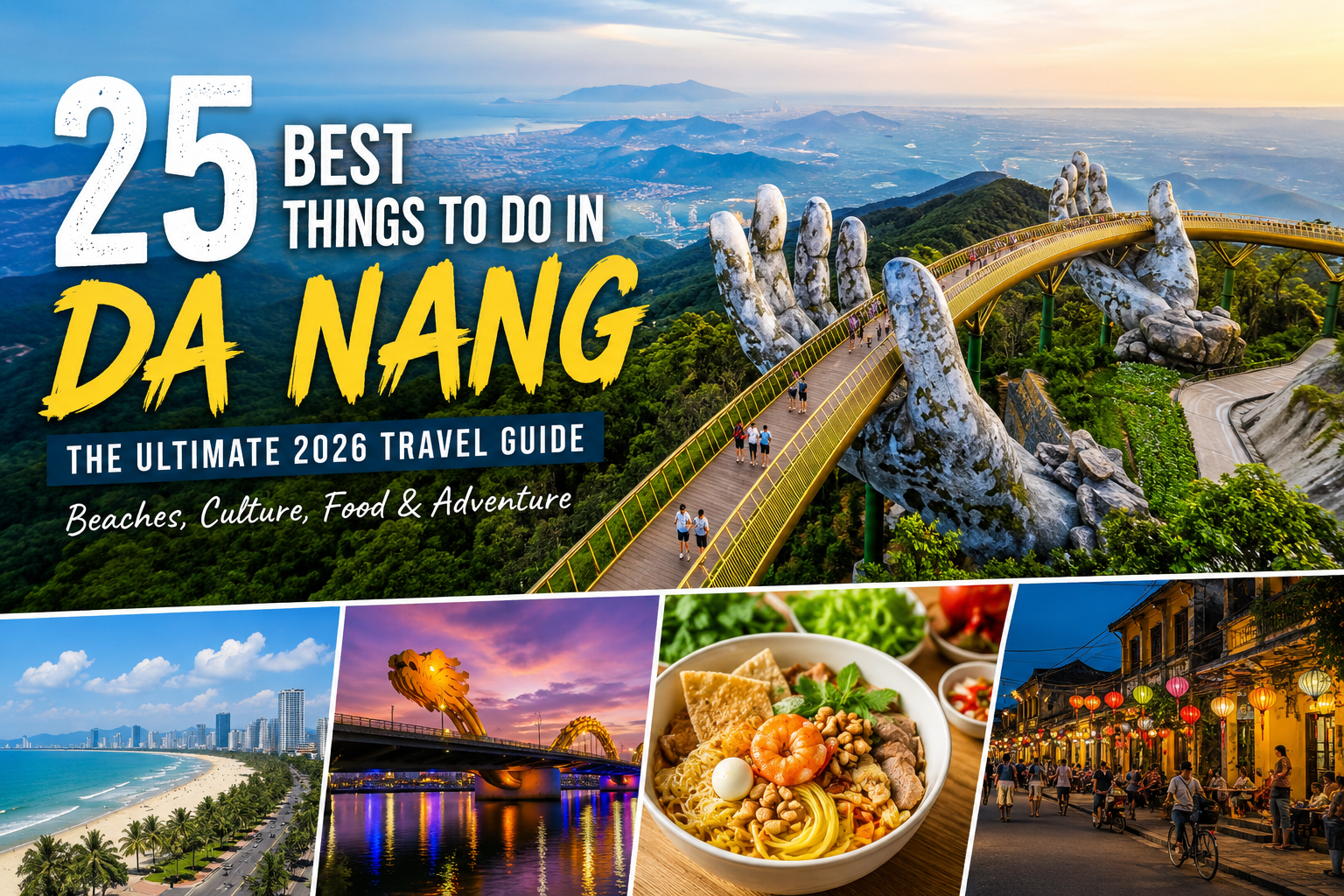
1. Marvel at the Golden Bridge Above the Clouds
Perched high in the mountains west of the city, the Golden Bridge has become one of Vietnam’s defining modern landmarks. Suspended above lush forests and seemingly held aloft by two enormous stone hands, the bridge creates an unforgettable visual experience.
Morning mist often drifts through the surrounding hills, giving the impression that visitors are walking among the clouds. Photographers should arrive shortly after opening hours, when the soft light and lighter crowds produce the most dramatic images.
Beyond the bridge itself, the surrounding Ba Na Hills complex includes gardens, viewpoints, entertainment areas, restaurants, and one of the longest cable car systems in the world.
2. Experience Sunrise at My Khe Beach
My Khe Beach is not merely a place for swimming—it is where many residents begin their day. Before dawn, joggers, fishermen, yoga practitioners, and families gather along the shoreline as the South China Sea gradually shifts from deep blue to brilliant gold.
Unlike beaches dominated by tourism, My Khe retains a distinctly local atmosphere in the early hours. Visitors who wake before sunrise witness a daily ritual that reflects the rhythm of life in Da Nang.
The beach’s gentle slope, clean sand, and generally calm waters make it suitable for travelers of all ages.
3. Explore the Marble Mountains
Five marble and limestone hills rise unexpectedly from the surrounding plain, each named after one of the classical elements. Inside, hidden staircases lead to Buddhist sanctuaries, meditation chambers, and naturally formed caves illuminated by shafts of sunlight.
The Marble Mountains reveal the deep connection between Vietnam’s natural landscapes and spiritual traditions. Carved statues, incense-filled temples, and panoramic viewpoints coexist within a setting shaped over millions of years by geological processes.
Visitors should wear comfortable footwear and allow at least two hours to fully appreciate the site.
4. Witness the Dragon Bridge Fire Show
Every weekend evening, Da Nang’s Dragon Bridge transforms from an architectural landmark into a public spectacle. Flames burst from the dragon’s mouth before jets of water follow, delighting families and photographers gathered along the riverbanks.
Although the performance lasts only a few minutes, the surrounding atmosphere—street vendors, music, and crowds enjoying the cool night air—captures the city’s welcoming character.
5. Discover the Serenity of Son Tra Peninsula
Often referred to as the “green lung” of Da Nang, Son Tra Peninsula protects one of the region’s last remaining coastal forests. Winding roads climb through dense vegetation before revealing dramatic ocean panoramas.
Wildlife enthusiasts may even spot the endangered red-shanked douc langur, a primate celebrated for its extraordinary coloration and regarded as one of the world’s most beautiful monkeys.
The peninsula demonstrates that despite Da Nang’s rapid urban development, significant natural ecosystems remain remarkably intact.
6. Visit Linh Ung Pagoda and the Lady Buddha
Standing nearly 67 meters tall and facing the sea, the Lady Buddha statue dominates the skyline from Son Tra Peninsula. The surrounding pagoda complex offers sweeping coastal views and a peaceful environment where visitors can observe local religious practices with respect.
The site represents more than a tourist attraction—it symbolizes protection for fishermen and serves as an important place of worship for local communities.
7. Taste Mi Quang, Da Nang’s Signature Dish
Among Vietnam’s celebrated regional cuisines, Mi Quang occupies a special place. Thick rice noodles are served with a modest amount of intensely flavored broth, accompanied by herbs, roasted peanuts, sesame rice crackers, and toppings ranging from shrimp and pork to chicken or frog.
Its distinctive balance of textures and aromas reflects the culinary identity of Central Vietnam, where dishes often emphasize freshness rather than heaviness.
8. Indulge in the City’s Seafood Culture
With access to abundant coastal waters, Da Nang has earned a reputation as one of Vietnam’s premier seafood destinations.
Markets and restaurants display tanks filled with live lobster, crab, clams, scallops, squid, and fish caught only hours earlier. Diners typically select ingredients directly before preparation, resulting in meals that showcase natural flavors enhanced by garlic, chili, lemongrass, or tamarind.
For many international visitors, enjoying seafood beside the beach at sunset becomes one of the highlights of their journey.
9. Wander Through Han Market
Han Market offers insight into daily urban life beyond the city’s resorts and beaches. Vendors sell tropical fruits, Vietnamese coffee, spices, silk products, local snacks, and handcrafted souvenirs while generations of families continue businesses established decades ago.
Bargaining remains common, though interactions are generally friendly and respectful.
10. Appreciate the Museum of Cham Sculpture
The ancient Champa Kingdom once flourished across much of Central Vietnam, leaving behind a remarkable artistic legacy influenced by Hindu traditions and regional craftsmanship.
The Museum of Cham Sculpture preserves sandstone statues, temple fragments, and intricate carvings dating back centuries, providing valuable context for travelers interested in Southeast Asian history beyond the better-known narratives of imperial Vietnam.
11. Cruise Along the Han River at Night
As darkness falls, Da Nang reveals another personality. Bridges glow in changing colors while riverside promenades fill with couples, families, and musicians.
A leisurely cruise offers uninterrupted views of the skyline and provides an excellent perspective on how the city has embraced modern architecture without entirely abandoning its natural waterfront.
12. Experience Vietnam’s Café Culture
Coffee occupies a central role in Vietnamese social life. Da Nang’s cafés range from minimalist spaces overlooking the ocean to hidden courtyards shaded by tropical plants.
Visitors should sample traditional Vietnamese iced coffee with condensed milk, coconut coffee, or salt coffee—a regional specialty whose subtle balance of sweetness and savory notes surprises many first-time drinkers.
13. Take a Day Trip to Hoi An
Only about thirty minutes from Da Nang lies Hoi An, a remarkably preserved trading port where lantern-lit streets, historic merchant houses, riverside cafés, and artisan workshops evoke centuries of maritime commerce.
An evening stroll through the old town reveals why it remains one of Vietnam’s most beloved destinations.
14. Journey to Hue and Vietnam’s Imperial Past
North of Da Nang, Hue preserves the legacy of the Nguyen Dynasty through its Imperial City, royal tombs, temples, and poetic landscapes along the Perfume River.
Travelers interested in Vietnam’s political and cultural history will find Hue an essential complement to Da Nang’s coastal attractions.
15. Drive Across the Hai Van Pass
Frequently described as one of Asia’s most scenic coastal roads, Hai Van Pass winds between mountains and sea through a succession of dramatic viewpoints.
The route offers changing panoramas of beaches, fishing villages, forests, and mist-covered peaks, rewarding travelers who prefer exploration at a slower pace.
16. Explore Local Night Markets
Da Nang’s night markets combine shopping, dining, and entertainment in an energetic yet approachable environment.
Visitors can browse handmade crafts, sample grilled seafood skewers, sip sugarcane juice, and purchase affordable souvenirs while observing the rhythms of local nightlife.
17. Discover Hidden Alleys and Neighborhoods
Some of the city’s greatest pleasures lie away from famous attractions. Residential lanes reveal family-run noodle shops, independent bakeries, tiny cafés, and street murals that seldom appear in guidebooks.
Walking without a fixed itinerary often leads to memorable encounters and authentic experiences.
18. Watch Fishermen Return at Dawn
Along sections of the coastline, traditional basket boats and fishing vessels continue practices passed down through generations.
Observing fishermen unload the morning catch provides a glimpse into livelihoods that predate Da Nang’s transformation into a modern tourist destination.
19. Sample Regional Street Food
Beyond Mi Quang, visitors should try banh xeo, bun cha ca, nem lui, banh beo, and fresh spring rolls.
Central Vietnamese cuisine generally features brighter flavors, abundant herbs, and balanced seasoning rather than excessive sweetness.
20. Visit Local Art Galleries
A growing community of artists and photographers documents both Vietnam’s rapid modernization and its enduring traditions.
Independent galleries showcase contemporary perspectives rarely encountered through mainstream tourism.
21. Enjoy Rooftop Views
Modern hotels and rooftop lounges offer sweeping vistas over the coastline, city center, and surrounding mountains.
Watching twilight settle over Da Nang while the lights gradually illuminate below creates an unforgettable atmosphere.
22. Shop for Coffee and Local Products
Vietnam ranks among the world’s leading coffee producers, making freshly roasted beans one of the finest souvenirs available.
Other worthwhile purchases include handcrafted ceramics, woven goods, silk accessories, and locally produced spices.
23. Embrace Slow Travel
Da Nang rewards visitors who resist the temptation to rush between attractions. Renting a bicycle, lingering over breakfast, or spending an afternoon by the sea often creates stronger memories than checking destinations off a list.
24. Use Da Nang as a Base for Central Vietnam
Its international airport, reliable infrastructure, and central location make Da Nang an excellent hub for exploring Hoi An, Hue, My Son Sanctuary, and surrounding coastal regions without frequently changing accommodation.
25. Appreciate the City’s Balance Between Tradition and Progress
Perhaps Da Nang’s greatest appeal cannot be captured in a single landmark. It lies instead in the harmonious coexistence of innovation and heritage: glittering bridges span rivers where fishing boats still drift; luxury resorts stand within reach of centuries-old temples; and bustling cafés operate alongside quiet neighborhood markets.
This equilibrium gives the city a character that feels distinctly Vietnamese while remaining accessible to travelers from around the world.
Final Thoughts
Da Nang is more than a beach destination or a convenient stop between Hoi An and Hue. It is a city that rewards curiosity, inviting visitors to look beyond postcard views and engage with the landscapes, cuisine, traditions, and communities that define Central Vietnam.
For first-time travelers, it offers one of the easiest introductions to the country. For returning visitors, it provides endless opportunities to slow down, explore deeper, and discover new perspectives with every journey.
In 2026 and beyond, Da Nang stands not only as one of Vietnam’s finest destinations but as a compelling example of how a modern Asian city can preserve its cultural identity while embracing the future.


