
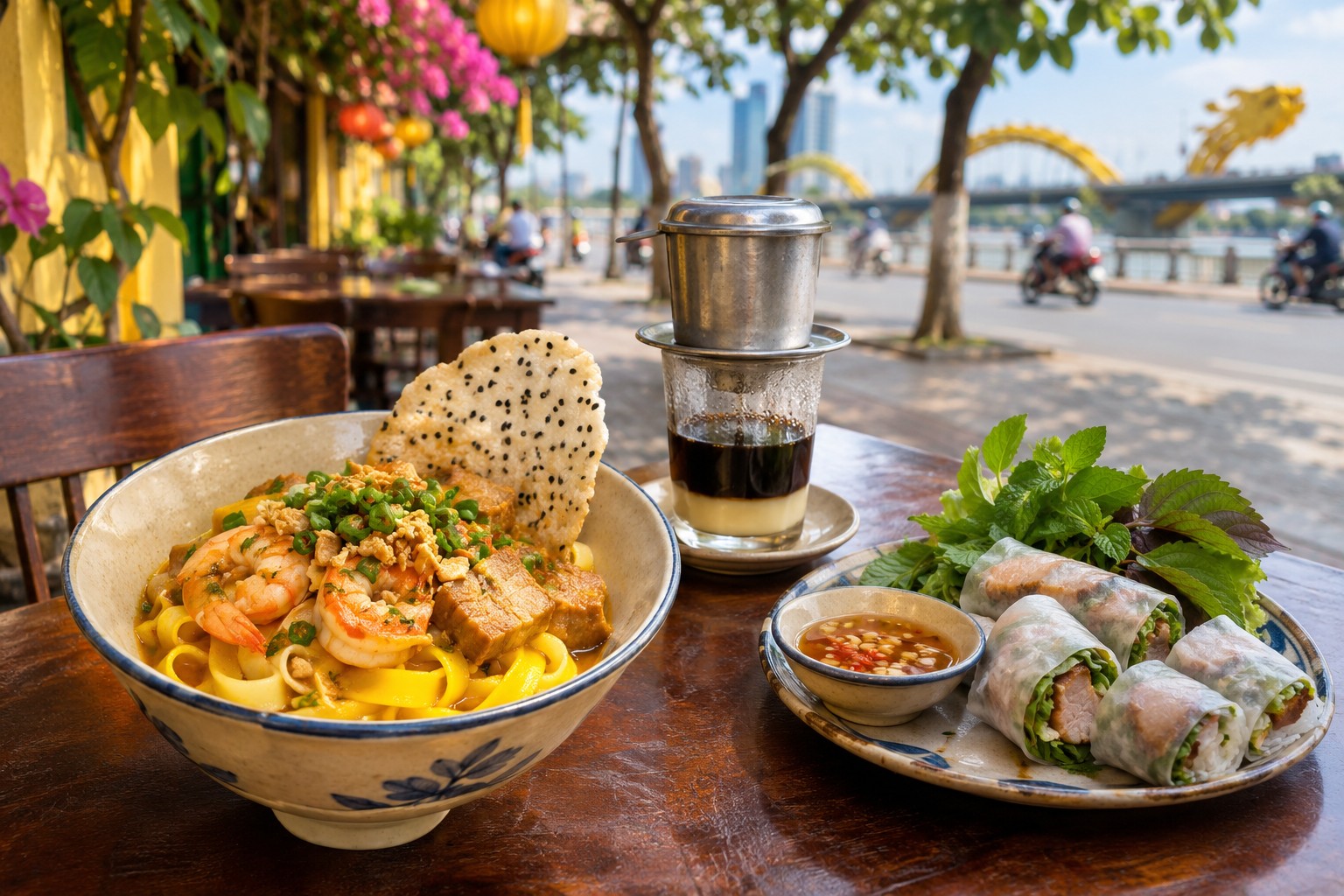
Da Nang Food Itinerary: Two Days of Local Flavors Without Overeating
A good Da Nang food itinerary needs more than a list of dishes. It needs appetite, sensible distances and enough time between meals to enjoy the next one. Two days can introduce fish-cake noodles, mi Quang, pork rice-paper rolls, crisp pancakes, coffee and a sweet snack, but not if every stop is treated as a full meal and the route repeatedly crosses the city.
This plan uses meal types as anchors rather than promising that particular restaurants operate at every hour. Choose current venues near your accommodation and the day's activities, then confirm opening information. You will learn more by enjoying a few dishes attentively than by trying to finish every specialty in one crowded afternoon.
Start by choosing two compact routes
Use one day for a central-city food pattern and another around the beach or your accommodation area. The exact division depends on where you stay and the restaurants you select. Map the stops before leaving and remove any detour that exists only because a place appears on a ranking. A great meal does not need a long journey to be meaningful.
Keep one alternative for each main meal. A vendor may close, finish a batch or have a wait that does not suit your schedule. A backup in the same area preserves the plan without turning it into an urgent search. Save the Vietnamese dish names and map pins so you can communicate clearly when choosing or arranging transport.
Day 1 breakfast: bun cha ca
Begin with a standard bowl of bun cha ca: rice vermicelli, fish cake and broth, with the restaurant's accompaniments. Ask what comes in the regular serving and whether steamed, fried or mixed fish cake is offered. Taste the soup before adding chili, lime or another condiment so you understand the kitchen's starting balance.
Keep the portion aligned with the rest of the day. A small serving, when available, may suit a tasting plan; a normal bowl is appropriate if lunch will be later. Do not order extra fish automatically just because it appears as an option. You can return to the dish another morning. Breakfast should leave you satisfied, not already trying to recover appetite.
Give breakfast time to settle
Follow with a gentle city walk, a museum visit or another activity near the route. Avoid treating the interval as an opportunity to add several “small” savory stops. Small portions accumulate, and the next main dish becomes harder to appreciate. Food travel works better when meals remain distinct experiences.
If you want coffee, decide whether to have it now or after lunch. A drink with condensed milk or a rich topping can function as a substantial sweet item rather than a neutral pause. Choose according to appetite and preference. There is no rule that every signature drink must be consumed on the first day.
Day 1 lunch: pork rice-paper rolls
Banh trang cuon thit heo provides a useful contrast with the breakfast soup. Thin pork slices, rice paper, herbs and vegetables are assembled into rolls, typically with a strong fermented fish-based dipping sauce called mam nem. Start with a light dip and a modest filling so you can notice the different textures.
Ask whether portions are individual or shared and what is included. For two travelers, begin with the restaurant's suggested amount for two rather than adding extra meat before seeing the serving. Request a demonstration if the wrapper arrangement is unfamiliar. The meal is naturally slower than a quick noodle bowl, so allow enough time to assemble and enjoy it without rushing.
Day 1 afternoon: one coffee stop
Choose a cafe that suits the kind of pause you want. If you want to talk and rest, comfortable seating and a manageable noise level matter more than a dramatic photo corner. Order a coffee style you are curious about and ask what it contains if the name is unfamiliar.
A strong coffee and a sweetened drink are different decisions from water with a meal. You can choose a simple black coffee, a milk-based version or no coffee at all. Do not let the itinerary turn personal preference into an obligation. The purpose of the stop is to enjoy the drink and restore energy for the evening, not to create another consumption target.
Day 1 dinner: banh xeo and nem lui
Crisp savory pancakes and grilled meat skewers create a sociable dinner with herbs, wrappers and dipping sauce. Confirm how pancakes and skewers are counted on the menu before ordering. Start modestly, eat the hot pancakes promptly and request another round only if you still want it.
Build small rolls rather than packing every ingredient into one oversized parcel. Taste the sauce before adding condiments and ask about ingredients if necessary. If you choose a well-known specialist such as Ba Duong, confirm the exact location and current service information. A guide listing is a useful research lead, not a guarantee of an immediate table or one universal style of sauce.
Day 2 breakfast: mi Quang
Use the second morning for mi Quang so you can compare a different noodle structure and flavor balance. Choose a specific menu version and ask what the toppings include. Broad noodles, a smaller amount of concentrated liquid and fresh accompaniments create a different experience from the bun cha ca soup you tried on the first day.
Taste the bowl before adjusting it. Note the contrast between noodles, protein, herbs and any peanuts or rice cracker served with it. If you have dietary requirements, explain them before ordering rather than removing visible ingredients afterward. One focused bowl teaches more than several variations ordered simultaneously when you are not hungry enough to distinguish them.
Day 2 lunch: leave room for choice
Keep lunch flexible according to appetite. A simple rice meal, a modest banh mi or a lighter dish may fit better than another elaborate specialty. If seafood is the meal you most want, make it the main lunch or dinner and reduce other eating accordingly. There is no need to fit every food into a fixed sequence regardless of how you feel.
For seafood, confirm the exact item, amount, pricing basis and cooking method before agreeing. If a weight-based price is involved, understand the quantity being selected. Ask about additional preparation charges where relevant. A clear order is part of enjoying the meal, especially when sharing and when several appealing options are presented at once.
Day 2 afternoon: a small dessert
Choose one dessert style rather than several large mixed glasses. Che, tofu pudding or a small cake can each provide a different texture. Ask what is in the serving, whether it is warm or cold and which toppings are optional. A colorful display does not explain ingredients by itself.
Share first if you mainly want a taste. You can order another portion afterward, but you cannot restore appetite by treating every rich dessert as a minor snack. If you need to avoid dairy, eggs or other ingredients, ask specifically. Coconut flavor does not establish that the full preparation is dairy-free.
Day 2 dinner: repeat or deepen a favorite
Use the final dinner for what you genuinely want, including returning to a dish you enjoyed. Repetition can reveal details you missed the first time. Alternatively, choose a meal style not yet covered, keeping the order proportionate to appetite and the day's earlier food.
Do not interpret the second day as a deadline to consume everything omitted. The best conclusion may be one comfortable dinner and a short walk. Save remaining dishes for a future visit. A food itinerary should leave you with clear memories and curiosity, not the sense that each meal was endured to finish a list.
How to choose restaurants for this plan
Use specialist menus, current opening information and practical routes. Read recent descriptions for patterns about food and service, but distinguish taste preferences from operational problems. A neighborhood place can be a better fit than a distant famous venue if it serves the dish you want at the time you need.
Confirm the exact branch when a name appears in several locations. A menu photograph from one branch may not describe another. Keep expectations focused: choose a place for a particular meal rather than demanding that every stop provide the same atmosphere, language support or seating. Variety in setting can be enjoyable when the practical needs are clear.
Order transparently and keep shared meals simple
Check current prices, portion sizes and extras before ordering. Ask whether the amount shown is per piece, per person, per plate or by weight. Clarify drinks and optional additions separately. A short clear exchange prevents more confusion than trying to reconstruct the bill at the end.
For groups, agree who is ordering and how many dishes you initially want. Several people independently adding “one small thing” can produce far more food than intended. Begin with a manageable round, then adjust. Respect service flow and ask before taking close photographs of staff or other diners. The restaurant is a working space as well as part of your trip.
Adapt the route for dietary requirements
A vegetarian or vegan version should be confirmed as a complete preparation, including stock and sauce. Visible vegetables do not establish that a dish is plant-based. If a restriction involves an allergy, communicate it separately and ask whether the venue can meet the preparation conditions you need.
Choose suitable kitchens before setting the route. A dedicated vegetarian venue or a class with an agreed menu may provide a better experience than modifying every standard dish. The goal is still variety and pleasure, not merely finding something technically edible at each planned stop. Let the venues that can serve you well shape the itinerary.
Leave with a personal food map
At the end of two days, note the dishes you would repeat and the places that fit your routine. Save names, not just photographs of anonymous bowls. A few reliable choices can make the rest of a Da Nang stay easier while leaving room to explore beyond them.
Use the individual guides to bun cha ca, mi Quang, pork rolls, banh xeo and desserts for deeper detail. This two-day plan is a framework for appetite and movement, not a mandatory tasting exam. If you finish with several meals you enjoyed and a better understanding of how they differ, it has done its job.


