
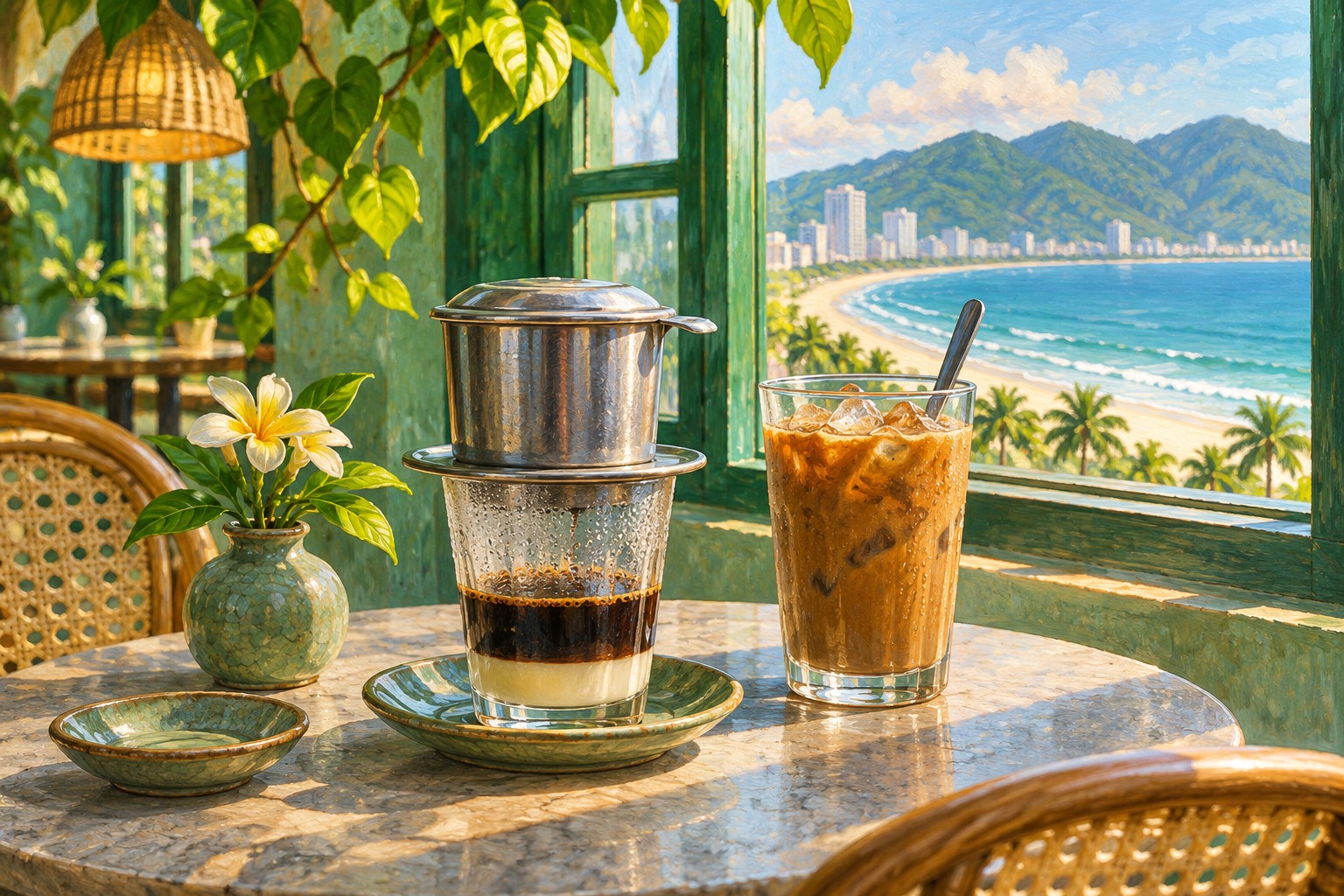
A good coffee stop in Da Nang can be a small discovery or simply a comfortable pause. You might want to try phin brewing, order something familiar, enjoy a view, or sit somewhere suitable during rain. Choosing the drink and setting separately makes that decision easier.
This guide explains useful menu terms, ways to communicate sweetness and milk preferences, and how to choose a café that fits your actual day. It avoids an unverified best-café ranking and instead gives you a practical method for finding the experience you want near the places you already plan to visit.
Start with a Few Familiar Menu Words
Vietnam's national tourism website describes phin brewing and coffee with condensed milk as recognizable parts of the country's coffee culture. In practice, ask the café how it prepares the specific drink you are ordering.
| Menu term | A useful starting meaning |
|---|---|
| Ca phe den | Black coffee; specify hot or iced and your sugar preference |
| Ca phe sua da | Iced coffee with sweetened condensed milk |
| Phin | The small drip filter associated with a traditional brewing method |
| Bac xiu | A milk-forward drink with coffee; recipes and sweetness vary |
These terms help you begin an order. They do not replace checking ingredients or the café's own menu description.
Trying Phin Coffee
If your drink is brewed at the table, give it time. Ask the server when it is ready and how they suggest combining the components.
Try the drink before adding more sweetener. If condensed milk is already included, the finished cup may be sweeter than you expect from its appearance.
A small cup does not necessarily mean a mild drink. If you are sensitive to caffeine, ask about a smaller serving, a suitable alternative, or whether a decaffeinated option is actually available.
Choosing the Right Café Setting
Near the Beach
Look for a place along your existing beach route if you want coffee after a walk. Compare shade, airflow, seating comfort, and the actual view from the table rather than relying only on a rooftop photograph.
If you arrive in beachwear or with wet belongings, check the venue's expectations and keep shared seating dry.
Near the River
A river-side coffee stop can fit into a central sightseeing outing or an evening walk. Check whether the setting you want is available at the time you visit.
For a special seat or sunset visit, confirm the reservation and minimum-spend policy if there is one. A table shown in a promotional image may not be available to every customer.
A Neighborhood Café
For a shorter, everyday stop, choose somewhere near your accommodation or next activity. This can be more rewarding than a long journey made only to order the same drink.
Look at the current menu and choose a place where you feel comfortable asking questions. You do not need a highly designed interior for the stop to be enjoyable.
If You Prefer Espresso or Specialty Coffee
Ask about the brewing options rather than assuming every café serves the same range. Espresso, filter coffee, local blends, and milk alternatives are property-specific choices.
If the beans matter to you, ask what is currently being used and whether a particular option is available. Avoid building a visit around an old menu photograph.
For dairy restrictions, explain what you need clearly. A drink marketed as coconut coffee may still contain dairy ingredients, so verify the preparation.
Working from a Café
If you want to work, ask whether it is appropriate before settling in for several hours. Confirm the Wi-Fi, power access, noise level, and any time or purchase expectations.
Choose a table that does not occupy the venue's only large seating area during a busy meal period. A café being pleasant for coffee does not automatically make it a suitable remote office.
Buying Coffee to Take Home
Ask about roast date, grind, storage, and the brewing method the coffee is intended for. Whole beans only help if you have access to a grinder; an unsuitable grind can make a familiar product difficult to use.
If you buy a phin, request a short demonstration or instructions. Check your destination's import rules for any additional food products you purchase.
Describe the Drink You Want in Concrete Terms
Start with temperature, milk, and sweetness. A request for strong or normal coffee can be interpreted differently, while hot or iced and with or without condensed milk are clearer starting points. Ask how the café prepares the specific menu item.
If you want less sweetness, ask before preparation and establish where the sweetness comes from. Reducing added sugar may not make a condensed-milk drink unsweetened. Likewise, a premixed preparation may offer less flexibility than a drink assembled individually.
For an unfamiliar specialty drink, read the ingredients or ask for a description. Coconut, egg, or other names should not be treated as a complete allergen statement. Check dairy and other relevant ingredients rather than deciding from the name alone.
Useful Ordering Language
| What you want to clarify | A simple phrase |
|---|---|
| Hot or iced | Nóng hay đá? |
| Less sugar | Ít đường |
| No added sugar | Không đường |
| Does it contain milk? | Món này có sữa không? |
| Can you explain this drink? | Bạn giải thích giúp tôi món này được không? |
These phrases support an order, but they do not guarantee a recipe change or explain a serious dietary restriction. Confirm what the kitchen or bar can actually do. If avoiding an ingredient is essential, use a clear specific message and choose a different drink when the answer is uncertain.
Enjoying a Phin Without Rushing It
If the coffee is served with a filter at the table, wait for the preparation to finish and ask how to handle the filter if you are unsure. Keep space for it rather than balancing several items on a small table.
Taste before adding anything else. If the drink includes condensed milk, notice how mixing changes it. You can enjoy the process without making a claim that every café uses an identical method or that one recipe represents all Vietnamese coffee.
If you are in a hurry, ask which drink can be prepared in the time available. A slow coffee stop and a quick takeaway serve different purposes. Choose the experience that suits the moment rather than ordering something you will have to abandon unfinished.
Choose a Seat for the Visit You Intend to Have
For conversation, look at the actual sound level and table arrangement. For reading, consider light and comfort. For a view, confirm what is visible from the seat available to you rather than from the venue's best promotional angle.
An open terrace may be appealing in one set of conditions and less useful in another. If you want reliable shelter, check indoor seating and the route to it. A café described as covered may still involve a wet or exposed approach.
When working, ask about the venue's expectations before occupying a table for several hours. Power sockets, Wi-Fi, and a comfortable chair are useful only if the setting permits the kind of stay you intend. Respect busy periods and shared seating.
Make a Short Café Route Instead of a Long Ranking
Choose one stop near your morning activity and perhaps another with a different purpose on another day. You might compare a traditional-style drink with an espresso preparation or choose one stop for the setting and another for the coffee itself.
Avoid collecting several sweet drinks in quick succession simply to complete a list. A better comparison comes when you have room to enjoy each one. Keep notes on what you ordered and what you liked if you want to explore more thoughtfully.
If a particular café is closed, choose a nearby alternative that meets the same need. A coffee stop is often most valuable because it provides a useful pause, not because it occupies a precise address on an itinerary.
Buying Beans, Ground Coffee, or a Filter
Ask how the coffee is intended to be brewed and whether the grind suits your equipment. A product can be enjoyable in a café but difficult to reproduce at home if the preparation method is different.
If buying a phin, ask for simple instructions and check that you understand the parts. Choose a size you will use rather than buying only for appearance. Keep food products in appropriate packaging and review any import requirements for your destination.
Take home enough information to use the purchase: the product, roast or grind details where supplied, and the suggested preparation. That small note can be more valuable than another decorative souvenir.
Frequently Asked Questions
What is a good first Vietnamese coffee order?
Iced coffee with condensed milk is a recognizable starting point if its ingredients suit you. Ask about sweetness before ordering.
Where is the best café in Da Nang?
Choose by the drink, setting, and route that matter to you. This guide does not present an unverified ranked list of businesses.
Can I ask for less sugar?
Ask before preparation and clarify whether sweetness comes from added sugar, condensed milk, or a premixed ingredient.


