
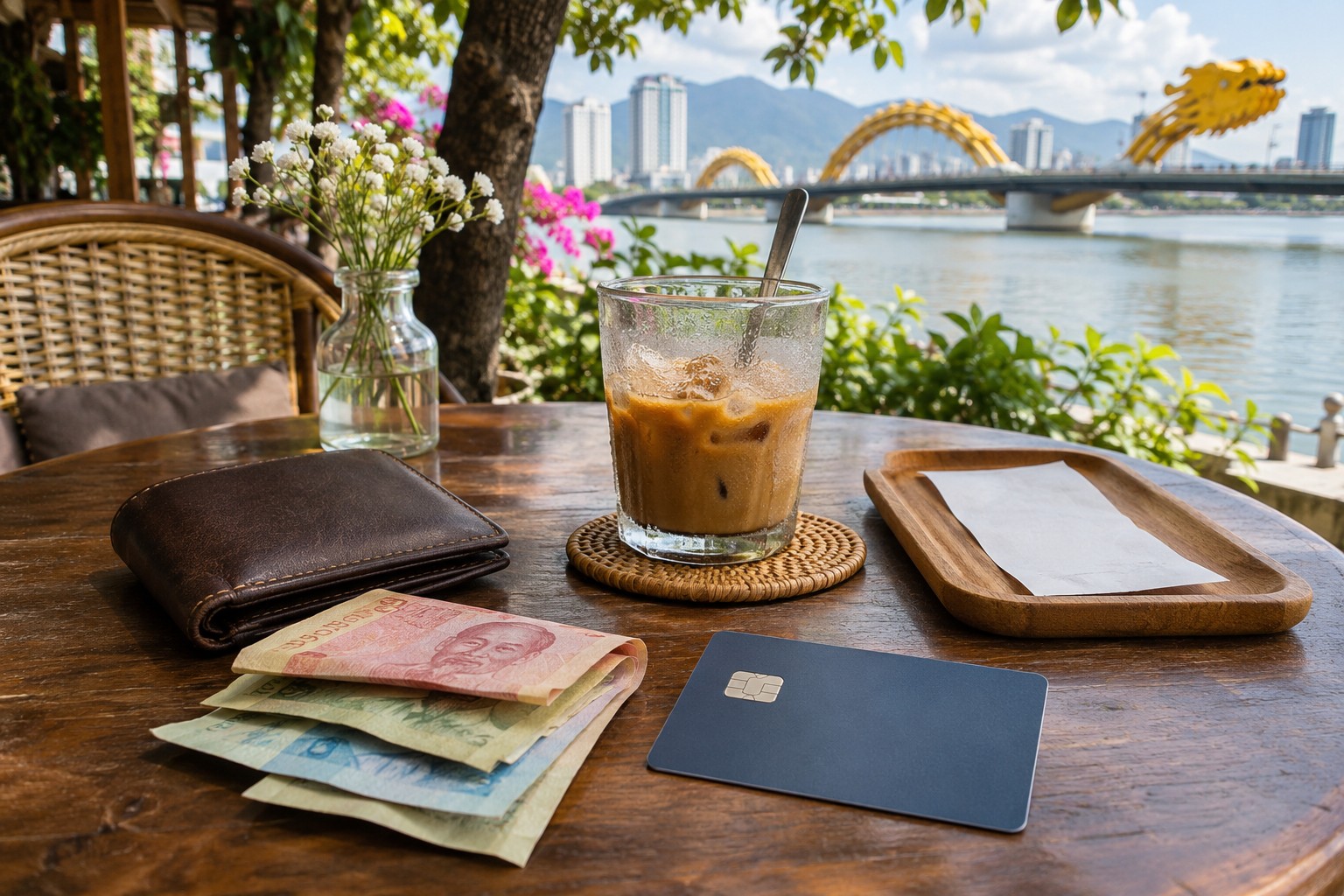
Paying in Da Nang: Cash, Cards and ATMs for a Smoother Trip
A practical payment setup for Da Nang combines a way to handle larger bookings with enough Vietnamese dong for small everyday purchases. The exact balance depends on where you eat, how you travel and which cards you carry. A hotel may accept your card while a nearby food stall expects cash, and a visible QR code does not necessarily mean your foreign banking app can use it.
This guide explains the decisions to make before and during the trip without quoting an exchange rate or bank fee as a permanent fact. Charges, limits and supported services vary by provider and can change. Use your bank's current terms and the information displayed at the transaction before agreeing to a payment or withdrawal.
Get comfortable with Vietnamese dong
Vietnam's currency is the dong, commonly written as VND or with the dong symbol. Prices can contain more zeros than travelers are used to, so read the complete amount rather than relying on note color or a quick mental impression. Give yourself a moment to check what you are handing over and the change you receive.
Keep smaller denominations available for modest purchases when practical. A high-value note can be inconvenient at a small stall early in service. Organize notes in a way that makes them easy to distinguish, and avoid displaying a large stack while deciding. Familiarity comes quickly if you slow down for the first few transactions instead of treating every payment as a rushed exchange.
Build a two-method plan
Use at least two practical payment methods where possible, such as a suitable international card and local cash. Keep them stored so a single loss does not remove every option at once. A backup card is useful only if you understand its PIN, availability and current overseas-use conditions.
Before departure, check your provider's requirements for international transactions and how to contact support. Save essential contact information in a place you can reach if the phone or card is unavailable. You do not need an elaborate financial system for a holiday, but a clear backup makes an ordinary declined transaction much less disruptive.
Know where cash is most useful
Cash is commonly useful for small food purchases and other modest transactions where card infrastructure may be limited. Ask what a vendor accepts before ordering if you do not have a workable cash amount. A card accepted at a large hotel does not establish that a nearby independent business accepts the same method.
Carry enough for the next part of the day rather than assuming every outing has convenient access to an ATM. For a village visit or a longer excursion, confirm expected payments in advance. At the same time, do not carry the entire trip budget unnecessarily. Match the amount to the actual plan and retain a practical reserve for changes.
Read prices before confirming the order
Ask whether an amount is per item, per person, per plate or by weight. This is especially important for shared food and seafood. Clarify preparation charges, extras and optional items before agreeing. A clear purchase is easier to enjoy than one based on assumptions you try to resolve when the bill arrives.
If a menu uses abbreviated figures, ask for the full total when uncertain. Check that everyone at the table understands the initial order. For transport or a service arranged directly, confirm the route, waiting time and what the stated amount includes. Most payment confusion is easier to prevent before the service than to untangle afterward.
Cards can simplify larger expenses
International cards are useful at many hotels, restaurants and tourism businesses, but acceptance varies by venue and card. Ask about the method and any disclosed surcharge before payment. Do not assume a logo or a past visit guarantees that a terminal is currently operating or that every card network is supported.
Check the transaction amount before authorizing and retain the receipt or confirmation until you have verified the charge. If a payment appears to fail, ask what status the terminal shows before immediately repeating it. Your provider's app can help, but pending entries do not always behave like final settled transactions. Keep the relevant records if you need the merchant or bank to investigate.
Understand currency conversion choices
Some card terminals or ATMs may offer a choice between a local-currency transaction and a converted amount in another currency. Compare the displayed terms with your card provider's foreign-exchange conditions rather than assuming the more familiar currency is automatically better value. The provider of the conversion and the applicable fees can differ.
Take time to read the screen. If you do not understand the choice, ask for an explanation or cancel before authorizing. There is no need to accept a conversion simply because it is presented prominently. The important habit is to know which currency and terms you are agreeing to, using current information rather than a fixed rule copied from someone else's card setup.
ATM costs come from more than one place
A withdrawal can involve an ATM operator charge, your own provider's fee and currency-conversion conditions. Limits also vary. Check your bank's current terms before travel and read the machine's displayed information before confirming. An older guide naming a particular ATM as universally free may not apply to your card or date.
Choose a practical location where you can complete the transaction without being rushed. Keep the screen and keypad private, follow the machine's instructions and collect the card, cash and receipt as applicable before leaving. If something goes wrong, use the operator's legitimate contact details and your bank's support route rather than accepting unsolicited help with sensitive information.
Make withdrawal size a practical decision
Balance the effort and any transaction costs against the amount of cash you are comfortable carrying. Do not withdraw an excessive sum solely to reduce a small fee, and do not create repeated inconvenience by withdrawing too little for the day's known needs. Your card's limits and the machine's limits may not be the same.
If the amount you request is unavailable, read the response rather than repeatedly trying without understanding why. Keep a second payment method available. A declined withdrawal is not proof that the card is unusable everywhere, but it is a reason to check the provider's information before relying on another attempt as the only solution.
Exchange money through a clear legitimate service
If you exchange foreign currency, use a service authorized to provide that transaction and ask about the rate, fees, documentation and final amount before proceeding. Count and inspect what you receive while still at the counter. Keep the transaction record where provided.
Do not compare offers only by a large rate number without understanding whether charges or conditions change the result. Avoid informal arrangements that you cannot verify or document. The relevant comparison is the amount of VND you actually receive under clear terms, not a rate quoted without context or a claim that a particular kind of shop always offers the best deal.
Do not assume local QR payments work for every visitor
QR codes are visible in many Vietnamese businesses, but the supported banking or payment systems may differ from what your home app can use. Ask before relying on a code as your only payment method. A code on the counter does not establish compatibility with a foreign account or wallet.
If you use a supported service, verify the recipient and amount before confirming. Keep a backup for situations where the connection or app does not work. Do not install an unfamiliar financial app or transfer money based only on hurried instructions from an unverified source. Convenience is useful when you understand the system, not when it removes the checks you would normally make.
Understand hotel deposits and final bills
A hotel can distinguish between the room payment, a security deposit and an authorization held on a card. Ask which arrangement applies, how it is recorded and what happens at checkout. The timing of a release or refund can depend on the hotel and your bank, so obtain the relevant details rather than expecting one universal schedule.
Review the final bill for meals, minibar use, extra beds or other agreed charges. Keep receipts for cash payments and deposit returns. If something is unclear, raise it while staff can explain the record. A low room rate does not remove the need for transparent payment terms, and a familiar brand does not make every package condition identical.
Split group expenses before they become awkward
For shared meals and transport, decide how the group will handle payment. One person can settle and record the total, or each person can pay separately if the venue supports it. Ask before assuming a small business can divide a complex bill across several cards and currencies.
Keep the process simple enough that it does not dominate every meal. Agree on how shared dishes, drinks and optional extras are treated. If different travelers have very different budgets, discuss that before choosing an expensive venue. Clear expectations make the trip more comfortable and prevent a practical payment task from becoming a social problem at the end of the evening.
Keep essential records without oversharing
Retain confirmations for substantial purchases and services until the trip is settled. Protect card details, PINs and one-time codes. A legitimate payment process should not require you to publish sensitive information or send it casually through an unverified chat. Contact your provider directly when you need help.
If a card is lost or a transaction is unfamiliar, follow your bank's current process promptly. Keep an alternative method available while the issue is addressed. This is another reason to separate backups rather than keeping every card and all cash together in one place. Ordinary organization can be more useful than carrying more payment products.
A simple daily payment routine
Before leaving, check that you have a suitable card, a manageable amount of cash and the details for any prepaid booking. Confirm prices before agreeing, read the transaction before authorizing and keep records for larger expenses. Adjust the cash amount to the actual route, especially for longer outings.
Use the Da Nang budget guide, the local food articles and the getting-around guide to estimate the kinds of payments your trip will involve. There is no single perfect cash-to-card ratio. A reliable setup is one with clear terms, a workable backup and enough familiarity with VND that you can focus on the day instead of worrying about every transaction.


