
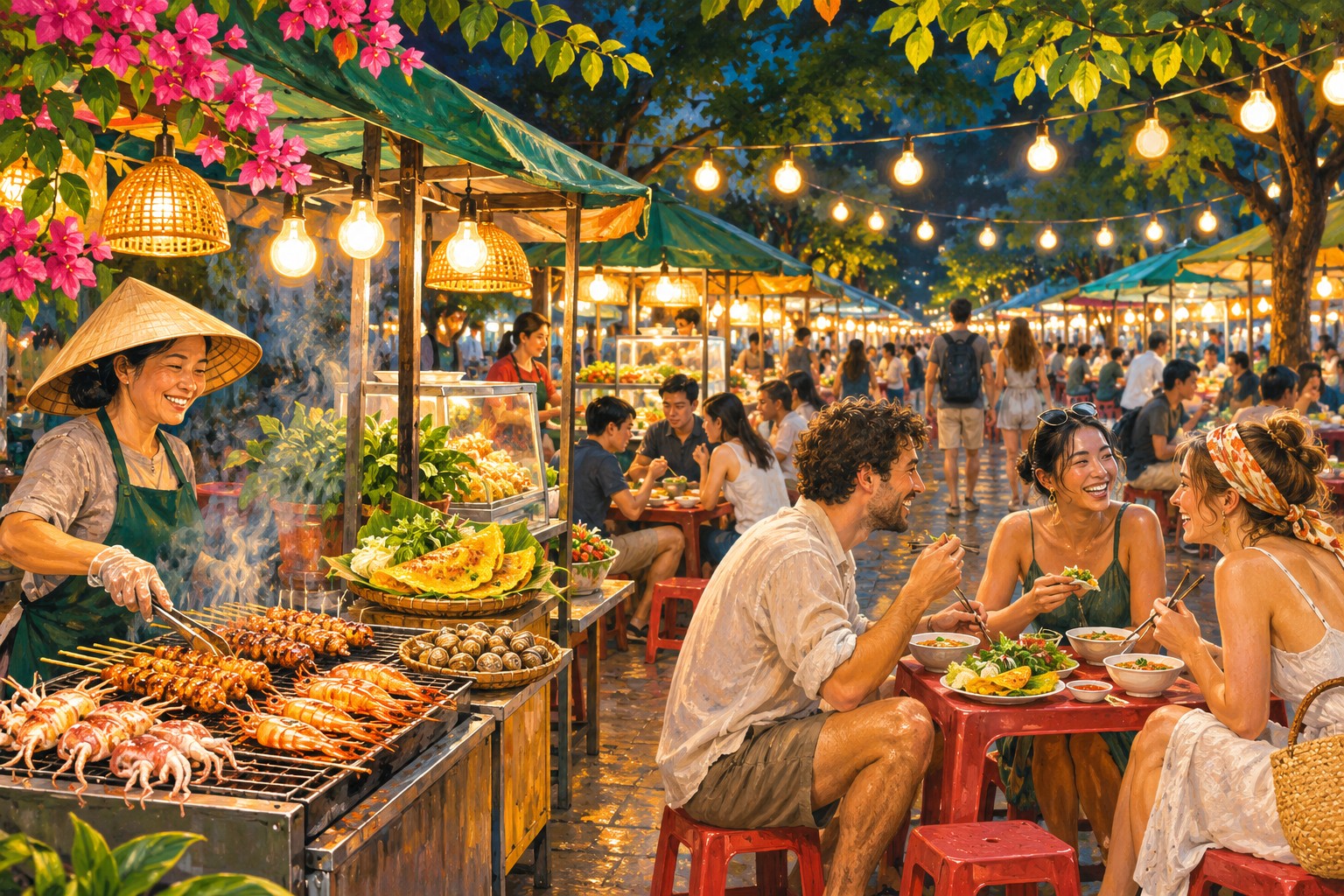
 A Da Nang night market can be a lively setting for food, browsing, and an evening walk, but it is best approached with a clear purpose. You may want a few snacks, a full meal, or a short shopping visit. Trying to do everything at once can make the outing less relaxed than it needs to be.
This guide explains how to choose a current venue, organize the food and spending, and connect the visit with the rest of your evening. Locations, formats, and operating arrangements can change, so use recent venue information rather than treating a familiar market name as a permanent itinerary instruction.
Start by Deciding What You Want
Some visitors want a full dinner, others a few snacks, and others mainly want to browse gifts. Your purpose affects when to arrive and how much time to allow.
If you are going for food, avoid a large meal immediately beforehand. If you are going for photographs and browsing, you can keep dinner separate and choose food only if something appeals.
Son Tra Night Market
Local reporting identifies Son Tra Night Market as part of the nighttime activity around Dragon Bridge. That makes it a candidate for an evening that also includes the river.
Confirm the current map pin and entrance before requesting transport. Do not copy an old street address without checking it against the present operator or recent official visitor information.
This guide deliberately avoids presenting a fixed stall count or permanent closing time. Individual vendors and venue arrangements may differ, and an operator's update is more useful for your visit than an old number repeated across travel blogs.
An Thuong and Other Evening Options
The city tourism portal includes An Thuong night market in its market coverage. If you are staying in that area, check whether the current arrangement offers the experience you want before traveling across the city for another market.
For any venue, distinguish a traditional market, a temporary fair, a food complex, and a special event. They may all be promoted with similar language while operating on different days and under different arrangements.
Do not build an evening around an old Helio recommendation without verifying the venue's current status and format. Treat changes as a reason to recheck the plan rather than to follow an outdated checklist.
How to Order Food
Walk through the available options first. Choose a stall with a menu or a clear explanation, ask the price, and confirm the portion before the food is prepared.
For seafood, establish the unit, weight, and cooking charge. A photograph of a large platter does not tell you what quantity the displayed price includes.
Start with a modest order. If you are sharing, tell the seller how many people will eat it and ask whether additional accompaniments are included.
A Note on Allergies and Ingredients
Use a clear translated message where necessary and ask about sauces and cooking methods. If the seller cannot confidently explain the preparation, choose something else.
A familiar-looking snack may contain ingredients you would not guess from its appearance. Asking before purchase is easier than trying to remove an ingredient after it has been mixed or cooked.
Shopping Without Pressure
Decide what you are willing to spend before beginning a purchase. Ask for a price for a specific item and quantity, inspect it, and keep any negotiation polite.
You can leave without buying. Avoid handling delicate stock casually or beginning a lengthy negotiation for entertainment.
For gifts and packaged food, check quality, seals, and relevant import rules. Do not assume a tourist-oriented product is automatically permitted in your destination country.
Combining the Market with Dragon Bridge
Check the current bridge-show notice if that is part of your evening. Then allow enough time between food, walking, and finding a viewing position.
Choose a meetup point away from the busiest area and decide how you will leave. A nearby market visit should not force you into a crowded last-minute rush.
If the performance is changed or the crowd is uncomfortable, keep the evening centered on dinner and a permitted riverside walk instead.
Distinguish a Market from an Event or Food Complex
Travel posts sometimes use the same language for a regular market, a temporary fair, a collection of restaurants, and a special evening event. Before going, establish what is actually operating on your date and whether it offers the experience you want.
If the main attraction is a performance, look for the current announcement and its timing. If the goal is food, investigate the stalls or dining arrangements rather than relying on an image of entertainment from a previous event. If shopping matters, check whether the products you hope to browse are part of the current venue.
This distinction prevents a common disappointment: arriving at the correct location but expecting the wrong format. It also makes transport planning easier because you can estimate whether the visit is a short stop or the main evening activity.
Arrive with a Meal Strategy
If the market is dinner, leave room for it and avoid a large meal immediately beforehand. Begin with a walk through the available options and choose a first order you understand. You can add something else if you still want it.
For a group, discuss preferences and dietary restrictions before splitting up. Decide whether everyone will buy individual portions or share a few dishes. Nominate a clear meeting place if people browse separately, and keep the arrangement simple enough to work in a busy space.
Do not treat every attractive stall as an obligation to buy. A few enjoyable items are enough. It is easier to appreciate a dish when you know what it is and are still hungry than when you are trying to finish several purchases made for photographs.
Understand Portions, Sets, and Display Prices
A displayed amount may refer to one piece, a small portion, or a set with specific contents. Ask which applies before ordering. If pointing at a photograph, confirm whether it shows the portion included in that price or several orders presented together.
Seafood deserves a separate calculation if sold by weight. Confirm the quantity, unit, and cooking charge before preparation. Keep that discussion focused on one item at a time so the total remains understandable.
For a prepared snack, ask what is included and whether extras are optional. A simple question before cooking is more useful than discovering afterward that the item was priced differently from what you imagined. Clear ordering supports a relaxed visit rather than reducing spontaneity.
Keep Spending Easy to Follow
Choose a comfortable allowance for food and small purchases before leaving the hotel. Carry manageable denominations and keep the main travel funds separate from the amount you expect to use while browsing.
For shared orders, record the main amounts if the group plans to divide costs. Several small transactions become difficult to remember at the end of the night. You do not need a formal spreadsheet at each stall; a short note can be enough.
If you see an appealing gift, compare the actual item and quantity before paying. Inspect what is being packed, especially when buying more than one. Keep the purchase organized so you are not leaving bags behind while concentrating on the next stall.
How to Handle a Busy Evening with Children
Start earlier in your family's evening routine where practical and choose a manageable visit length. Food, noise, and browsing can be interesting without requiring everyone to remain until the venue closes.
Decide how adults will supervise and where the group will meet if separated. A recognizable entrance or permanent landmark is more useful than an individual stall that may be difficult to identify from another direction.
Have a simple alternative if the child is tired or the space is uncomfortable. A nearby meal or return to the hotel can be a better decision than trying to finish a planned route. The success of a family evening depends on comfort, not the number of stalls visited.
Combining Food with a Bridge or River Visit
If a scheduled performance is part of the plan, confirm its current timing and leave room between eating and moving to a public viewing area. Do not assume that a seat in a market provides an unobstructed view of every nearby landmark.
Choose one primary activity. If dinner is the priority, keep the performance optional. If watching a confirmed show matters most, arrange food so that ordering and waiting do not create a last-minute rush. Two activities fit better when their roles are clear.
Think about the journey afterward. Identify an appropriate pickup location and whether the return service you intend to use is operating at that time. A route that works before dinner may not be available after a late event.
Shopping for Things You Will Take Home
Check materials, size, packaging, and the condition of the specific item. If buying food, inspect seals and labels and consider storage. Ask whether anything needs special handling rather than assuming all tourist products are equally practical for a flight.
Review your destination's import rules before buying restricted categories such as certain animal products, fresh items, seeds, or plants. Secure packaging can make something easier to carry but cannot establish permission to bring it across a border.
Keep the rest of the evening realistic once you have purchases. A delicate or bulky item may make a long walk less comfortable. Either buy near the end of the visit or plan how it will be carried without turning the outing into a luggage exercise.
Leave When the Visit Has Given You What You Wanted
A market does not need to be explored exhaustively. If you have enjoyed a meal, found a gift, or spent a pleasant time browsing, you can leave without completing every aisle. That preserves energy for the next day and keeps the experience positive.
Before departing, check belongings, purchased items, change, and the route to your pickup. Allow a calm transition rather than requesting a vehicle and then discovering that half the group is still ordering food.
For your own notes, record the current venue and what you actually did there. That is more useful than repeating a broad ranking or fixed schedule that may change before another traveler arrives.
Frequently Asked Questions
Are all night markets open every night?
Do not assume so. Verify the venue's current operating days, hours, and event arrangements.
Can I have a full seafood dinner at a market?
Check the available stalls and pricing. Confirm the complete order before cooking, especially for weight-based items.
What should I save on my phone before leaving?
The current entrance, your hotel address, a return pickup option, and any confirmed event details.


