
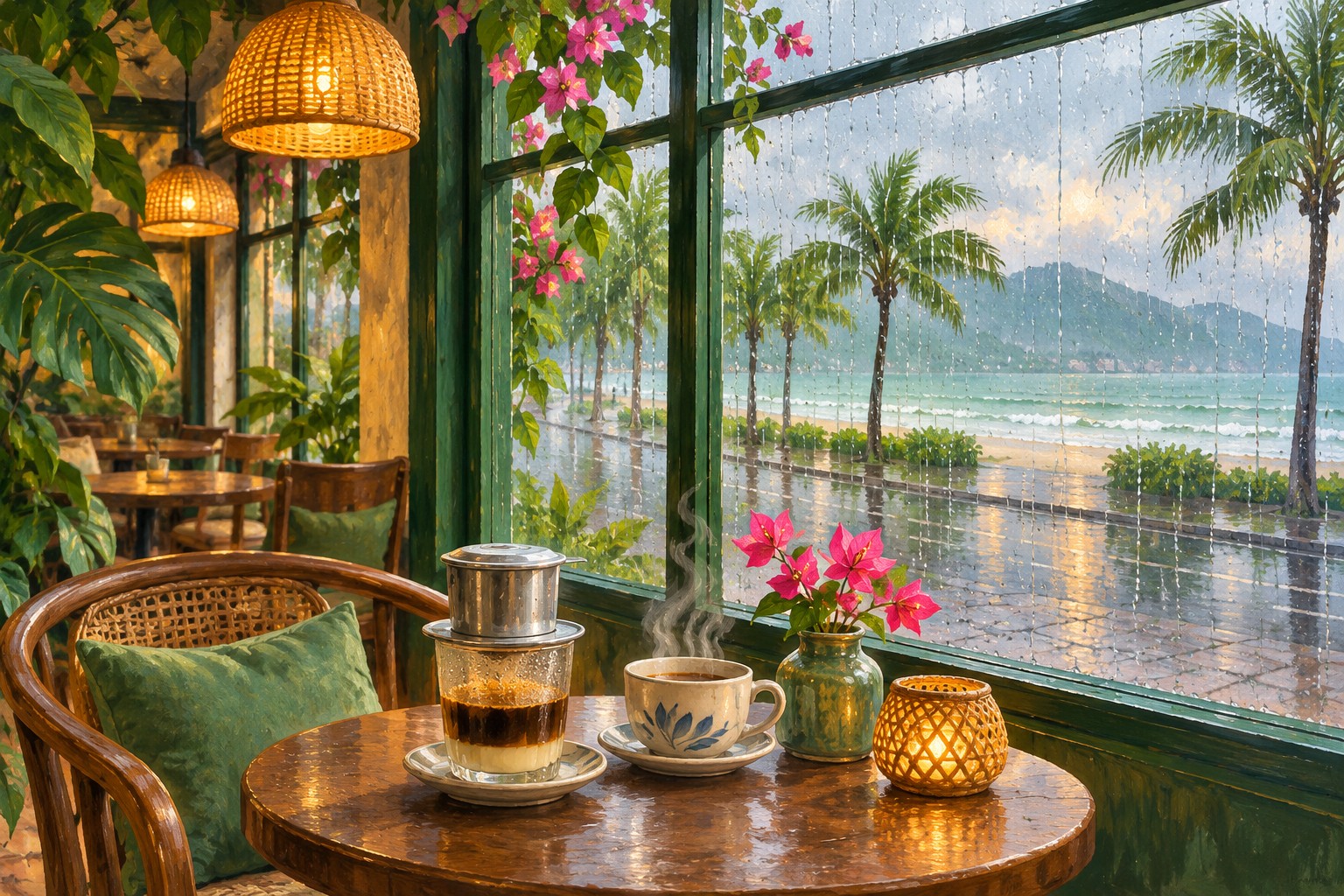
A rainy day in Da Nang can still offer a satisfying mix of culture, food, and rest when you choose activities that fit both the weather and the journey. The important first step is distinguishing an ordinary change of plans from conditions that make travel itself unsuitable.
This guide focuses on practical alternatives: a confirmed museum visit, a comfortable café, a meal with time to enjoy it, or an appropriate indoor attraction. It also explains how to group them into a compact day instead of replacing a beach outing with several long transfers between buildings.
Start with the Journey
Before choosing an activity, check whether it is operating and whether you can comfortably reach it. Confirm the entrance, transport, and the amount of walking between the vehicle and the building.
Keep the plan geographically compact. A museum, nearby lunch, and one coffee stop can make a better rainy day than several unrelated indoor attractions connected by long rides.
Visit Da Nang Museum
The museum's current official site lists its main city location at 31 Tran Phu. Save the correct visitor entrance rather than following an old listing for a previous location or another branch.
Check the day's opening arrangements and current exhibitions. Choose a visit length that fits your interest and leave time to read rather than trying to rush every display.
For families or travelers with mobility needs, ask about the actual visitor route and facilities before leaving the hotel.
Explore the Museum of Cham Sculpture
The Museum of Cham Sculpture is another cultural option to investigate. It appears in the city tourism authority's attraction information and offers a different focus from a general city-history visit.
Check the current ticket, opening hours, and any guide or interpretation service. If you are unfamiliar with the subject, a short explanation can make the visit more meaningful than walking quickly through without context.
Do not combine several museums simply because they are indoors. Choose the subject that interests you most and give it sufficient time.
Consider the Fine Arts Museum
The destination portal identifies the Da Nang Fine Arts Museum at 78 Le Duan. Confirm current exhibitions and operating arrangements before making a special journey.
An art visit can be a good choice when you want a quieter pace. Look at what is actually on display during your dates rather than assuming an exhibition mentioned in an old event post is still running.
If photography matters to you, check the rules inside the gallery rather than assuming all works can be photographed.
Make a Café Stop the Main Activity
Choose a comfortable café near your accommodation or museum route. Check that the seating you want is indoors and available, especially if the venue's best photographs show an open terrace.
Try a drink that interests you, read, or take time to reorganize the next day's itinerary. You do not need to turn the stop into a work session or a second attraction.
If you plan to stay for a long time, respect the venue's seating and purchase expectations. Keep wet belongings off upholstered furniture and shared tables.
Enjoy a Food-Focused Outing
Choose one meal you want to understand better and visit an appropriate indoor restaurant. Ask about ingredients and preparation, then leave time to eat without rushing.
A cooking class may also be worth investigating if the provider confirms current operation, transport, inclusions, and dietary arrangements. Ask whether any market or outdoor portion is still part of the experience.
Do not assume a class is fully indoors because its main activity takes place in a kitchen.
Investigate an Indoor Water-Park Visit
Mikazuki's official site describes both indoor and outdoor water-park areas. Review the selected product carefully to establish which facilities are included and whether current conditions affect operation.
For children, check the requirements for the specific activities you expect to use. Include travel, changing, and meal time in the day rather than comparing admission price alone.
An indoor venue should still be assessed alongside the conditions for getting there and back.
A Compact Rainy-Day Plan
| Part of the day | Suggested approach |
|---|---|
| Morning | One confirmed museum or indoor cultural visit |
| Lunch | A nearby restaurant with suitable seating |
| Afternoon | A café, rest at the hotel, or another short indoor stop |
| Evening | Dinner close to the accommodation |
Keep the schedule easy to shorten. If conditions improve, add a modest outdoor walk only where access and weather permit.
Build an Indoor Shortlist Before You Need It
Choose two or three options that genuinely interest you and record their current location, visitor entrance, and opening information. You do not need to reserve all of them. The purpose is to avoid starting from nothing when the outdoor plan changes.
Compare subjects rather than assuming every museum provides the same experience. A city-history visit, a collection focused on Cham sculpture, and an art exhibition appeal to different interests. Choose the one you are most likely to enjoy and give it sufficient time.
For each option, identify a nearby meal or coffee stop. This creates a compact alternative day with a natural break. A list of unrelated indoor venues is less useful if using it requires repeated journeys through conditions you were trying to avoid.
Check the Entrance and Journey, Not Only the Roof
A venue can be indoors while the approach involves exposed walking, an awkward drop-off, or another practical difficulty. Ask where vehicles can stop and how to reach the visitor entrance. Use the correct branch and current address.
For museums, read the actual day's opening arrangements and any temporary notices. A special exhibition announcement may describe a past program, and a general building schedule may not cover every activity. Confirm the part of the visit that motivated your choice.
During more serious weather, follow official guidance and check whether the venue is operating. Do not assume an indoor destination is automatically an appropriate journey. Staying comfortably at the accommodation can be the sensible alternative when the route itself is affected.
Give a Museum Visit a Focus
Before entering, decide what you most want to understand. You might be interested in the development of the city, a particular artistic tradition, or the relationship between objects and the places they came from. A small focus can make a visit more meaningful than trying to read every label.
Ask about available interpretation if you would find it useful. A guide, audio option, or official visitor material may help, but confirm the current arrangement rather than assuming it is included in admission.
For families, choose a modest route and allow the child to notice a few things. You do not need to complete every room for the visit to be worthwhile. Leave before attention and energy disappear if that creates a better experience for everyone.
Turn Lunch into an Unhurried Activity
Choose a dish you want to understand and a restaurant where you can sit comfortably. Read the menu, ask a clear question, and give the meal enough time. Rain can be a reason to slow the day down rather than to add more destinations.
If considering a cooking class, ask about the full program. A class may include a market visit or other outdoor component even when the cooking takes place inside. Confirm transport, duration, inclusions, and dietary arrangements.
Avoid making an unfamiliar food experience compete with a tight reservation immediately afterward. Part of the value is the opportunity to ask questions and enjoy the preparation or meal without rushing. Choose fewer activities and let them be complete.
Pick a Café for Shelter and Comfort
Check the available indoor seating rather than relying on photographs of an open terrace. Consider whether the venue suits conversation, reading, or a quiet pause. A dramatic view is less important if the seating is uncomfortable for the conditions.
Keep wet belongings organized and respect shared furniture. If you plan a long stay, ask about the venue's expectations and order appropriately. A café is a business, and being a pleasant place to wait does not make every table an unlimited workspace.
Use the time to review the next day's plans if useful, then allow yourself to enjoy the break. Constantly checking several weather apps can make a flexible day feel more stressful than necessary. Decide on a suitable plan and reassess when there is a practical reason.
Evaluate Larger Indoor Attractions Carefully
For a water-park or entertainment product, review the exact facilities included. A complex may combine indoor and outdoor areas, and individual activities may have their own requirements. Confirm the parts your group actually intends to use.
Include transport, changing, meals, and the return in the comparison. The ticket price alone does not describe the effort or total cost of the outing. For children, check requirements and supervision arrangements for the specific activity rather than a general family label.
If the route is long or uncertain, compare a nearer alternative. An indoor attraction can be worthwhile, but it should not be chosen automatically because the beach is unavailable. The right option is one you would enjoy under the actual conditions.
Three Rainy-Day Patterns
A Cultural Day
Choose one confirmed museum, have lunch nearby, and leave a café or hotel break afterward. Add a short second cultural stop only if it interests you and the route remains comfortable. Do not collect museums purely to fill time indoors.
A Food-and-Coffee Day
Organize around one meal or a suitable class, followed by a separate café stop when you want it. Keep the appetite and travel time realistic. Several large meals in quick succession do not necessarily create a better food experience.
A Family Rest-and-Play Day
Use a suitable nearby activity or confirmed hotel facility, protect normal meals and rest, and keep any longer journey optional. A quieter day can improve the remainder of the holiday rather than feeling like time lost.
How to Move the Outdoor Plans
Identify which activity depends most on suitable conditions and place it in the best available window, subject to booking terms and current instructions. Keep less weather-sensitive experiences available for another time.
Do not preserve the original order at the expense of a comfortable trip. If a reservation cannot move, compare its terms with the alternative rather than automatically forcing the outing. One changed activity need not make every other day rushed.
When conditions improve, add an outdoor walk only where appropriate and without trying to recover every missed hour. The trip remains a holiday, not a debt of unfinished attractions that must be repaid before departure.
Frequently Asked Questions
Should I move a mountain trip to a rainy day?
Do not assume that is a good swap. Check route conditions and provider guidance; a city-based indoor option may be more suitable.
Can I rely on an old museum address?
No. Use the museum's current official visitor information and save the correct branch and entrance.
Should I book all backup activities in advance?
Keep a shortlist and book only when the operating and cancellation conditions fit your needs. Avoid replacing one inflexible reservation with several more.


