
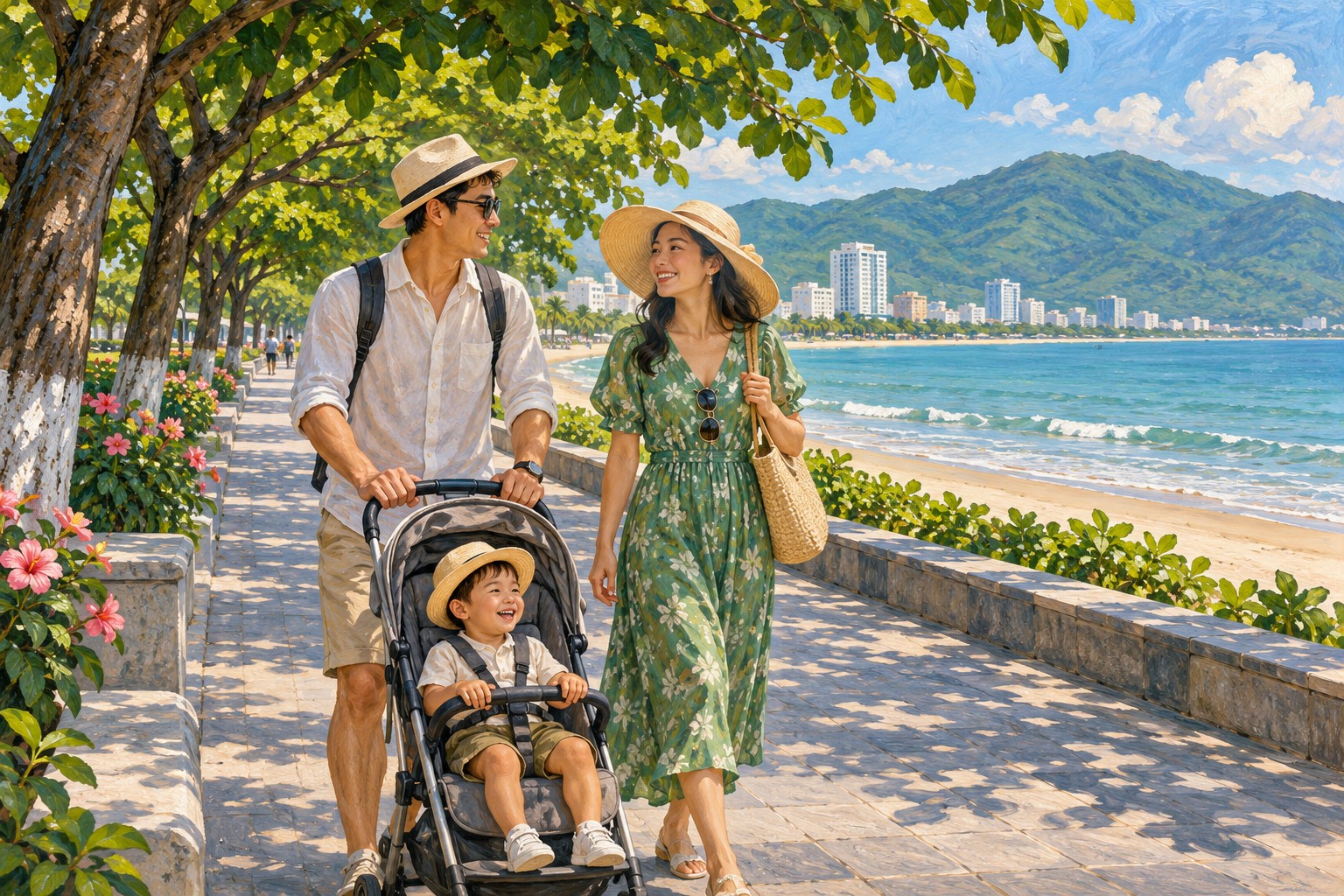
 A Da Nang holiday with children works best when the ordinary parts of the day are comfortable. A suitable room, a manageable route to meals, and a reliable rest period can matter more than the number of attractions you book. The aim is to give everyone something to enjoy without making every outing a test of stamina.
This guide helps you choose a family base, compare activities by their real demands, and plan transport and meals around your own children. It also explains how to keep alternatives available without filling the itinerary with backup reservations. Start modestly and adjust after seeing how the family handles the change of routine.
Choose the Hotel Around Daily Life
Begin with the room configuration. Confirm beds, occupancy, breakfast for each guest, and whether any cot or extra bed is actually included.
Then look at the route outside. How do you reach the beach? Is the nearest useful restaurant a comfortable walk? Can a vehicle stop near the entrance with your luggage and stroller?
For pool facilities, ask about access rules and supervision expectations. A shallow section or a photograph of children in the pool is not a substitute for understanding the current arrangement.
If your child naps, prioritize a room and location that make returning easy. A convenient hotel can be more valuable than a distant property with an extra attraction you will use only once.
Plan One Main Activity Per Day
A family sightseeing day should have a clear priority and a simple exit. Choose the activity everyone most wants to do, then make the café stop, shopping, or extra viewpoint optional.
Keep transit in the plan. Time sitting in a car, waiting in a queue, and walking from a drop-off all contribute to the effort, even if the attraction itself is described as easy.
Avoid scheduling an important performance after a demanding full-day outing unless your family genuinely enjoys that pace.
Beach Time with Children
Start with a short visit and see how it goes. Bring shade protection, drinking water, dry clothing, and a way to keep essential belongings together.
Check flags, posted rules, and lifeguard instructions before considering swimming. Decide which adult is responsible for supervision instead of assuming everyone is watching.
If swimming is restricted or your child does not want to enter the sea, enjoy a permitted shore or promenade activity. You do not have to make every beach visit a swimming session.
Choose Sightseeing Routes Carefully
For the Marble Mountains, investigate the exact route and remaining steps before taking a stroller. A lift serving one area does not establish that all caves and viewpoints are accessible.
For Linh Ung Pagoda or another religious site, explain simple behavior expectations before arriving: quiet voices where appropriate, no climbing on structures, and space for worshippers.
Keep the visit shorter than an adult-only itinerary if that makes it enjoyable. You can appreciate a site without exploring every section.
Indoor Options to Investigate
Mikazuki's official information describes a water park with indoor and outdoor areas. Before booking, check the current package, age or height requirements for individual activities, opening arrangements, and the facilities your family will actually use.
Da Nang Museum can be another candidate for a shorter cultural outing. Verify current exhibitions, hours, admission, and the practical route for your child's age and interests.
Choose indoor options before the weather changes, but do not assume they operate normally during severe conditions. Check the journey as well as the venue.
Meals and Snacks
Look at a menu before sitting down if your child needs a familiar option. Confirm spice, portion size, and ingredients rather than assuming a plain-looking dish is suitable.
Carry a manageable snack for an outing if permitted, and avoid making a young child wait for a late reservation simply because it fits the adult plan.
For allergies, explain the restriction clearly to the kitchen, including sauces and preparation. Choose another meal if accommodation cannot be confirmed.
Transport and Luggage
Book a vehicle for your real passenger and luggage count. Include the stroller, bags, and anything bulky when requesting a quote.
If a child restraint is needed, ask for the appropriate arrangement explicitly and obtain confirmation. Do not rely on a generic statement that the car is suitable for families.
For airport day, keep essentials in a separate bag so a delayed check-in or unavailable room does not leave everything inaccessible in the main luggage.
A Simple Family Day
Start with breakfast and a short morning outing. Return for lunch and rest, then choose a nearby activity if everyone has energy. Have dinner before fatigue turns the evening into a struggle.
This rhythm is intentionally modest. Add more only after seeing how your family handles the weather, transport, and change of routine.
Plan for Your Child's Stage, Not a Generic Family Label
A toddler, a school-age child, and a teenager may enjoy very different days. Begin with your child's normal needs and interests, then choose experiences that fit them. A venue being described as family-friendly is only a starting point for research.
For a younger child, look at meals, rest, changing, stroller use, and the ability to return easily. For an older child, consider whether there is something specific to engage with rather than a long sequence of adult sightseeing. A teenager may appreciate having a role in choosing one meal or outing.
Avoid assuming every day needs an activity designed exclusively for children. A short walk, an interesting meal, and time at a suitable hotel facility can work well when the pace is right. The practical details often determine enjoyment more than the activity category.
Choose Accommodation for the Whole Day
Think beyond the room at bedtime. Where will you have breakfast, how will you return for a rest, and what can you do nearby if plans change? A property that supports those everyday needs can reduce the work of the holiday.
Confirm the exact sleeping setup and any equipment you need. Ask whether a cot, extra bed, or other item is available and included, and obtain a clear answer for your dates. A general promise that families are welcome does not establish the arrangement in your room.
Look at the route from the entrance to the beach or nearby meals. Check crossings and vehicle access. A hotel can appear close to everything on a map while still making repeated short journeys awkward with a stroller or a child who is tired.
Create a Day with an Easy Exit
Choose one main outing and identify how it can be shortened. Ask what remains worthwhile if you complete only part of the route. A visit with several optional sections can be easier to adapt than a tightly timed sequence where leaving early disrupts the whole group.
Keep the return arrangement simple. For a driver booking, confirm where you will meet and what waiting is included. For an independent ride, make sure the pickup point is accessible and that you can request transport without searching for connectivity while managing a tired child.
Do not schedule the main meal at the end of the most demanding section if that conflicts with your child's normal routine. A pause before fatigue builds may improve the rest of the outing more than one extra stop would.
Compare Activities by Their Hidden Effort
Look at the journey, queue, distance from drop-off, walking surfaces, and time before the next break. These contribute to the day even if an attraction is promoted as easy or suitable for all ages.
For the Marble Mountains, ask about the specific sections you want and where a stroller or aid can be used. For a large attraction day, look at the whole internal journey and the activities actually available to the child's age or height. For a pagoda, plan a short respectful route and suitable clothing.
For a water park or hotel pool, verify the current facilities and requirements rather than relying on a photograph. Ask about the practical experience your family intends to use. A larger complex may contain areas with different access or admission conditions.
Give Children a Simple Role
Before an outing, describe what will happen in a few understandable steps: the car ride, the main place, lunch, and the return. Explain which part is definite and which part depends on conditions. This can make changes easier than presenting every idea as a promise.
Let a child make a manageable choice where appropriate, such as selecting a snack from suitable options or choosing between two short activities. Avoid offering a long list when only one or two are realistic.
For older children, a small observation task can create interest: notice a particular architectural detail, compare two foods, or choose a favorite photograph. Keep it playful and optional rather than turning every visit into a lesson or a performance.
Pack a Useful Day Bag, Not the Whole Suitcase
Carry the items your family reliably uses: drinking water, a suitable snack where permitted, a change of clothing, and personal essentials. Keep them organized enough that another adult can find them without unpacking the entire bag.
Consider the transition between activities. Beach items, religious-site clothing, and a meal afterward may require different things. If carrying everything becomes inconvenient, plan a return to the hotel instead of assuming one continuous outing is always more efficient.
Keep important documents and valuables accessible but secure. A family transfer is easier when one adult can manage the booking and another can handle the child and bags. Share key information so the plan does not depend on a single phone.
Meals That Work for the Whole Group
Read the menu before committing to a venue when a child needs a familiar option. Ask about preparation and spice before ordering. Do not assume that a dish can be changed after it is cooked or that a plain appearance means it contains only a few ingredients.
For allergies or restrictions, explain them specifically to the kitchen and confirm the response. Choose another meal if the answer is uncertain. A general family-friendly description does not establish dietary suitability.
Order a manageable amount and avoid turning every meal into a tasting challenge. Adults can try something new while keeping the child's meal straightforward. A comfortable shared table is more valuable than completing every food recommendation in one sitting.
A Sample Family Rhythm
| Part of the day | Starting point | Flexible addition |
|---|---|---|
| Morning | Breakfast and one main outing | A short stop only if everyone is comfortable |
| Midday | Lunch and a predictable rest | Keep this period protected |
| Afternoon | Nearby beach, walk, or hotel time | Change according to conditions and energy |
| Evening | A convenient meal | A brief walk rather than a compulsory late event |
This is a rhythm, not a fixed timetable. Your family's usual routine and travel dates determine the details. If the first day feels demanding, simplify the next rather than assuming everyone will immediately adapt.
Know What to Remove First
When the plan becomes crowded, remove an optional stop or a late finish before cutting essential rest and meals. A holiday feels better when the group has enough energy to enjoy the experiences that remain.
If adults want different things, consider a planned split for a short period when practical. Confirm the meeting point, transport, and responsibilities in advance. Do not improvise a separation in a busy place without ensuring everyone has what they need.
End each day by noting what worked. Perhaps a shorter outing and a relaxed meal produced a better mood than a large attraction day. Use that evidence to shape the rest of the stay. The best family itinerary is the one that fits the people on the trip.
Frequently Asked Questions
Is three days enough with children?
It can work for a light introduction. Add time if you want several major outings without sacrificing rest.
Should we stay near the beach?
Consider it if you will visit frequently, but inspect the actual access route and road crossing before booking.
What should we leave out first?
Remove the least important extra stop or late evening. Protect meals, rest, and a comfortable return journey.


