
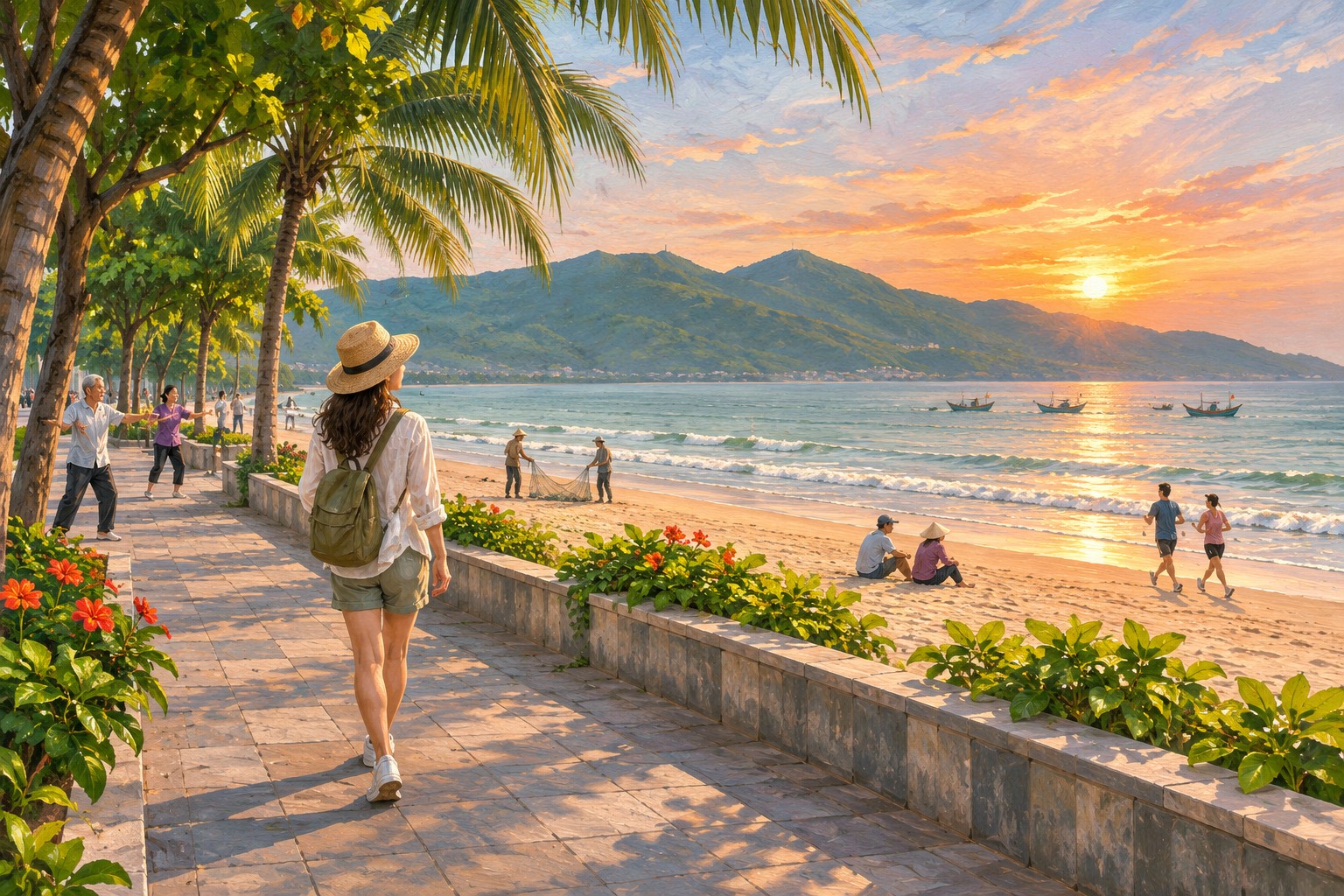
Free things to do in Da Nang are most useful when they form a pleasant day rather than a collection of distant map pins. A public beach walk, an evening by the river, or self-guided exploring can give you a sense of the destination without requiring a paid attraction package.
This guide separates the activity itself from optional spending such as transport, drinks, parking, and rentals. It also explains how to choose low-cost days that still fit your interests. The aim is to spend deliberately, not to make every moment of the holiday an exercise in avoiding payment.
1. Take a Beach Walk
Choose a public access point and enjoy a comfortable stretch of the coastline on foot. My Khe is a starting point to investigate, especially if you are already staying nearby.
You do not need to rent a chair or buy a drink to make the walk worthwhile. Bring water and choose a manageable route for the weather.
Swimming is a separate decision. Follow current flags and lifeguard guidance rather than assuming that access to the shore means the water is suitable.
2. Walk Along a Public Riverside Route
Plan a short route beside the Han River and leave time to pause. Check local barriers and current pedestrian arrangements before committing to a particular loop.
Keep the walk close to your accommodation or another planned activity if transport spending matters. A free attraction that requires several paid journeys may not be the cheapest day overall.
For an evening visit, save a return route and keep enough phone charge to request transport if needed.
3. See the Bridge Lights
Choose a permitted public viewpoint and enjoy the river after dark. If you hope to watch a scheduled performance, check the current official notice first.
You do not need to buy a restaurant package purely because a promotional photograph shows a view from its terrace. Compare the venue's actual service and view with the public options available.
Avoid standing where you obstruct movement or entering restricted areas for a closer angle.
4. Explore a Neighborhood on Foot
Choose a small area near your hotel and notice ordinary details: shopfronts, street trees, everyday food preparation, and changing activity through the day.
Keep photography considerate. Ask before taking a close portrait or photographing inside a business, and do not treat someone's home or workplace as an attraction you can enter without permission.
A neighborhood walk becomes more enjoyable when you leave the route open enough to follow an interesting public street and turn back when needed.
5. Browse a Market Without a Shopping Target
If the venue's access arrangements permit, a market can be an opportunity to observe trading and learn which products are sold locally.
You are not obliged to buy, but behave as a guest in a working space. Keep aisles clear, avoid unnecessary handling, and do not ask a vendor to spend a long time negotiating an item you never intended to purchase.
If you decide to eat or shop, confirm the price. Browsing and consuming are separate activities.
6. Look for Public Cultural Events
Check current city tourism notices for public exhibitions, performances, or seasonal events during your dates. Verify whether access is genuinely free and whether registration is required.
Do not assume an event repeats weekly because a post from an earlier year describes it. Save the current announcement and confirm its location before traveling.
Keep a nearby alternative in case the event changes. A free performance is a useful bonus rather than a reason to leave no other plan.
A Low-Spend Day Structure
Start with breakfast you have budgeted for, then take a nearby beach walk. Rest at your accommodation during the part of the day when you do not want to be outside.
Later, choose a public city walk and a modest dinner. If there is a confirmed suitable public event, add it only if the route and timing work.
This plan keeps paid spending focused on food and necessary transport rather than trying to make every hour an organized activity.
What Can Make a Free Day Expensive?
Repeated rides, impulse purchases, drinks at every stop, and rentals you did not intend to use can add up. Decide which optional purchases you actually value before leaving the hotel.
Carry the practical items you already own, such as a hat, water bottle, and rain layer. Avoid overpacking; a heavy bag can make a simple walk uncomfortable.
Count the Total Cost of a Free Outing
An activity without admission can still involve several rides, a meal at an expensive venue, or equipment you did not intend to rent. Compare the whole outing with a simpler alternative near your accommodation.
For example, a beach walk from a convenient hotel may require little additional spending. Traveling across the destination to another public beach solely because a list ranks it more highly may create transport costs without improving the experience you wanted.
This does not mean you should never travel for a free activity. Choose it because the place or experience interests you, then budget for the journey honestly. The word free describes one part of the plan, not necessarily the entire day.
Give a Walk a Small Purpose
Choose a theme that interests you: morning activity, shopfronts, public architecture, river reflections, or the changing coastline. A modest focus can make an ordinary route more engaging without turning it into a formal tour.
Keep the route within public areas and respect homes and workplaces. Ask before taking close identifiable portraits or photographing inside a business. Observing daily life is not permission to interrupt it or enter private spaces.
Take a few notes or photographs if you enjoy them, then leave room to simply look. A self-guided walk does not require continuous recording. You can learn from the activity around you while keeping the experience unhurried.
Explore a Market Without Feeling Obliged to Buy
Where current access permits, browsing can help you understand local products and trading. Keep aisles clear, avoid unnecessary handling, and recognize that vendors are working rather than providing a performance.
If something interests you, ask a focused question. Do not begin a long negotiation solely for entertainment when you do not intend to purchase. You can politely decline and continue without treating the interaction as a contest.
If you decide to eat or shop, establish the price and quantity. A free browsing visit becomes a purchase when you order or use a paid service, so keep that distinction clear. This makes both your spending and the vendor's expectations easier to understand.
Look for Public Events with Current Confirmation
Use official destination notices to identify events during your dates, then check the actual access conditions. Some may be free but require registration or operate only during a limited period. Others may have both free public areas and paid components.
Save the current announcement and venue rather than an old article with a similar event name. Confirm timing before traveling, especially when the event is the main reason for leaving your hotel.
Keep a nearby alternative. If the program changes or the area is too crowded for your group, you can still enjoy a short walk or return for a meal. A free event is a useful opportunity, not a reason to abandon practical judgment about the day.
Build a Day Around What You Already Have
Choose an outing that uses practical items you brought: walking shoes, a hat, water, and weather protection. Avoid buying equipment for an activity you only considered because it was described as free.
If your accommodation includes facilities you enjoy, make use of them deliberately. A rest period or a swim in an included pool can be part of a satisfying day, subject to the property's actual rules. There is no need to leave continuously to justify the trip.
Plan meals you will enjoy within your budget. Saving attraction spending does not require making food an afterthought. A simple local meal followed by a public walk can be a complete experience with its costs understood in advance.
Choose One Paid Priority Rather Than Many Small Obligations
A budget-friendly holiday can combine free public experiences with one paid activity that genuinely matters to you. That may be more satisfying than buying several packages mainly because they are common on itineraries.
Make the trade-off explicit. If a particular attraction is a priority, allocate money to it and keep other days simpler. If you prefer food and the coast, spend on convenient accommodation and meals instead of admission you are not excited about.
This approach gives the budget a purpose. You are choosing the experiences you value, rather than treating spending itself as either a requirement or a failure.
End with a Small Review
After a low-spend day, note what you actually enjoyed and what created unnecessary cost or effort. Perhaps the shorter walk was better than the distant viewpoint, or the meal near your hotel was more enjoyable than another transfer.
Use that experience to shape the remaining days. The best free activities are the ones that suit the holiday you want. They do not need to be the longest, most photographed, or most frequently repeated suggestions online.
Frequently Asked Questions
Can I enjoy Da Nang without paid attractions?
Yes, if beach walks, food, public spaces, and everyday exploring match your interests. Budget separately for accommodation, meals, and transport.
Are all parks, museums, and temples free?
Do not assume that. Check the current admission conditions for each individual site.
How do I find events during my stay?
Use current official destination notices and verify the date, access conditions, and venue before going.


