
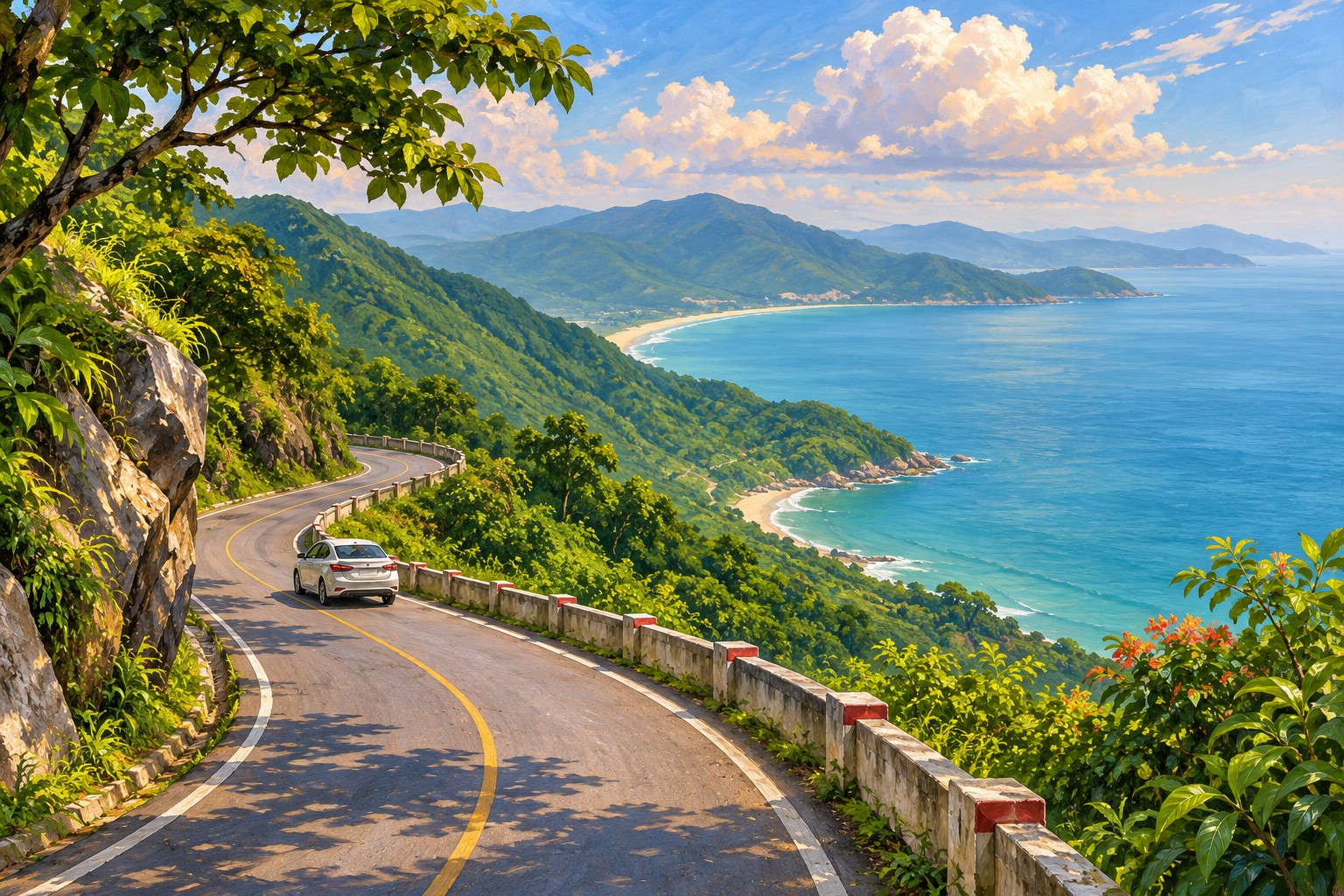
Hai Van Pass is most appealing when you enjoy the journey itself: a changing landscape, a few considered stops, and time to look rather than a race to another destination. The outing should fit your comfort with the route and the conditions on the day.
This guide helps you choose between a return excursion and an onward journey, compare a car or guided option, and avoid overloading the stop list. It also explains how to plan photographs, meals, and the return so the scenic road remains the experience instead of becoming a deadline-driven transfer.
What Is the Appeal?
Vietnam's national tourism website describes Hai Van as a coastal mountain pass on the journey between Da Nang and Hue, with the road rising through green slopes above the sea.
Treat the landscape as the main experience. A small number of comfortable stops is more useful than a list of every café, viewpoint, and side road you have seen online.
Visibility can change the experience substantially. If a clear coastal view is your main reason for going, keep the plan flexible enough to choose suitable conditions.
Decide Between a Return Outing and an Onward Journey
A return outing starts and ends at your Da Nang accommodation. It can suit travelers who want the scenic road without moving hotels.
An onward journey continues toward another destination, such as Hue. That requires a different plan for luggage, timing, and the route after the pass.
Make that distinction explicit when requesting a quote. A provider may use similar promotional wording for trips with very different distances, stops, and return arrangements.
Choosing a Car with a Driver
A car can be a comfortable choice when you want to concentrate on the view and avoid handling an unfamiliar road. Ask whether the itinerary follows the scenic pass rather than simply using the fastest road connection.
Confirm the planned stops, included waiting time, total duration allowance, and what happens if conditions make the route unsuitable. Agree on the return destination and any extra charge for extending the trip.
If historical explanation or local interpretation matters, ask whether a guide is included. A driver-only service should not be assumed to provide the same experience.
Considering a Guided Motorcycle Experience
Ask about the operator, rider arrangements, passenger equipment, insurance details, and the exact route. Confirm how luggage is handled and whether there is an alternative if the ride cannot proceed.
If considering self-riding, verify current licensing requirements and your coverage independently. Being offered a rental does not establish that it is suitable for your experience or documentation.
Do not choose a ride mainly because a promotional photograph looks adventurous. The comfortable option is the one that fits your abilities and the conditions.
A Manageable Day Structure
Leave after checking the route conditions and take the approach at an unhurried pace. Stop only where it is permitted and safe, then give yourself time for a meal or rest before returning.
If continuing toward Lang Co is part of the plan, confirm that it is included and understand how it changes the day. Do not add several distant stops simply because they appear on the same regional map.
Keep the evening light. A scenic road outing is easier to enjoy when you are not checking the clock against an important dinner reservation or onward flight.
Viewpoints and Roadside Stops
Use designated areas and follow the driver's or site's instructions. A dramatic bend may photograph well but be inappropriate for standing, parking, or crossing.
If you want to visit a monument, café, or managed viewpoint, check its current hours and admission separately. Do not assume every stop along a public road is free or always accessible.
For photographs, let the vehicle stop properly and step out only where it is appropriate. Avoid leaning into traffic or asking a driver to pause in an unsafe position.
What to Bring
Bring water, a light layer, suitable shoes, and rain protection that does not interfere with movement. Keep your phone charged and carry essential contact details offline.
For a longer vehicle journey, plan around your own comfort needs and tell the provider if winding roads are a concern. A shortened outing may be a better choice than committing to an ambitious circuit.
Decide Whether the Road or the Destination Comes First
For a return trip from Da Nang, the road can be the main activity. Choose a manageable number of permitted stops, leave time to appreciate them, and return without needing to complete an extensive sightseeing program elsewhere.
For an onward journey toward Hue, the road shares the day with arrival and any other planned visits. Be realistic about the time available. Adding scenic stops changes a transfer into a longer outing, even when the final destination remains the same.
Tell the provider which experience you want. A fastest-route transfer and a scenic-pass journey should not be assumed to be identical. Confirm the route and stops before comparing prices, especially if the pass itself is the reason for booking.
Compare Transport for Comfort and Clarity
A car with a driver can give you time to look at the landscape without managing an unfamiliar route. Ask about vehicle comfort, passenger and luggage capacity, waiting, and the planned return or final drop-off.
For a guided motorcycle experience, investigate the actual operator, rider arrangement, equipment, coverage, and handling of changed conditions. A promotional photograph does not answer those practical questions. If considering self-riding, check the current requirements and your own suitability independently.
Choose the option that allows you to enjoy the outing. There is no need to select a more demanding mode of travel merely because it appears frequently in travel imagery. The memorable part can be the scenery and the stops, whichever appropriate arrangement brings you there.
Use a Short Stop List
Identify what each stop contributes: a broad landscape view, a cultural or historical visit, a meal, or a practical break. If several stops serve the same purpose, decide whether all are necessary.
Ask where the vehicle can safely and legally stop and whether additional walking is involved. A photograph taken from an attractive bend does not establish that the same position is suitable for parking or standing. Follow current instructions rather than copying an online angle.
Leave one or two additions optional. If visibility or energy makes the main stops enjoyable, spend more time there. If conditions are less suitable, a shorter route may be the better day. An extensive list is not automatically better value.
Plan a Meal as a Break, Not Another Deadline
If the route includes a meal beyond the pass, confirm where it fits and what is included. Ask whether the stop is a fixed restaurant, a choice on the day, or simply time allocated for lunch.
Budget for the meal separately when necessary and clarify payment arrangements. A vehicle quote with a lunch stop does not necessarily include the food. Likewise, a set meal in a tour may not offer the same flexibility as choosing from a menu.
Give the pause enough time to be useful. The journey is easier to enjoy when people can sit, eat, and organize themselves without immediately rushing back to the vehicle. A simple meal can be a valuable part of the day even if it is not a famous restaurant stop.
Photograph the Landscape Without Letting It Control the Day
Choose a few compositions and take photographs from appropriate stopping places. Then leave time to look directly at the landscape. A scenic outing does not need to become a continuous search for the next angle.
Accept that haze, cloud, and light change. If the view is your main priority, keep the booking flexible where possible and make the decision using current conditions. Do not assume a longer drive guarantees a clearer scene.
Travel companions may have different interests in photography. Agree on a comfortable amount of stopping and waiting before departure. That lets the photographer enjoy the process without leaving others unexpectedly committed to a series of lengthy pauses.
Understand What a Changed-Conditions Policy Means
Ask the provider what happens if the intended route is unsuitable or a stop is unavailable. Look for a practical explanation of alternatives, shortening, rescheduling, and the relevant booking terms.
Do not interpret a willingness to operate as a guarantee that the trip will match the photographs or suit your own comfort. If the original reason for going is undermined, compare the available alternative with another day you would enjoy in Da Nang.
During the outing, follow current local instructions. Do not ask a driver or guide to bypass a restriction because another visitor reported using a route before. Your booking should allow the day to respond sensibly to the actual conditions.
A Return Outing and an Onward Journey Compared
| Planning detail | Return to Da Nang | Continue toward another destination |
|---|---|---|
| Main purpose | Enjoy the scenic route and selected stops | Combine a scenic journey with relocation |
| Luggage | Usually limited to a day bag | Confirm space for full travel bags |
| Timing | Set a comfortable return window | Account for arrival and check-in |
| Extra visits | Add only when they improve the outing | Reduce expectations if the road takes priority |
The table is a planning comparison rather than a fixed itinerary. Your provider's actual route and the time available determine the details. Use it to ask clearer questions and avoid comparing different products as though they were the same.
Leave the Evening Flexible
Even a journey with little strenuous walking can feel tiring after several hours of movement and stops. Keep the evening suitable for the day you have chosen. A meal near the hotel may be preferable to another important reservation.
If the outing is on a departure day, examine whether the timing is genuinely comfortable. A scenic stop is easy to shorten, but a missed onward connection creates a much larger problem. In many short trips, placing the pass on a separate day is the simpler choice.
Before booking, picture the whole sequence from pickup to return. If it still feels like a day you would enjoy rather than a set of obligations, the route is more likely to be a good fit.
Frequently Asked Questions
Can I enjoy Hai Van Pass without riding a motorcycle?
Yes. Compare a car or organized option that explicitly includes the scenic route and suitable stops.
Should I combine it with Hue?
Consider that if you are traveling onward or are comfortable with a longer day. Keep the Hue sightseeing plan realistic.
What if the weather is unsuitable?
Follow current local guidance and your provider's operating decision. Use a city-based alternative instead of forcing the original route.


