
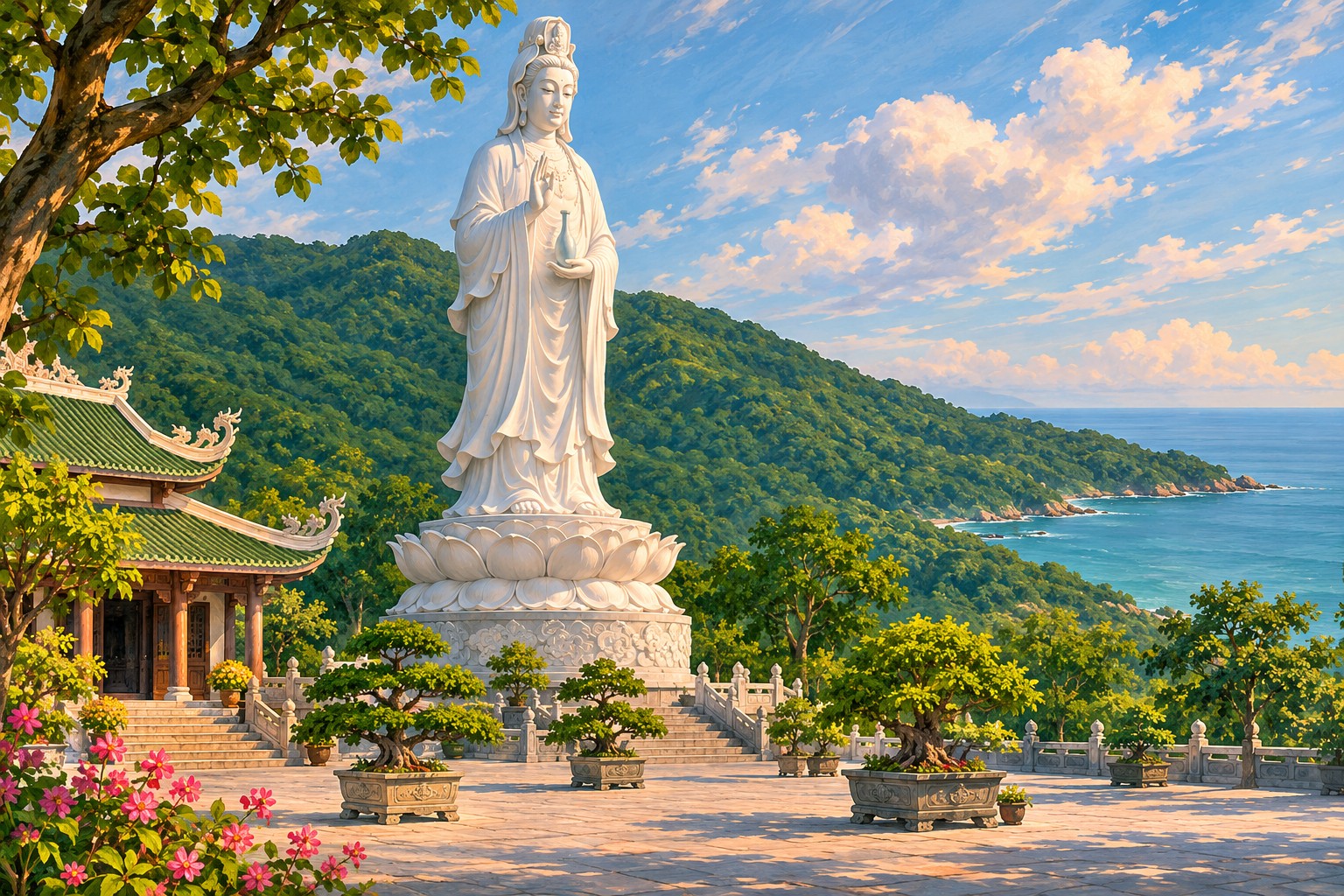
 Visiting Lady Buddha at Linh Ung Pagoda on Son Tra is an opportunity to slow down as well as see a recognizable Da Nang landmark. The statue is the reason many travelers first search for the site, but the visit can include much more attention to the grounds, architecture, and people using the pagoda for worship.
Prepare the correct destination, suitable clothing, and an uncomplicated return journey. This guide explains how to make that visit comfortable and respectful without assuming you must understand or take part in every religious practice. It also distinguishes a pagoda visit from a longer tour of the peninsula.
Make Sure You Choose the Right Linh Ung Pagoda
The name Linh Ung appears at more than one site in the wider destination. For the large white statue on Son Tra, save the exact Son Tra location and show it to your driver.
The city portal identifies the statue as Quan The Am Bodhisattva and gives its height as 67 meters. English-language travel writing often uses the familiar name Lady Buddha, but that shorthand should not be confused with a detailed explanation of Buddhist identity or practice.
If you want deeper religious or architectural interpretation, consider a knowledgeable guide rather than relying entirely on brief captions and social media descriptions.
How to Plan the Journey
For an uncomplicated visit, arrange a car journey to the pagoda with a clear return plan. If a driver waits, confirm how long is included and where you will meet afterward.
Check current opening and access arrangements shortly before traveling. Do not assume that visiting the pagoda also gives unrestricted access to every road elsewhere on Son Tra.
If you are joining a tour, read the stop description carefully. A drive past a landmark, a short photograph stop, and time to explore the grounds are different services.
What to Wear
Choose clothing that covers shoulders and knees, and carry a light layer if your main outfit is beachwear. Follow any additional instructions at individual buildings.
Wear shoes that you can comfortably walk in and remove if requested. Bring a bag that is easy to manage rather than leaving loose items around entrances while taking photographs.
If you plan to continue to the beach afterward, pack what you need instead of treating a religious visit as an extension of swimming time.
Visiting Respectfully
Keep your voice low around prayer areas and allow worshippers to move freely. Wait before entering a space if a ceremony or private observance is taking place.
Check before photographing inside buildings. Do not pose against statues, cross barriers, or place personal items on religious structures. A good photograph should not require interfering with the site.
If you wish to make an offering or donation, use the arrangements indicated by the pagoda. You do not need to imitate a ritual you do not understand; respectful observation is appropriate.
How Much Time Should You Allow?
For planning, give the visit a generous block within a half-day outing, including travel. The amount of time inside depends on your pace, the weather, and which areas are accessible.
Walk slowly enough to notice the courtyards and architecture rather than making the statue your only stop. Leave time for a rest before returning to your vehicle.
Travelers with limited mobility should ask about the route from the vehicle drop-off to the specific areas they wish to see. A broad statement that the site is accessible does not answer questions about steps, distance, and surfaces.
Weather and Comfort
Bring water and protect yourself from sun or rain according to the conditions. If the weather turns unsuitable, shorten the outing rather than forcing a longer tour of the peninsula.
Do not expect every visit to deliver the same coastal view as a promotional image. Haze, cloud, and visibility are part of outdoor travel. The pagoda can still be appreciated without a particular photograph.
An Easy Half-Day Combination
Leave your accommodation with suitable clothing, visit the pagoda, and return for lunch near the coast or your hotel. Keep the afternoon open for a rest, a café, or the beach if conditions suit.
This combination gives the religious visit enough time without making the day demanding. Add a further Son Tra stop only if current access and your group make it sensible.
Plan for a Place of Worship, Not Only a Photo Stop
Give the visit enough time that you do not feel obliged to move directly from the vehicle to the statue and back. Walk through the areas open to visitors, observe the setting, and make room for people who are there for religious reasons.
You do not need to perform a ritual to be a respectful visitor. If you are unsure about entering a space, removing footwear, or taking photographs, look for instructions and ask rather than copying a practice without understanding it.
A guide can be useful if learning about the religion or architecture is central to your interest. Confirm that interpretation is part of the service; transport to the entrance alone is a different arrangement. Avoid presenting a brief social-media caption as a complete explanation of what a statue or ritual means.
Prepare Clothing Before Leaving the Hotel
Consider the whole day when packing. If you plan a beach visit before or afterward, bring suitable clothing for the pagoda rather than assuming a light towel will serve every purpose. Choose a practical layer that you will actually carry and use.
Comfortable footwear matters because you may be walking around the grounds and standing for a while. If footwear must be removed in a particular area, organize belongings without blocking the entrance. Keep loose items together so moving between spaces remains easy.
For children, explain the expectations in advance in a simple way. Quiet voices in prayer areas, staying with the group, and avoiding climbing on structures are easier to manage when discussed before arriving. Keep the route modest enough that the visit does not become a test of patience.
Ask About the Route from the Vehicle
If mobility or stamina is a concern, ask about the actual drop-off, remaining distance, steps, surfaces, and resting opportunities. A general description that the pagoda is suitable for older visitors does not answer every person's needs.
For a waiting driver, choose a clear return meeting point before leaving the car. Save the contact method and confirm the waiting allowance. That lets you enjoy the visit without uncertainty about where to go afterward.
If arranging a new return vehicle, keep your phone charged and identify an accessible pickup location. Do not assume the point where one car drops you can be used by every service at every time. Follow current instructions on the ground.
Take Photographs Considerately
Begin with the areas where photography is permitted and you can stop without obstructing movement. Keep the setup compact and avoid turning an entrance or prayer space into a lengthy photo session.
Ask before photographing identifiable worshippers at close range. A public visitor area does not make every personal religious moment appropriate to record. If a ceremony is taking place, allow it the space it needs rather than moving closer to improve the image.
Changing visibility may alter the coastal view. Appreciate the visit for more than a specific backdrop, and avoid extending the route indefinitely because the sky does not match a photograph you saved. The grounds and architectural details may offer a more rewarding focus that day.
Keep Offerings and Purchases Separate from Entry Decisions
If you wish to make a donation or offering, follow the arrangements indicated by the pagoda. Ask for clarification where necessary. Respectful observation does not require purchasing something or participating in an unfamiliar practice.
For any optional service or purchase, establish the cost before agreeing. Do not interpret an individual sales approach as a statement of the site's admission arrangements. Use current official or on-site information for questions about access.
The same care applies to a booked excursion. Ask what the quoted amount covers, including transport, guide time, waiting, and any other stops. A service price should be understood on its own terms rather than assumed to be an admission charge.
A Calm Sequence for the Visit
Arrive with clothing and essentials ready, establish the return arrangement, and begin with the public visitor route. Pause before entering religious interiors and follow the instructions at each one. Take photographs where appropriate without making them the only purpose of the outing.
When the group has seen enough, return for a meal or rest rather than adding a long drive automatically. If you want more of Son Tra, make that a deliberate choice with current access checked. A focused pagoda visit can be a complete and worthwhile half-day experience in its own right.
Frequently Asked Questions
Is Lady Buddha the same site as the Marble Mountains?
No. The statue discussed here is at Linh Ung Pagoda on Son Tra. Check the exact destination because the Linh Ung name is used at different locations.
Can I visit in beach clothing?
Bring suitable covering clothing and follow the site's dress instructions. Plan the transition before leaving your hotel.
Do I need to take part in religious rituals?
No. Visitors can appreciate the site respectfully without participating in practices they do not understand.


