
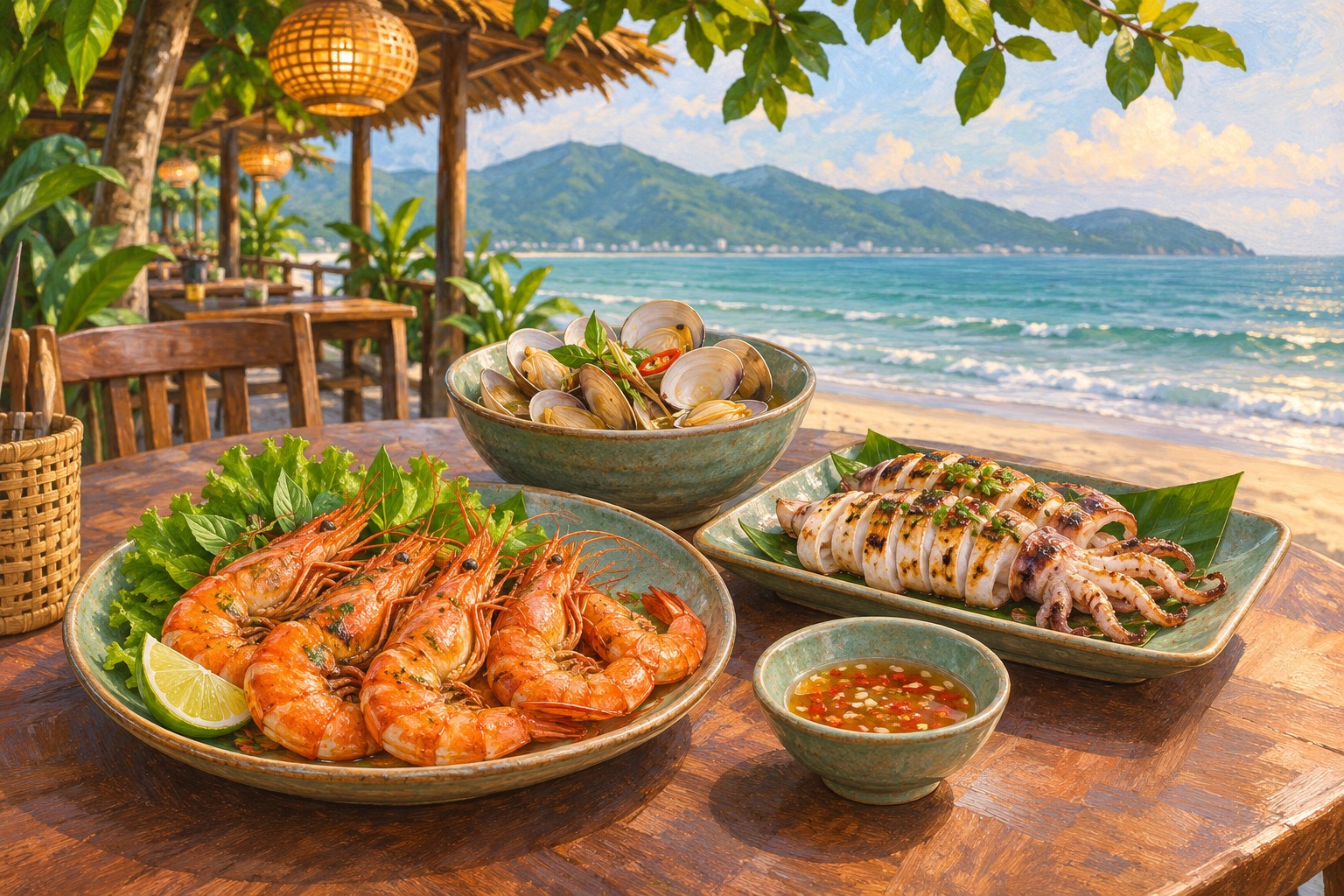
 Ordering seafood in Da Nang is much more comfortable when the price and preparation are clear before the kitchen starts. You may be choosing a prepared dish from a menu, selecting an item sold by weight, or sharing a set with several people. Each arrangement needs a slightly different question.
This guide takes you through the whole meal: selecting an ordering style, understanding units, agreeing on preparation, choosing enough food, and checking the final bill. It includes useful phrases and hypothetical calculations so you can recognize the structure of an order without mistaking an example for a current restaurant price.
Choose the Ordering Style That Suits You
Some meals are easy to understand from a portion-based menu. Others involve selecting seafood sold by weight and agreeing on a cooking method.
If you prefer a fixed total, investigate a set menu or clearly priced dishes. If you want to select from a display, take your time and ask for the calculation before confirming.
The destination tourism portal highlights seafood including shrimp, crab, squid, clams, and snails. Availability and price still need checking with the restaurant you actually choose.
Ask About the Unit
A number is only meaningful when you know what it buys. Is the price per kilogram, per 100 grams, per piece, or per prepared plate?
Ask the server to write down the unit if there is any uncertainty. Do not rely on a gesture toward a menu or a number entered into a calculator without context.
If an item is priced by weight, confirm the selected weight and the calculation. A small-looking live item can be sold under a different unit from the cooked dish pictured elsewhere on the menu.
Confirm Preparation Charges
Ask whether steaming, grilling, sauce, or another preparation is included. If it is extra, establish how that charge is calculated.
Also confirm any accompanying noodles, vegetables, bread, or rice. Something brought to the table is not necessarily complimentary. You can politely decline an optional item before using it if it is not part of your order.
For an expensive selection, request a clear written total for that item and its preparation before the kitchen starts.
A Simple Calculation Example
Suppose a hypothetical item is quoted at 400,000 VND per kilogram, and your chosen quantity is 0.6 kilogram. The seafood component would be 240,000 VND before any agreed preparation charge.
If the agreed cooking fee were 40,000 VND, that item would total 280,000 VND. These numbers illustrate the arithmetic only; they are not current Da Nang seafood prices.
This is why confirming both quantity and preparation matters more than comparing a single large price on a sign.
Order for Your Appetite
Start with fewer dishes than the table can physically hold. You can ask whether further orders are possible after the first dishes arrive.
For a group, choose a mix that everyone understands and will eat. Consider the difference between shell-on weight and the amount of food you expect to consume.
Ask how many people a portion is intended to serve, then use that as guidance rather than a guarantee. Appetites and side dishes vary.
Choosing a Restaurant
Look for a clear menu, understandable pricing, and staff willing to answer straightforward questions. Review current business details and recent feedback about the ordering process, not only food photographs.
If you want named options, the MICHELIN Guide publishes a Da Nang seafood selection. Treat it as a starting point for comparing menus and booking arrangements rather than a promise about your own meal or budget.
For a special occasion, contact the restaurant directly about seating, dietary needs, and the price structure you prefer.
Dietary Restrictions
Explain restrictions before selecting food. Sauces, shared cooking equipment, and mixed preparations may matter even when you order a single visible ingredient.
Use a translated message when helpful. If the kitchen cannot confidently accommodate a serious restriction, choose another meal rather than trying to solve the uncertainty after cooking.
Check the Bill Calmly
Compare the bill with the items, weights, and preparation you agreed to. Ask about any unfamiliar line before paying.
Include drinks and extras in your mental budget. If there is a discrepancy, explain the specific difference rather than making a general accusation. A written order or menu photograph can make the conversation clearer.
Follow One Item from Selection to Bill
For an item sold by weight, establish the species or item being offered, the price unit, the selected quantity, and the cooking method. Then ask for the total including preparation. Keeping that sequence clear is easier than trying to understand several items at once.
If the display contains different sizes or grades, confirm which price applies to the one you select. A sign next to a tank may not describe every item in it. Ask the server to identify your choice and write down the calculation when the amount is significant.
Once the quantity and preparation are agreed, avoid adding casual instructions that could be interpreted as extra orders. If you change something, confirm the revised total. This is especially helpful when several people in a group are speaking to different staff members.
Useful Questions to Keep on Your Phone
| English question | Vietnamese phrase |
|---|---|
| Is this price per kilogram or per plate? | Giá này tính theo ký hay theo đĩa? |
| How much does this weigh? | Phần này nặng bao nhiêu? |
| Is the cooking fee included? | Giá này đã bao gồm phí chế biến chưa? |
| What is the total for this item? | Tổng tiền món này là bao nhiêu? |
| Could you write it down? | Bạn viết giúp tôi được không? |
Use the phrases to support a clear conversation, not to rush through an order you still do not understand. Point to the relevant item and ask one question at a time. A written number is useful only when the unit and quantity are also established.
For a dietary restriction, prepare a separate specific message. A general ordering phrase cannot explain an allergy or the importance of avoiding cross-contact.
Choose Preparations That Create Variety
Ask which cooking methods are available for the selected seafood and what each costs. Steamed, grilled, and sauced preparations can create different experiences, but the kitchen's actual options and recipe should guide the choice.
For a group, consider contrast rather than ordering several dishes with the same rich sauce. A simpler preparation, another grilled item, and a side you enjoy may be easier to share than several heavy platters. This is a menu-planning suggestion, not a fixed rule about how seafood should be eaten.
Clarify how spicy or strongly seasoned a preparation is before cooking. Some sauces may be prepared in advance, and the kitchen may not be able to remove an ingredient afterward. If a particular seasoning is essential or unsuitable, ask early and accept a different dish when necessary.
Understand Quantity Before Comparing Prices
The purchased weight of a shell-on item is not the same as the amount of edible food you expect on a plate. Ask for guidance on a suitable quantity for your group, while remembering that appetites and sides change the answer.
Avoid judging value only by the size of a cooked platter in a photograph. A picture may show a different weight, several orders combined, or additional garnishes. Use the menu and the agreed selection to understand your own purchase.
If the pricing system feels uncomfortable, choose a clearly priced prepared portion or set. There is no requirement to buy from a live display to have a good seafood meal. Predictability may be more valuable to you than selecting every item individually.
A Shared-Meal Ordering Method
Nominate one person to coordinate the order after discussing preferences with the group. Establish a spending range, any restrictions, and the dishes people are willing to share. This reduces overlapping orders and uncertainty about whether something has already been requested.
Begin with a modest amount and ask whether further orders can be added later. Include vegetables, rice, noodles, or other sides you actually want, with their prices clarified. Do not let a series of small additions disappear from the group's understanding of the total.
If people are paying separately, agree how shared dishes and drinks will be divided. Solving that at the start is easier than calculating it while a restaurant is busy and the group is ready to leave. Clear shared spending allows the rest of the meal to feel more relaxed.
Another Hypothetical Calculation
Suppose a menu offers an imagined item at 300,000 VND per kilogram. A selected quantity of 0.8 kilogram would cost 240,000 VND before any separate cooking fee. If another hypothetical preparation charge is 30,000 VND, the agreed item total would be 270,000 VND.
Now imagine a different menu offers a prepared portion for 220,000 VND. You cannot conclude that the portion is cheaper for the same food until you understand its quantity and what it includes. These invented numbers demonstrate comparison, not current prices in Da Nang.
The same reasoning applies to a fixed set. Ask how many people it is intended for and whether the advertised items and drinks are all included. Compare complete meals rather than unrelated headline amounts.
Choosing Between a Casual Meal and an Occasion Restaurant
For a casual outing, clear pricing and a menu that suits the group may matter most. For a special occasion, you may also care about seating, noise, service style, and reservations. Those are legitimate parts of value, but they should be chosen deliberately.
Ask a venue about the exact table or dining area if the view is important. A coastal address does not guarantee a particular seat or atmosphere. If you want a quieter dinner, confirm whether the chosen time or space is appropriate rather than relying on a promotional photograph.
Review independent guide information as a starting point, then verify the business details directly. A recommendation can help create a shortlist; it does not establish the final price of your chosen meal or guarantee that every diner will prefer the same setting.
Resolve a Bill Question Specifically
If the amount differs from your expectation, identify the line that needs explanation. Ask about the quantity, unit, preparation, or extra item rather than beginning with a general claim that the whole bill is wrong.
Use the written order, menu photograph, or confirmation to clarify the difference calmly. A misunderstanding about kilograms and portions is easier to discuss when both sides are looking at the same item and calculation.
Once everything is clear, settle the agreed amount and keep the receipt if useful. For your own future planning, note the complete meal cost rather than only the seafood price. That produces a more accurate budget for the next dinner.
Frequently Asked Questions
Is seafood always priced by weight?
No. Ask about each item because restaurants and menu sections can use different units.
Can I ask for a total before ordering?
Yes. A clear calculation is especially useful for weight-based selections and separate preparation fees.
How do I keep the meal within budget?
Choose understandable portions, set a spending limit, confirm the complete price, and order more only if needed.


