
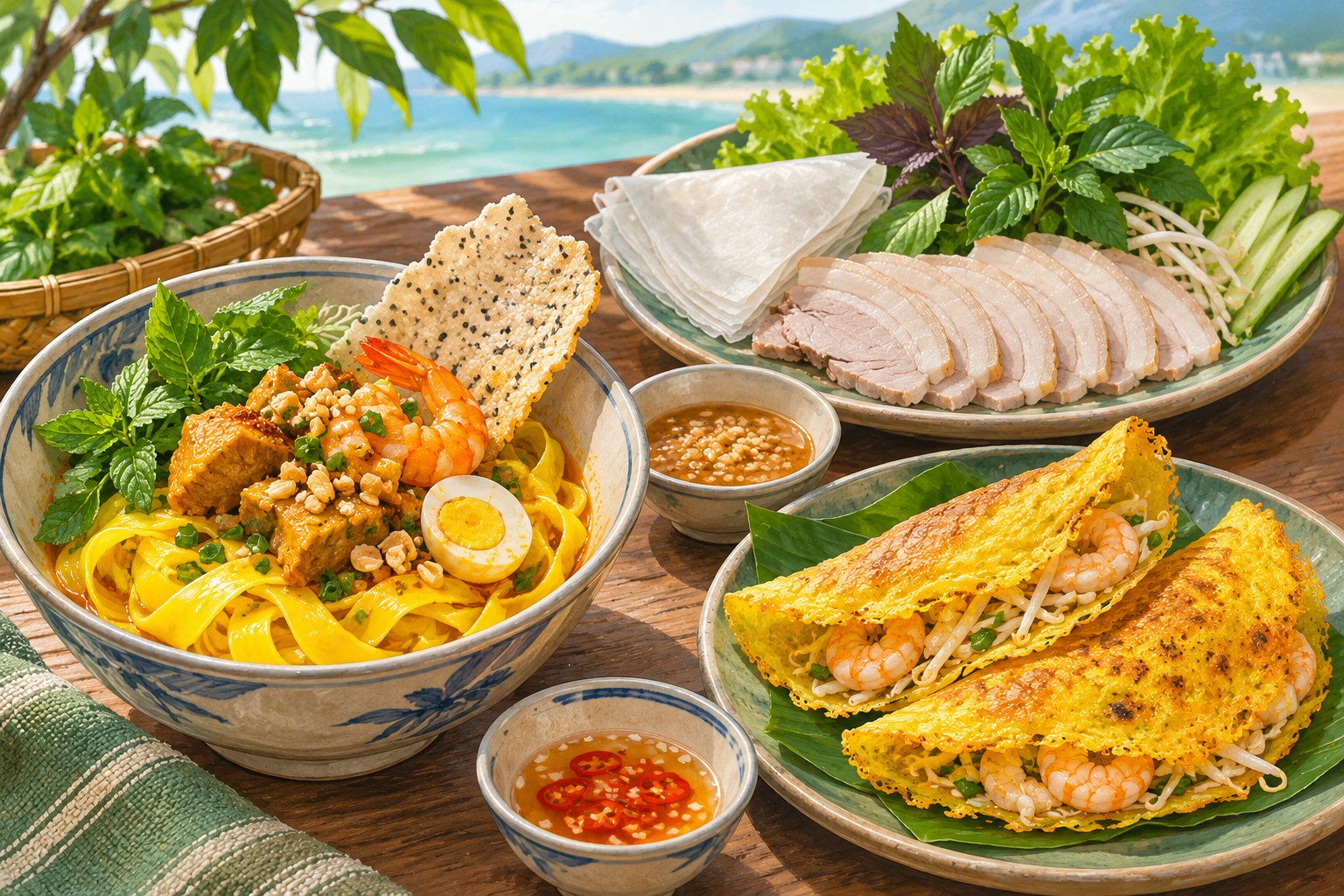
Eating in Da Nang is more rewarding when you understand a few dishes well instead of treating a food list as another set of attractions to complete. A bowl, platter, or shared table makes more sense when you know what the components are and can ask the kitchen a clear question.
This guide introduces useful dishes for a first visit and shows how to spread them across a short stay. It also covers ordering for a group, planning around appetite, and checking ingredients without assuming every restaurant prepares a dish in the same way. Choose the meals that interest you and give yourself time to enjoy them.
Mi Quang: Start with a Regional Noodle Dish
Mi Quang is associated with Da Nang and the surrounding central Vietnamese food tradition. Expect a rice-noodle dish whose toppings and preparation vary by restaurant.
Ask which versions are available and choose the protein you prefer. Look at what arrives alongside the bowl: herbs, crackers, citrus, and condiments are part of understanding how that kitchen serves it.
Try a bite before adding everything on the table. You can adjust the flavor gradually, and you do not have to use every accompaniment.
Bun Cha Ca: Consider a Fish Cake Noodle Meal
Fish cake noodle soup is another useful dish to investigate. Before ordering, establish whether you are choosing a standard bowl or a version with additional toppings.
If you are unfamiliar with the menu, point to a clearly described option rather than asking for the largest bowl without understanding what it contains.
For breakfast, check service hours in advance. A place that is popular for a morning dish may not be a reliable dinner plan.
Banh Trang Cuon Thit Heo: Assemble Your Own Rolls
This dish brings sliced pork, rice paper, vegetables, and dipping sauce together at the table. It can be an enjoyable shared meal because you assemble each bite yourself.
Ask how the restaurant recommends using the components. Try a little of the sauce first, particularly if fermented flavors are new to you.
Order for the number of people and appetite you actually have. A large platter may look appealing but leave less room for other dishes you wanted to try later.
Banh Xeo and Nem Lui: A Shared Table
Banh xeo and nem lui can offer another meal built around wrapping, herbs, and dipping. Preparations vary, so ask what is included in the set and whether accompaniments are charged separately.
If you are sharing several dishes, explain the group size and ask for a manageable amount. You can order more if needed.
These are good dishes for slowing down. Make space on the table, observe how the components work together, and avoid rushing to the next sightseeing stop.
Seafood: Clarify the Order First
Seafood can be a memorable part of a coastal holiday, but the ordering method deserves attention. Ask whether each item is sold by weight or portion, and confirm preparation charges before the kitchen begins.
Choose a small number of dishes with different preparations rather than several large platters at once. Include the sides and drinks in your budget.
If you prefer a predictable total, consider a clearly priced set or portion-based menu rather than selecting items without a written calculation.
Desserts and Coffee
Leave space for a small sweet dish or a café stop. Ask what a dessert contains rather than assuming a familiar appearance means familiar ingredients.
For coffee, begin with a drink you can identify: black coffee, coffee with condensed milk, or an espresso-based option if offered. Tell the server your preferences for sweetness, milk, and temperature.
A Food Plan for Three Days
| Day | One meal to investigate | A second experience |
|---|---|---|
| 1 | Mi Quang | A Vietnamese coffee stop |
| 2 | Pork rice-paper rolls or banh xeo | A modest market snack |
| 3 | Fish cake noodles or seafood | A dessert you have not tried |
This is a suggested tasting structure, not a requirement to eat particular dishes at particular times. Adapt it to available kitchens, your appetite, and dietary needs.
Dietary Restrictions and Allergies
Use a clear translated message describing what you cannot eat. Explain the ingredient and the seriousness of the restriction, including sauces and cooking liquids where relevant.
Do not assume a dish without visible meat is vegetarian, or that removing a topping removes an allergen from the preparation. Ask the kitchen and choose another meal if the answer is uncertain.
Build a Food Itinerary Around Meals You Actually Want
Choose one dish as the focus of a meal and leave room for the rest of the day. If you plan several large tasting stops in quick succession, the later meals may become obligations rather than enjoyable experiences. Appetite is a real part of itinerary planning.
Place your food stops near existing activities where possible. A lunch after a morning visit or a dinner before a river walk can feel natural. Traveling across the city repeatedly for dishes with many available versions can use time you would rather spend eating and exploring.
Keep a backup in the same area if a particular kitchen or dish is important. Check the service period before making a special journey. A map listing that says a restaurant is open does not necessarily establish that every dish is available throughout the day.
Learn How the Table Is Meant to Work
Some meals arrive as an assembled bowl, while others involve wrapping or combining several components. If you are unsure, ask for a brief demonstration rather than treating unfamiliar items as decoration or adding everything at once.
Taste the main preparation before adjusting it. Add condiments gradually and discover what each contributes. You do not need to use every chili, herb, or sauce to eat a dish correctly; preferences and kitchen preparations vary.
For shared meals, clear a little space and organize plates so everyone can reach the components comfortably. Ask whether accompaniments are included and whether another portion can be ordered later. A manageable first order is easier to enjoy than a crowded table where nobody knows how much has been purchased.
Use Dish Names as a Starting Vocabulary
Names help you navigate a menu, but they do not replace ingredient checks. A familiar-looking word can appear in several versions, and an English translation may simplify important details. Ask which protein and preparation the chosen item includes.
If you prefer to point at a menu, choose an item with a clear price and description. Confirm whether the picture represents one portion or a larger set. A photo can show garnishes or multiple dishes that are not all part of the single item listed.
Keep a short note of dishes you enjoyed and the version you ordered. That is more useful for a second visit than remembering only that the restaurant served noodles. It also helps when you want a different preparation rather than repeating the same meal unintentionally.
A Suggested Tasting Sequence for a Short Stay
Begin with a straightforward dish whose ingredients you understand, such as an available Mi Quang version that suits you. Use that first meal to get comfortable with ordering, accompaniments, and portion sizes.
At another meal, choose a table-assembled dish such as pork rice-paper rolls or an appropriate banh xeo order. This changes the rhythm and introduces a different way of eating. Ask for help with the components if necessary and order enough for the people actually sharing.
Reserve a separate meal for seafood if you want it. Clarifying weight, preparation, and the final total is easier when you are not trying to rush onward. Finish another outing with coffee or a small dessert when you genuinely want one rather than adding both to every meal.
This sequence is an editorial suggestion, not a claim that particular dishes must be eaten at specific times. Adapt it to kitchen hours, dietary needs, and your appetite.
Ordering for People with Different Preferences
Ask the group what they want to share before ordering. Some people may be happy with a shared table, while others prefer an individual bowl with clearly understood ingredients. Combining those approaches is often simpler than expecting everyone to eat the same unfamiliar platter.
Establish spice and sauce preferences early. Asking whether a dish can be prepared differently is more useful before cooking than after it arrives. Understand that some elements may be prepared in advance and cannot simply be removed.
For children or a companion who wants a familiar option, check the menu rather than assuming one is available. A restaurant chosen for a particular specialty may not offer every alternative. It is reasonable to choose a broader menu when that makes the meal comfortable for the whole group.
Dietary Restrictions Need Specific Questions
Explain the ingredient you must avoid and whether cross-contact is relevant. A dish without visible meat may still use stock, sauce, or another animal-derived ingredient. Removing a garnish after preparation is not the same as making the meal without it.
Use a translated message if that helps the conversation. Keep it clear enough for the kitchen to understand, and ask for confirmation rather than relying on a polite nod to a long explanation. If the answer is uncertain, choose a different preparation or venue.
Do not rely on the word vegetarian, healthy, or plain without understanding how the kitchen uses it. For a serious restriction, the details of preparation matter more than a broad marketing label.
How to Assess a Food Tour
Look for a route and serving plan that suit your appetite and mobility. Ask how many stops are included, whether walking or vehicle travel is involved, and how dietary needs are handled. The number of dishes is less important than the time and explanation provided.
Check what the quoted price covers. Drinks, additional orders, and transport to the meeting point may be separate. Ask whether the itinerary changes with availability and how the provider handles a closed or unsuitable stop.
A good fit for a first-time visitor may involve help ordering and explaining a few dishes. A traveler already comfortable with local food may prefer a more specialized experience. Choose based on what you want to learn rather than the longest promotional menu.
Keep the Spending and the Experience Clear
Before ordering, understand the unit and portion. A price per plate, per person, per set, and per kilogram can produce very different totals. If a menu is unclear, ask for a written amount for the actual order.
Allow for drinks and small extras in the budget. A meal may seem inexpensive until several separately charged items are added, particularly when a group is sharing without tracking the order. Clear ordering makes the meal more relaxed, not less spontaneous.
Afterward, record the dish and what you liked about it if you want to explore further. Was it the texture, herbs, sauce, or preparation? That gives your next meal a useful direction and turns a short trip into a more thoughtful introduction to the food.
Frequently Asked Questions
What should I try first?
Mi Quang is a useful starting point if its ingredients suit you. Choose an available version you understand rather than ordering only from a photograph.
Should I book a food tour?
It can be useful if you want interpretation, help ordering, and several small tastes. Confirm dietary arrangements and the actual route before booking.
How can I avoid ordering too much?
Start with a modest amount, ask about portion sizes, and add dishes only if you still want them.


