
 Banh Trang Cuon Thit Heo: A Da Nang Food Guide for First-Time Visitors
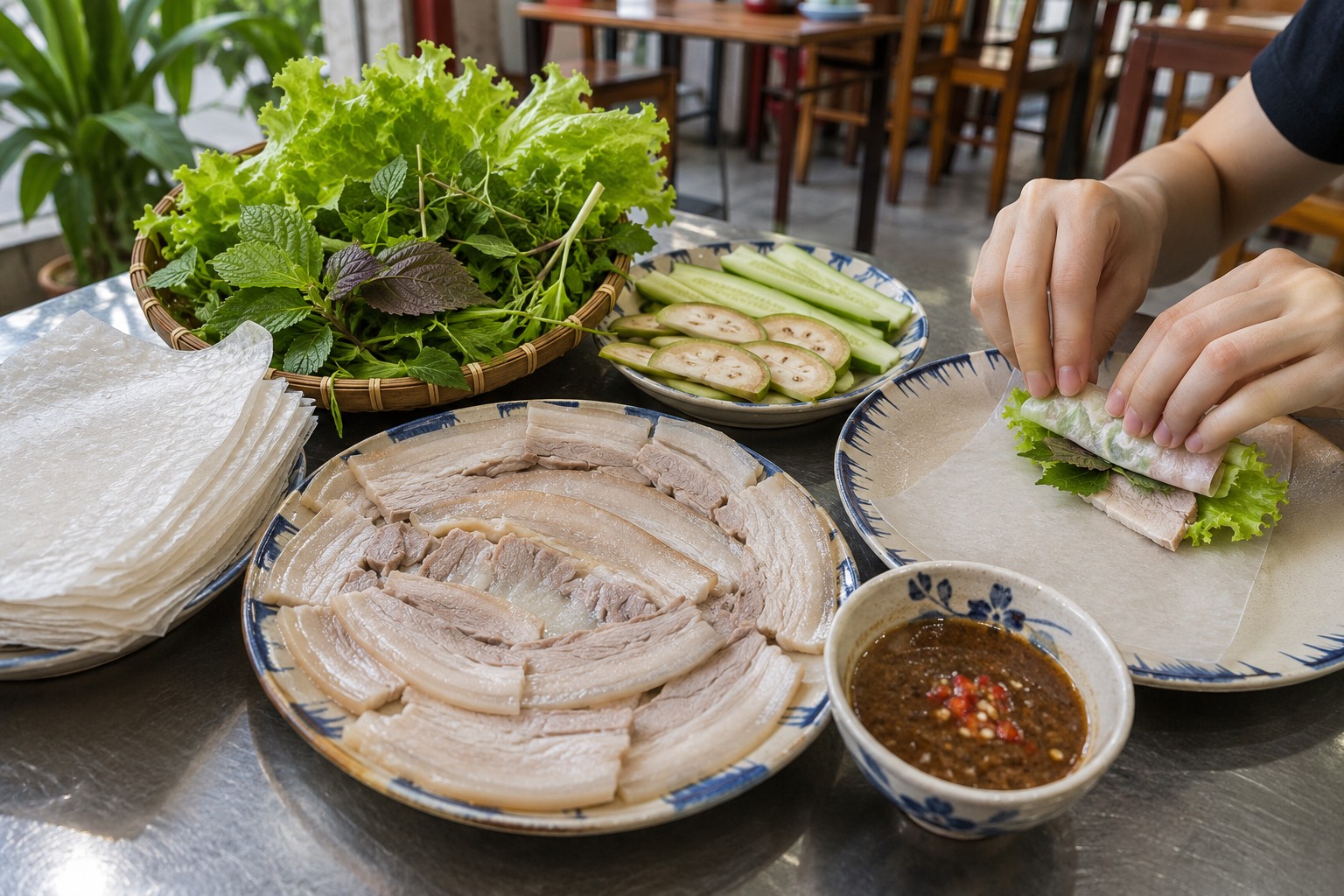
Banh trang cuon thit heo is a meal assembled a little at a time: rice paper, thinly sliced pork, fresh vegetables, herbs and a dipping sauce with a strong regional character. Instead of receiving one finished roll, you are usually given the components and invited to build each bite yourself. The pleasure comes from the contrast between soft meat, crisp greens, a flexible wrapper and the concentrated flavor of mam nem.
For a first-time visitor to Da Nang, the dish is also a useful introduction to local eating. It encourages sharing, rewards a slow pace and shows why fresh herbs are a central part of a meal rather than decorative garnish. This guide explains the components, how to order and how to make a comfortable first plate without treating one restaurant's version as the only correct one.
What the name tells you
“Banh trang” refers to rice paper, “cuon” to rolling and “thit heo” to pork. The name describes the structure of the meal rather than one rigid recipe. The dish is associated with the Da Nang and Quang Nam food region, and restaurants differ in their pork cuts, greens, wrappers and sauce preparation.
Do not confuse it with every other Vietnamese roll. Fresh spring rolls may arrive already assembled with different fillings, while fried rolls are another preparation entirely. Here, the central experience is building a fresh roll at the table from pork and accompaniments. If a menu translation seems broad, look for the Vietnamese name or ask to see the portion before deciding how much to order.
The pork is more important than quantity alone
The pork is commonly boiled, cooled and sliced thinly, although restaurants may offer variations. Some cuts combine lean meat, fat and skin, creating several textures in the same slice. A large mound is not automatically better than a modest serving cut well enough to fold neatly into a small roll.
If you prefer leaner meat, ask what cut is available rather than trying to remove every fatty section after the meal arrives. If you enjoy richer textures, compare how the pork balances with the herbs and sauce. Avoid filling the first wrapper with too much meat. A small amount allows you to understand the dish before deciding whether you want a richer or greener second roll.
The herb plate is part of the main dish
Lettuce, cucumber and a changing selection of herbs and other vegetables provide freshness and texture. Depending on the restaurant, you may find ingredients such as green banana or star fruit alongside the greens. These add different kinds of tartness, crispness or gentle astringency. The exact basket should not be treated as a universal checklist.
Taste unfamiliar leaves in small amounts so you can recognize their flavor. Build a first roll with lettuce, cucumber and one herb, then add more variety. You do not need to include everything in each bite. Keeping portions manageable also makes rolling easier and lets the pork and sauce remain distinct instead of compressing the entire meal into one oversized parcel.
Rice paper and soft rice sheets can appear together
Some servings combine dry rice paper with a soft rice sheet, often described as banh uot. The dry wrapper provides structure, while the soft layer changes the texture and moisture. At other restaurants, the setup may look different. Watch how staff demonstrate it or politely ask for help rather than assuming every wrapper needs the same treatment.
Avoid soaking rice paper automatically. Different products and serving styles require different handling, and over-wetting can make the wrapper tear or stick. If water is provided specifically for the wrappers, use it as demonstrated. Keep the stack dry and separate from shared sauce. One careful first attempt usually teaches you more than trying to assemble several rolls quickly.
Mam nem gives the meal its distinctive character
Mam nem is a fermented fish-based sauce with a pronounced aroma and concentrated savory flavor. It is different from the clearer fish sauce many visitors already know. Preparations can include ingredients such as pineapple, garlic, chili and sugar, with proportions varying by kitchen. The sauce is a major part of the experience, not an incidental accompaniment.
If you are unfamiliar with fermented flavors, start with a light dip rather than covering the entire roll. Taste, then decide whether to use more. Ask for chili separately when possible if you prefer to control heat. Do not add a large quantity of extra seasoning before trying the sauce as served; the balance of saltiness, sweetness and acidity has already been shaped by the kitchen.
A simple first-roll method
Place one wrapper on a clean personal plate and add any soft rice layer provided. Lay a small piece of lettuce in the center, followed by cucumber, one or two herbs and a thin slice of pork. Keep the filling away from the outer edges. Fold or roll gently, using only enough pressure to keep the contents together.
Dip one end into your personal sauce bowl and eat while the vegetables remain crisp. Your first roll does not need to look like a restaurant photograph. If it falls apart, use less filling next time. The aim is a balanced mouthful that can be held comfortably, not the largest roll the rice paper can physically contain. The technique becomes intuitive after a few attempts.
Order with sharing in mind
Ask whether the menu price is per person or per platter and how many people a portion is intended to serve. Some restaurants organize the meal as individual sets, while others bring shared plates. Confirm what is included before ordering additional pork or extra accompaniments. A table covered with small dishes can look more complicated than the bill actually is.
For two people trying the dish for the first time, begin with the restaurant's suggested portion for two rather than ordering several extra plates immediately. You can assess appetite after the first few rolls. If you are planning a food-focused day with other stops, tell staff you want a lighter amount if an appropriate portion is available. Sharing should reduce waste, not require everyone to eat beyond comfort.
How to choose a place to try it
Start with a restaurant that identifies the dish clearly and provides a current menu. Da Nang's official tourism food information is a useful research starting point, while a current map listing helps confirm the entrance and location. Restaurant names and branches can be similar, so verify the exact address rather than following an old photo without context.
Look for a practical setup: ingredients arriving in good condition, clean utensils and a clear ordering process. A specialist restaurant may offer an easier first introduction than a large menu where the dish is only a minor item. Comfort matters too. If you want to understand the components, choose somewhere you can sit without rushing and ask a question or two when the table is being arranged.
Allergies and dietary requirements need clear communication
This is a pork dish with a fish-based sauce, and recipes or accompaniments may contain additional ingredients. Do not assume that avoiding the pork makes the meal vegetarian or that a replacement dipping sauce is free of seafood. If you have a significant allergy, explain the ingredient concern clearly before ordering and ask about preparation as well as visible toppings.
For travelers with dietary restrictions, a different dish at a restaurant able to answer specific questions may be a better choice than heavily modifying this one. A translation card can help communicate requirements, but it cannot guarantee that a kitchen can meet them. If staff are unsure about ingredients, do not interpret uncertainty as confirmation that an item is suitable.
Price questions that prevent confusion
Read the current menu at the table and ask about portion size, extra meat, drinks and optional items before agreeing. Prices change, and online photographs may show an earlier menu or a different branch. Distinguish a per-person amount from a shared platter price. This matters more than trying to memorize a supposedly standard citywide price.
If the restaurant brings items you did not intend to use, ask whether they are included before opening or consuming them. When requesting more herbs or rice paper, clarify any charge. These are ordinary questions and can be asked politely. A clear order lets you focus on the food instead of reconstructing the meal from the bill afterward.
Fit the meal into a Da Nang food day
Banh trang cuon thit heo can make a satisfying lunch or dinner, especially when you want a break from soup and noodles. Pair it with a simple drink and leave space afterward rather than adding another large main dish immediately. Because you assemble each roll, the meal naturally invites a slower pace.
On another day, compare it with mi Quang, bun cha ca or banh xeo. Notice how the same region uses herbs and sauces differently across dishes. You do not need to eat all the signature foods in one afternoon. Spreading them across the trip makes the flavors easier to remember and reduces the chance that a food itinerary becomes a sequence of meals you are too full to enjoy.
Common first-time mistakes
The most common practical problem is overfilling the wrapper. The second is treating the herb basket as decoration and eating mostly pork and rice paper. Another is assuming mam nem behaves like a mild dipping sauce and adding too much before tasting it. Start small in each case, then adjust to your preference.
Do not worry about copying every gesture perfectly. Ask for a demonstration, use your own sauce bowl and keep shared ingredients tidy. Respect the dish's structure while allowing yourself to discover the combination you enjoy. A memorable first serving often comes from a few balanced rolls eaten attentively rather than from seeking a definitive verdict on the city's “best” restaurant.
What to try next
Use this meal as a starting point for exploring Da Nang's fresh herbs, rice preparations and fermented flavors. The guides to local food, mi Quang and banh xeo provide useful contrasts. If the sauce is new to you, return to it later in the trip; familiarity can change how you notice its balance.
The essential idea is straightforward: thin pork, fresh accompaniments, a manageable wrapper and a little sauce. Once those parts come together, banh trang cuon thit heo becomes less an unfamiliar plate of ingredients and more a meal you can shape bite by bite. That hands-on rhythm is a large part of why it deserves a place in a first visit to Da Nang.


