
 Where to Take a Cooking Class in Da Nang: Choose a Class You Will Actually Enjoy
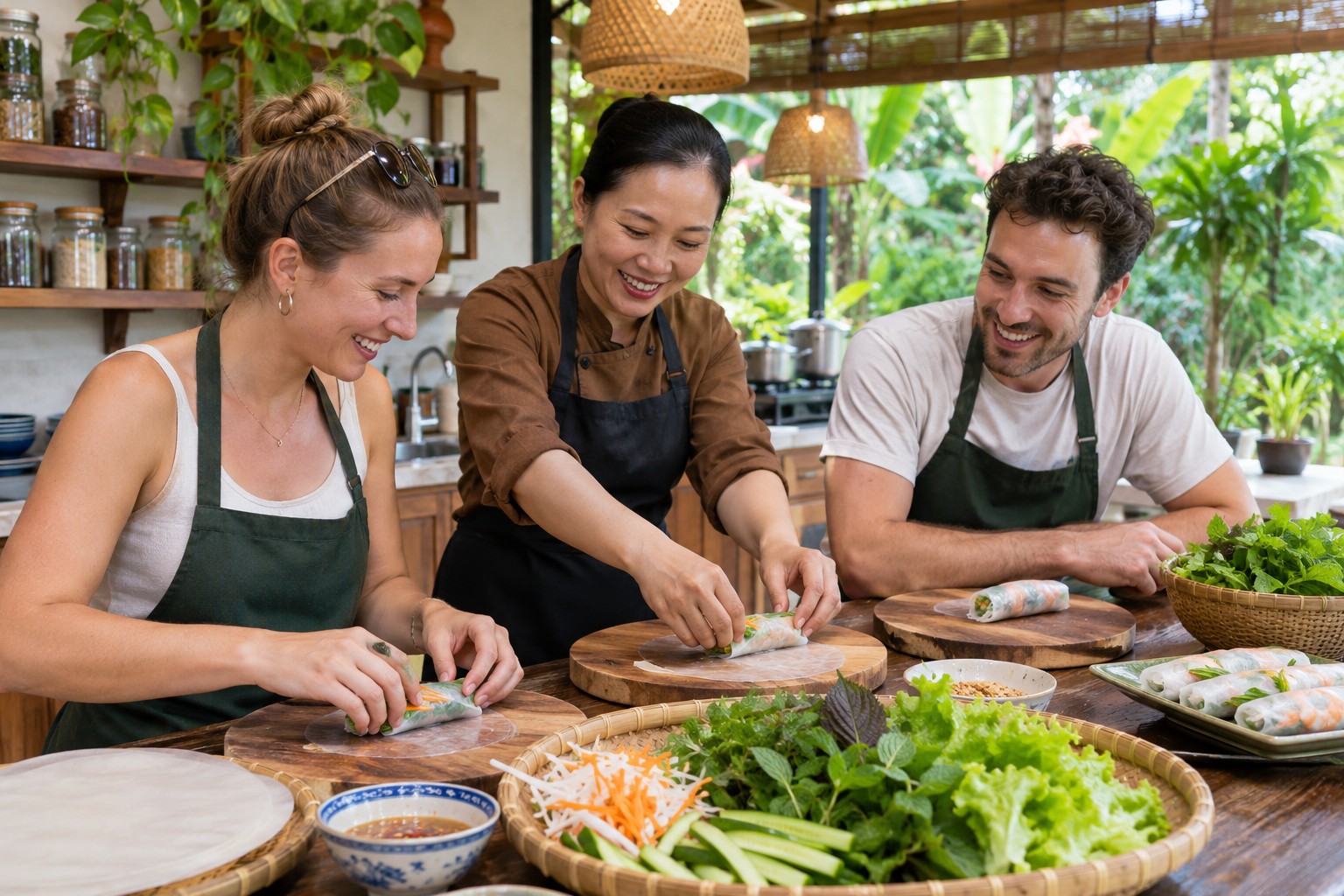
A cooking class can turn a Da Nang food trip from a sequence of restaurant meals into something you can understand and repeat at home. You see how ingredients become a dish, learn why a sauce tastes the way it does and discover which steps require technique rather than simply following a list. The best class for you depends on the experience you want: a focused lesson, a market visit, a family activity or a longer excursion.
The phrase “cooking class” covers very different products. One may involve individual workstations and several dishes, while another combines transport, sightseeing and a shorter demonstration. Before choosing by photographs or dish count, decide how much of the time you want to spend cooking. This guide provides researched starting points and the questions that make comparison meaningful.
Choose the format before the provider
A short class suits travelers who want one focused activity without reorganizing a whole day. A market-and-cooking format adds an introduction to shopping and ingredients. A longer countryside package may combine a lesson with transport and other activities. None is inherently superior; they serve different expectations.
If hands-on cooking is your priority, calculate how much of the total duration is actual kitchen time. A five-hour package can contain less cooking than a shorter workshop if much of it is spent traveling or visiting other places. Ask for the current sequence, approximate duration of each stage and what participants do themselves. This prevents a mismatch between an attractive itinerary and the lesson you imagined.
Research starting point: Hoang’s Kitchen
Hoang's Kitchen Da Nang publishes cooking-class information that includes market shopping and hands-on preparation. It is a useful provider to investigate if you want to connect ingredients with the dishes you cook. Because names, branches and advertised formats can differ, confirm that the session is in Da Nang and identify the exact meeting point before booking.
Ask which menu is available for your date and what the quoted price includes. A restaurant's wider menu is not necessarily the class menu. Confirm whether the group chooses dishes together or whether the lesson is fixed. If a specific dish is your main reason for attending, obtain written confirmation rather than treating it as an informal preference that the instructor may not be able to accommodate.
Research starting point: Da Nang Home Cooking
Da Nang Home Cooking publishes shorter class options as well as longer experiences. That makes it a useful comparison when deciding between a concentrated lesson and a broader outing. Review the exact product page rather than combining details from several packages into one expectation.
Check the class size, meeting arrangements and current menu directly. Ask whether each participant cooks every dish or whether tasks are divided among the group. Both formats can be enjoyable, but they provide different kinds of practice. If you want to reproduce a technique at home, make sure you will actually perform it rather than only watch someone else complete that step.
Research starting point: Apron Up in Da Nang
Apron Up's Da Nang class information describes a multi-dish experience with a market component. It is another candidate to compare for travelers who want a structured introduction and recipes to take away. Verify which location and session you are reserving, since similar names may appear in more than one destination.
A long dish list can sound impressive, but ask how the workload is organized and how much is prepared in advance. Some components naturally require advance preparation, while others are best learned through practice. The useful measure is not the number printed on the page but whether you leave understanding the important steps, ingredient choices and adjustments for your own kitchen.
Family Kitchen and smaller-group comparisons
Family Kitchen Da Nang publishes information about cooking experiences and dietary adaptations. It can be included in a shortlist when you are looking for a more personal format or a private session. Confirm current availability and what “private” means for the group you are booking; it may involve different pricing and arrangements from joining an open class.
Ask whether children can participate at their ages, how tasks are adapted and whether everyone cooks or some guests mainly observe. A family setting does not automatically make every knife, stove or frying task appropriate for every child. Explain the group composition in advance so the provider can give a realistic answer about suitability rather than making adjustments only after you arrive.
Look for dishes you want to cook again
Choose a menu based on your interests and the ingredients you can obtain at home. Fresh rolls, a pancake, a noodle dish or a salad teach different skills. A familiar favorite can be rewarding because you already know the result you want, while an unfamiliar regional dish can broaden your understanding of the food you are eating during the trip.
Ask which recipes involve useful transferable techniques: balancing a dipping sauce, preparing herbs, handling rice paper or managing a hot pan. A class becomes more valuable when it explains why a step matters. You should be able to adapt intelligently later, not just reproduce a photograph once with ingredients someone else has measured and arranged.
Confirm what “hands-on” means
Some classes give each participant a workstation; others have pairs or a shared central table. In a collaborative class, you may chop one ingredient while another traveler cooks the main dish. That can be sociable, but it may not meet your goal if you want to practice every stage independently.
Ask how many people share a stove and whether you will complete the core techniques yourself. Check the language of instruction and whether there is time for questions. If you are a beginner, a clear demonstration followed by supervised practice can be more useful than being left alone with a recipe. If you cook frequently, ask whether the lesson goes beyond assembly and covers seasoning decisions in detail.
A market visit should have a purpose
A market component is most useful when the instructor explains how to identify and choose ingredients, not merely when the group walks past stalls. Ask whether you will buy ingredients for the meal, discuss seasonal substitutions or learn how the same item is used in different dishes. This context can make later independent food visits more meaningful.
Wear practical shoes and carry only what you need. Ask permission before taking close photographs of vendors or other shoppers. A market is a working place, and the visit should fit around that activity. If mobility, heat or sensory concerns matter, ask about the route and duration in advance. You can choose a class without a market visit if the kitchen lesson is the part you most want.
Vegetarian and vegan requests need a complete adaptation
Ask whether the menu, stock, sauces and toppings can all be prepared to your requirements. Replacing meat with tofu is not sufficient if the original sauce or broth remains unchanged. Give the provider enough notice to plan a suitable lesson and confirm whether your food will be prepared separately where necessary.
Hoang's class information and other providers' published details invite dietary requests, but a general statement should be followed by a specific conversation about your session. If you have an allergy, describe it clearly and ask whether the provider can accommodate the preparation conditions you need. A cooking class is participatory, so knowing exactly what you will handle is as important as knowing what you will eat.
Think carefully about children and groups
For children, compare lesson length, the amount of waiting and the tasks available. A long market excursion followed by several dishes may be too much for a younger child even if the class accepts families. A shorter private format may allow a better pace, but confirm the cost and how much flexibility is actually offered.
For adult groups with different interests, agree on the goal before booking. Some people want a social meal; others want technical instruction. A suitable class can include both, but a shared expectation helps. Ask about seating, dietary requirements and whether non-cooking companions can attend. Do not assume an observer is included without registering them or that every participant wants the same menu.
Read the inclusions and exclusions
Check whether the price covers ingredients, the meal, drinks, transport, market purchases and a recipe copy. Confirm the meeting point and whether pickup applies to your accommodation area. A class advertised in Da Nang may include activities elsewhere, so examine the route rather than relying on the destination label.
Review cancellation and rescheduling terms, especially if your arrival flight or an outdoor excursion is uncertain. Ask what happens in poor weather if part of the program is outside. Save the agreed menu, date, guest count and dietary notes with the booking. Clear arrangements allow the provider to prepare properly and keep you from arriving with assumptions based on a different package.
Prepare a few questions for the kitchen
Useful questions include how to recognize the right batter consistency, how much heat the pan needs and how to balance a sauce without measuring every drop. Ask what can be substituted at home and what would change the dish substantially. These practical explanations are often more valuable than a certificate or an elaborate group photo.
Take brief notes while the instructor explains a technique, but do not let photography replace participation. Photograph ingredients or key stages when appropriate, then put the phone away for the actual cooking. Ask for clarification when a step seems obvious to an experienced cook but is new to you. A class is one of the easiest places to ask without worrying that you are slowing down restaurant service.
Make room to enjoy the meal
Do not book a large lunch immediately before a class that includes eating several prepared dishes. Leave enough time afterward to enjoy the meal and return without rushing. Consider whether a morning class fits better with your energy or whether an afternoon session provides a relaxed evening plan.
A cooking lesson can also be a useful alternative to a beach-only day, but check which parts remain outdoors. Pair it with a gentle activity rather than another demanding excursion. The experience should leave you with an understanding of the food and a pleasant shared meal, not the feeling that you have hurried through another item between transfers.
Choose the class with the clearest fit
Shortlist two or three providers, compare the current format and send the same questions to each. Choose based on hands-on time, menu suitability, group size, communication and total cost. There is no need to declare one provider the city's universal best when another may fit your own schedule and learning style more closely.
Use the guides to local food, vegetarian dining and Vietnamese breakfast to identify dishes you want to understand better. After the class, revisit one of those foods in a restaurant and notice the techniques you now recognize. That connection between cooking and eating is the lasting value of the experience: Da Nang's food becomes something you can interpret, discuss and bring into your own kitchen.


