
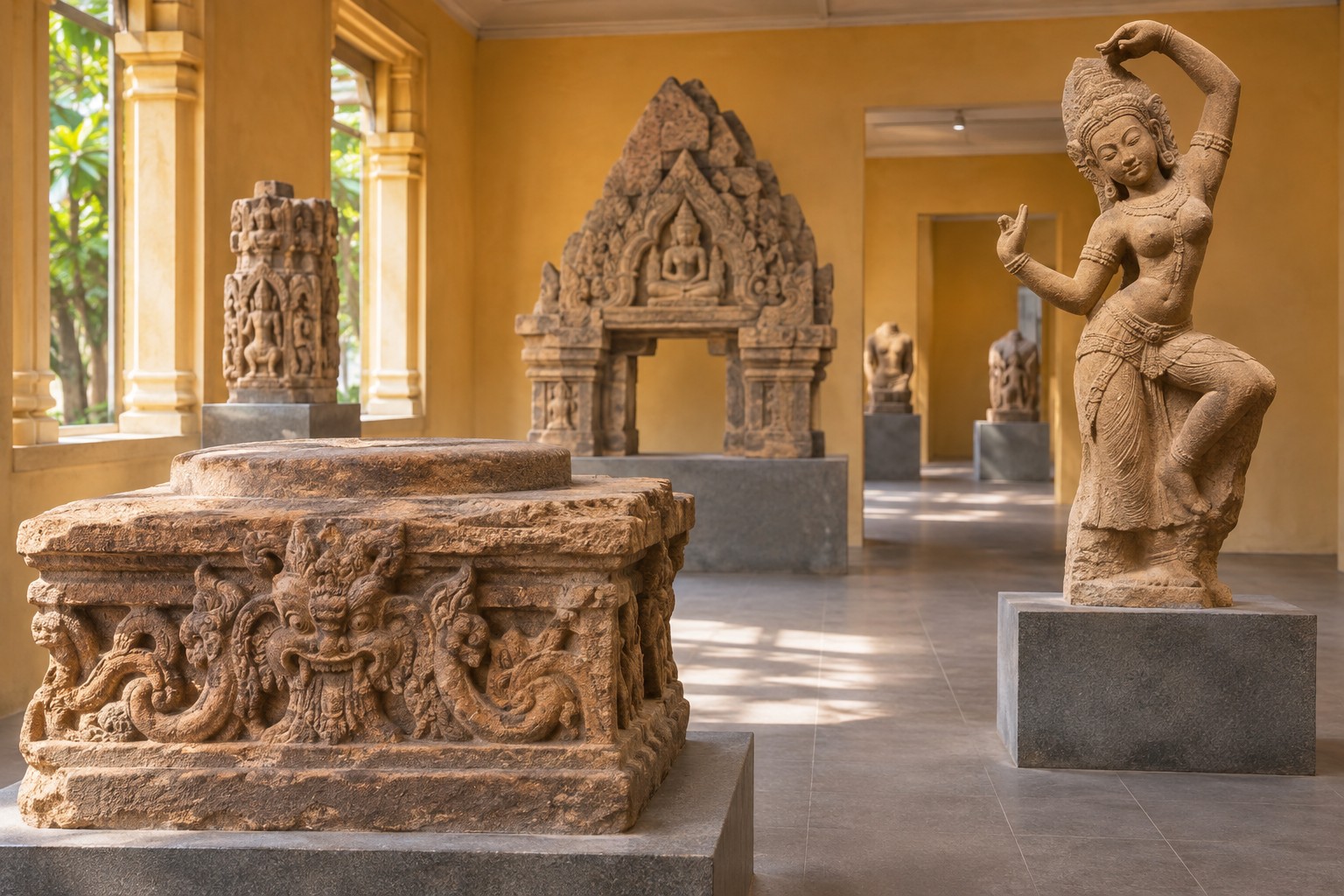
AI-generated illustration; not a documentary photograph of a specific venue, object or event.
Da Nang Museum of Cham Sculpture: A Visitor's Guide to Looking More Closely
The Da Nang Museum of Cham Sculpture offers a different pace from the city's beaches and mountain viewpoints. Instead of moving between photo stops, you can spend time with sandstone figures, carved architectural fragments and the visual language of Cham art. The visit becomes more rewarding when you look slowly and use labels to connect an object with its original setting rather than treating the galleries as a collection of isolated statues.
You do not need prior knowledge of art history to enjoy the museum. A useful first visit combines a little orientation, a few carefully chosen objects and enough time to notice carving, scale and detail. This guide explains how to plan that visit without turning it into an examination or assuming every traveler wants an exhaustive survey of the collection.
Know which museum you are visiting
The Museum of Cham Sculpture is a specialist collection, not a general museum of contemporary Da Nang life. It should not be confused with the separately named Da Nang Museum. Save the full name and the address at 2, 2 Thang 9 Street when arranging transport. Similar English shorthand can otherwise produce an avoidable journey to the wrong institution.
Its central location makes it practical to combine with a city meal or a river-area walk. Choose the museum because the collection interests you, rather than because you need any indoor activity to fill an hour. A focused visit can be memorable even on a clear day, and it can provide context for other heritage outings during the trip.
Understand what the collection represents
The collection concerns Cham sculpture and material associated with the historical Champa cultural world of central Vietnam. Works may relate to religious settings, architectural decoration or ceremonial use. Their original functions are often important to understanding why a figure, pedestal or fragment looks the way it does.
Use the museum's own labels for dates, names and provenance. Avoid assuming that every weathered figure represents the same deity or that similar-looking objects came from one site. A small amount of attention to the label can turn a general impression into a meaningful comparison. You can appreciate form and craftsmanship while recognizing that some interpretations require specialist knowledge.
Confirm current admission and hours
The city's tourism information lists a standard admission of VND 60,000, with category-specific provisions that should be checked directly. Bring suitable identification if you intend to request a reduced or exempt category. Do not assume that a rule applying to one group applies to every visitor, and use the current ticket counter information if conditions differ from an older article.
Published tourism pages have shown inconsistent opening schedules, so verify the museum's current visitor notice before arranging a tightly timed visit, particularly on a Monday. This guide deliberately does not present one conflicting timetable as guaranteed. Confirming current access is more useful than arriving with confidence based on a convenient but outdated snippet.
Give the visit a realistic amount of time
For a first visit, plan enough time to orient yourself and explore without watching the clock constantly. Your actual pace will depend on whether you use an audio guide, join a guided explanation or prefer independent looking. Avoid squeezing the museum into the final few minutes before closing or a fixed transfer.
A shorter visit can still work if it has a clear focus. Choose a few galleries or objects and look closely rather than rushing through every room. A longer visit benefits from brief pauses so the visual details do not blend together. You are not required to see every object with equal attention for the visit to be worthwhile.
Begin by reading the gallery organization
Before concentrating on individual pieces, look at how the rooms are arranged. Groupings may help you connect works by site or artistic context. Read the introductory material and identify the route that makes sense for you. Moving with a basic structure is easier than repeatedly backtracking because every interesting object pulls you in another direction.
Keep the original setting in mind. A fragment displayed at eye level may once have belonged high on a building, while a pedestal may have supported something no longer present. Ask what the object was part of and how people would have encountered it. That question helps you move beyond identifying a decorative shape to imagining its place in a larger environment.
Look at one object in three passes
First, notice the overall form: posture, proportions and the relationship between solid stone and open space. Next, examine the surface: carving depth, repeated patterns, worn edges and areas where detail remains crisp. Finally, read the label and return to the object with that information in mind.
This simple method works even if you do not recognize the subject. It prevents the label from becoming the entire experience while keeping observation grounded in the museum's interpretation. You may notice a detail that raises a useful question for a guide. There is no need to produce a definitive interpretation; careful attention is already a meaningful way to engage.
Compare details rather than searching for a favorite immediately
Choose two works and compare how the body, clothing, ornament or surrounding frame is carved. Look for differences in movement, density and treatment of space. Ask whether the label connects those differences with different sites or periods. Do not invent an explanation when the museum does not provide one, but use the comparison to make your looking more precise.
A fragment can be as interesting as a complete figure. Repetition, tool marks and the relationship between pattern and structure may be easier to notice on a smaller section. Resist the idea that only the largest or most photographed work deserves attention. The collection becomes more varied when you give quieter pieces time as well.
Consider an explanation or audio guide
If an official guide or audio service is available for your visit, ask how it works, which languages are supported and whether it requires a separate fee or booking. Confirm current arrangements on arrival or in advance. A guide can help connect objects with their original settings and clarify symbolism that is difficult to infer independently.
Choose the amount of interpretation you enjoy. Some visitors prefer a structured explanation; others want a few key points followed by time alone. If you join a tour, leave space afterward to revisit one object that caught your attention. Understanding and looking complement each other, but neither needs to dominate the entire visit.
Photograph respectfully and follow the current rules
Check the museum's photography policy before taking pictures, including any restrictions on flash, tripods or particular displays. Keep other visitors' routes clear and avoid approaching an object so closely that you risk contact. A museum is not a setting for climbing, leaning on displays or rearranging yourself around sculpture for a dramatic pose.
Take a few photographs that help you remember details rather than photographing every object automatically. If permitted, include the relevant label in a separate reference image so you can identify the work later. Spend time looking without the screen as well. A sharp picture is useful, but it cannot replace noticing the object's actual scale and surface.
Visiting with children
A family visit works better with a small task than with an expectation of reading every label. Ask children to find an animal, compare two patterns or describe a pose. Keep the questions observational and appropriate to their age. Explain that the objects are fragile and should not be touched unless the museum explicitly offers a permitted handling activity.
Plan a manageable duration and a simple meal afterward. One thoughtful conversation about a figure can be more successful than a long circuit completed with tired children. If adults want a deeper visit, consider taking turns so one person can look more closely while another accompanies a child through a shorter route.
Accessibility requires route-specific questions
If steps, standing time or room transitions could affect your visit, ask the museum about current access arrangements before going. A general statement that a venue is accessible may not describe every entrance, gallery or facility. Explain the assistance you need and request practical information about the route you intend to use.
The same applies to guided experiences: ask whether the group moves quickly, whether seating is available and whether you can pause independently. A little advance information helps you choose a comfortable visit. Do not rely solely on a street photograph to understand an interior route or assume that every part of an older building has identical access.
Combine the museum with a sensible city outing
A central-city meal and a short river walk make a natural pairing with the museum. Keep the outdoor portion flexible for heat and rain. You do not need to add a distant mountain excursion simply because the museum visit takes less than a full day. A relaxed combination leaves time to process what you have seen.
If you also plan to visit My Son, the museum can provide useful context, but the two experiences remain different. One presents objects in a curated setting; the other involves an archaeological landscape. Check current practical details for each separately rather than assuming a museum ticket or tour automatically includes access to another site.
Leave with one clear memory
Before leaving, return to an object or detail that interested you and look again. You may see more after exploring the rest of the collection. A single remembered carving, movement or pattern is a better result than a phone full of unidentified images and little sense of the visit itself.
Pair this guide with the central Da Nang itinerary and the Dragon Bridge area guide when organizing the day. Confirm current hours, allow time for the collection and approach the galleries with curiosity. The museum rewards a kind of attention that busy travel often squeezes out: standing still long enough for an object to become more than a passing impression.


