
Nam O Village: Coastal Walks, Fish Sauce Heritage and a Slower Da Nang Visit
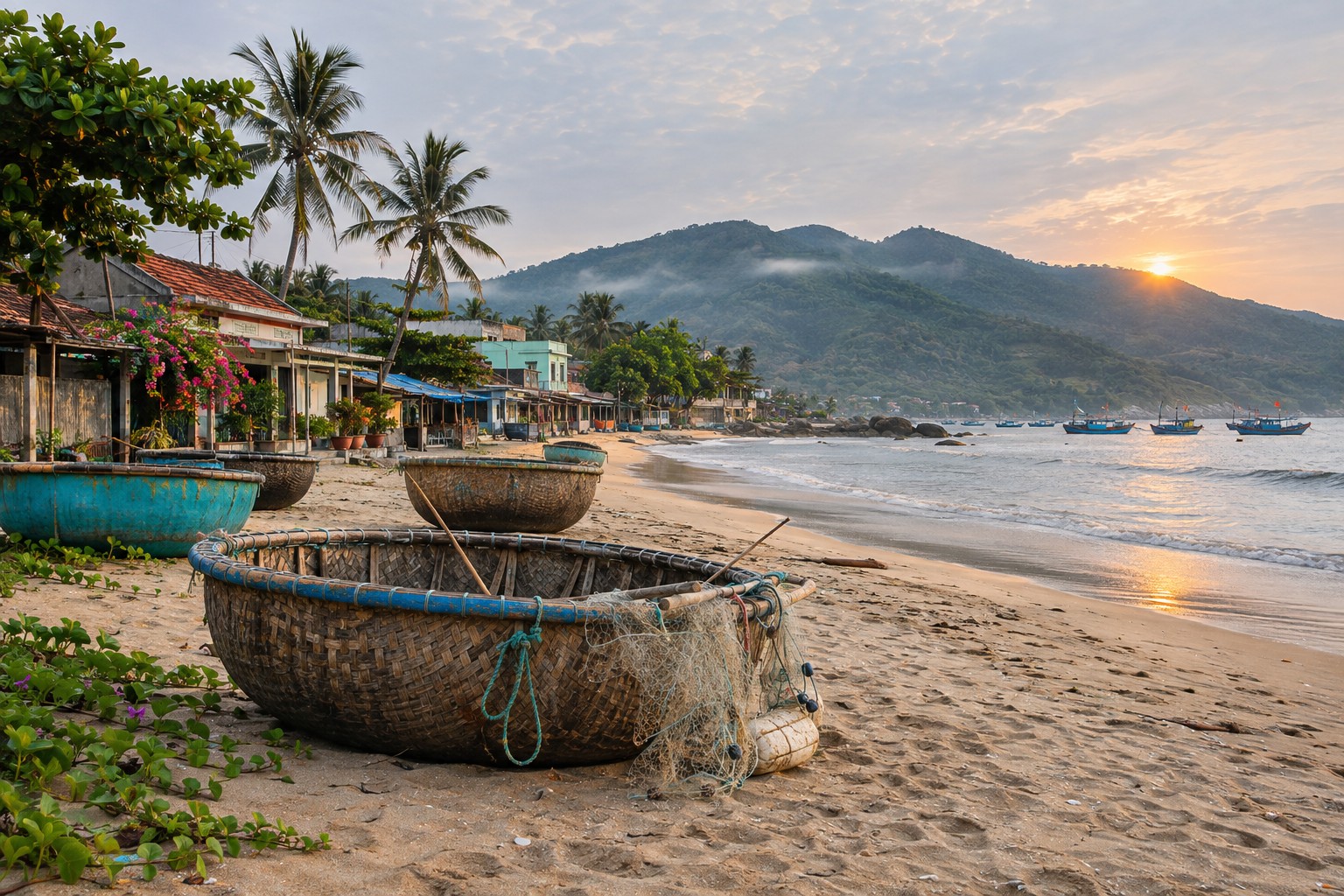
Nam O offers a different way to experience Da Nang: a coastal community, a long-established fish sauce craft and everyday life near the bay and the Cu De River. It is not another version of the central beach hotel strip. The appeal lies in paying attention to working spaces, local food traditions and the relationship between a village and the water around it.
A good visit is modest in scale. You do not need to fill a whole day with loosely connected stops or expect every lane to contain an organized attraction. Choose a practical route, arrange any workshop visit in advance and leave room to observe respectfully. This guide helps you plan that experience without treating residents' homes and workplaces as an open-air theme park.
Understand where you are going
Nam O lies northwest of central Da Nang near the approaches to Hai Van Pass. The tourism authority describes the village as roughly 15 kilometers from the city center, but the journey depends on your starting point and exact destination. Save the specific meeting point rather than asking a driver to interpret the broad name of a coastal area.
A fish sauce producer, a shoreline access point and a reef viewpoint may not share the same entrance. Identify the activity you actually want before arranging transport. That distinction matters particularly if you are meeting a guide or visiting a workshop by appointment. A little precision at the start prevents time spent moving between map pins that represent different experiences.
Visit for a living craft, not only a view
Nam O is known for traditional fish sauce production, a craft connected with local fishing and family knowledge. The useful question is how the work is done and maintained, not simply where to photograph a row of jars. A respectful conversation with a producer can reveal more than a quick stop at a scenic corner.
Ask whether a visit is available, whether someone can explain the process and whether there is a charge or purchase expectation. A production space may not operate like a walk-in museum. Give the host an opportunity to prepare and avoid arriving with a group that assumes access to every working area. Tourism is one part of the setting, not its only purpose.
What to ask at a fish sauce workshop
Useful questions concern ingredients, fermentation, filtering and the differences between products. Ask the producer how to recognize the bottle they recommend for your intended use. A sauce used in cooking may be chosen differently from one intended for a dipping preparation. Let the host explain the product rather than assuming the darkest color or strongest aroma proves quality.
Keep technical claims tied to the explanation you receive. Methods can differ between producers, and a guide's general summary may not describe every family operation. If you take notes for later cooking, record the product name and the suggested use. That information is more practical than trying to memorize a broad story while losing track of which bottle you actually bought.
Photograph people and workplaces with permission
Working hands, tools and narrow lanes can be visually interesting, but they remain part of other people's lives. Ask before taking close photographs of residents or entering a production area. Do not move equipment, touch containers or step into a doorway because it creates a better composition. A camera does not change the boundary between a public route and private space.
If someone declines, accept it without negotiation. You can still photograph permitted wider scenes or concentrate on details that do not intrude. A brief conversation may produce a more meaningful memory than a hurried portrait. Keep pathways clear and do not interrupt carrying, loading or other work to organize a shot.
Take the shoreline as it is that day
Coastal conditions can change the character of the visit. A quiet morning may support a pleasant walk, while rain, waves or slippery surfaces may make a shoreline section unsuitable. Do not assume that a photograph taken in a particular season describes the conditions you will find. Ask locally about access and respect any restrictions.
Nam O is not a promise of supervised swimming. If your aim is a beach swim, investigate the actual location and current instructions rather than treating every sandy or rocky coastal area as equivalent to a staffed central beach. You can enjoy views and village life without entering the water or venturing onto exposed surfaces.
Be cautious about reef and moss photographs
Images of green-covered rocks can create strong expectations, but appearance depends on season, water and weather. Do not plan a visit on the assumption that a specific color or exposed surface is guaranteed. A disappointing photographic condition does not make the village itself less worthwhile, provided the trip was organized around more than one image.
Wet rocks can be difficult underfoot, and approaching waves can change access quickly. Stay within a comfortable, permitted route and do not copy a pose merely because someone else appears to have stood there. A photograph is not evidence that the route was appropriate, available or safe under your conditions. A wider view from stable ground can be just as effective.
Choose a comfortable time and pace
The tourism authority suggests morning and later-afternoon visiting periods. The practical benefit is avoiding an unnecessarily demanding outdoor schedule and allowing time for local activity, but individual workshop appointments should take priority. Ask your host when a visit is useful rather than arriving only according to a generic travel recommendation.
Keep the plan short enough that you can adapt. A village walk, one confirmed craft visit and a simple meal can make a satisfying half-day. Add a second destination only if it fits the weather, transport and interests of the group. More stops do not automatically produce a deeper experience, especially when they reduce every encounter to a few hurried minutes.
Arrange the return before you get absorbed
Decide how you will return to your accommodation, particularly if you travel beyond the most convenient pickup streets. A driver waiting at an agreed point can simplify the visit, while an independent return requires a working phone, a clear pickup pin and some flexibility. Confirm the arrangement before leaving the vehicle.
If you combine Nam O with another northwest-coast outing, specify the full route and any waiting time in advance. Do not assume a simple one-way fare includes an extended sequence of stops. For any journey toward Hai Van Pass, make a separate decision about the route, conditions and transport. The fact that two places appear in the same regional guide does not make every combination appropriate on the day.
Try food with an understanding of the dish
Local food can connect the craft story with the table, but ask what you are ordering and how it is prepared. Fish sauce is an ingredient, not a complete description of a meal. If you have dietary requirements or prefer fully cooked dishes, state that before choosing. Do not rely on a broad English translation to explain every preparation.
A simple meal at a venue that can answer your questions is more useful than ordering an unfamiliar specialty solely to complete a list. Confirm the portion and current price. If you are with a guide, explain your preferences in advance so the food stop fits your group rather than becoming an unexpected test of willingness to eat something new.
Buy a bottle thoughtfully
If you want fish sauce to take home, ask about the producer, bottle size, seal and recommended storage. Choose packaging that suits the journey and keep it protected from leaks. Ask which product is appropriate for your cooking rather than buying only according to the most elaborate gift presentation.
Check the rules of the places you will travel through before carrying food across borders, and consider airline baggage requirements separately. A liquid product needs practical packing even when it is permitted. Save the label so you can identify it later. A small bottle you understand and use can be a better souvenir than a large purchase selected without knowing how it will fit your kitchen.
Families should keep the visit tangible
Children may engage well with boats, tools and the idea of ingredients changing over time, but a long technical explanation may not suit every age. Ask whether a host is comfortable receiving children and what parts of the space can be visited. Keep hands away from equipment and containers unless the host explicitly offers an appropriate activity.
Bring what your family normally needs for an outdoor walk and allow breaks. A brief visit with one clear story is often more successful than trying to cover the entire area. Do not promise children a swim or a dramatic rock photograph before checking conditions. Give the day enough flexibility that a changed route still feels like a good outing.
Combine places for a reason
A northwest-coast plan can include another nearby destination, but choose a connection that adds meaning. A craft visit followed by a coastal walk has a coherent pace. Adding several distant sights simply because they lie in a broad direction can turn a slower visit into hours in a car.
Leave the city-center museums or southern resort coast for another part of the trip unless transport and time genuinely make the combination sensible. The value of Nam O is partly the chance to stop rushing. Protect that quality in the itinerary rather than using the village as a quick box between larger attractions.
Leave with a clearer sense of the place
A good Nam O visit may be remembered through a conversation, a process you learned or a view of ordinary work by the water. It does not require an empty village, perfect weather or access to every photogenic corner. Respect for the setting makes the experience more worthwhile for both visitors and residents.
Use the guides to Hai Van Pass, getting around Da Nang and local food when arranging the wider trip. Confirm one or two meaningful activities, keep the route practical and let the coastal community remain itself. That approach reveals a side of Da Nang that can be missed when every outing is organized around the same central landmarks.


