
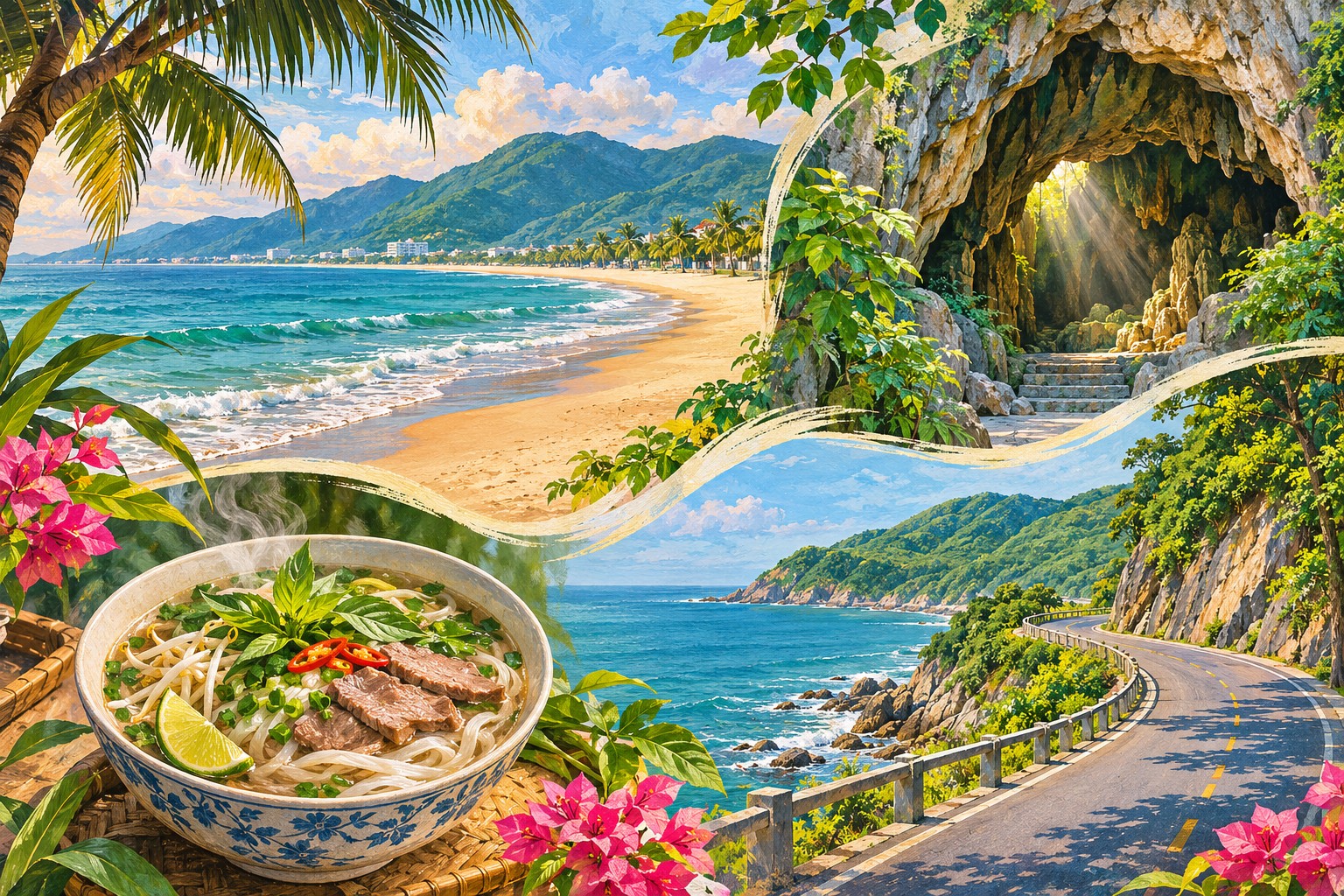
 There are enough things to do in Da Nang to fill a short break or a slower holiday, but the most enjoyable trip rarely includes everything. The useful question is which experiences deserve your time, how they fit together, and what you would rather leave for another visit.
Start with a balance: time by the sea, one sightseeing outing that interests you, food you are curious about, and an evening with room to walk or sit. This guide helps you turn a list of attractions into a trip that feels coherent. It includes a practical way to choose priorities without treating every famous place as compulsory.
1. Make a Beach Morning Part of the Holiday
Start with My Khe if you want a recognizable introduction to Da Nang's coastline. Leave time to walk, sit, and have breakfast afterward instead of arriving only for a photograph.
Swimming is optional and depends on local instructions and conditions. A beach visit can still be enjoyable as a promenade walk or a quiet break with a view.
Choose this experience when you want an easy first morning or a slower day between outings.
2. Explore the Marble Mountains
Consider the Marble Mountains for caves, religious spaces, and an outing that involves walking and climbing. Do not treat it as a completely step-free attraction just because part of the site may have assisted access.
Wear shoes with grip and allow enough time to choose a manageable route. If anyone in your group has difficulty with steps, investigate the exact accessible areas before booking transport.
3. Visit Linh Ung Pagoda on Son Tra
Linh Ung Pagoda is a useful choice for travelers interested in a religious landmark and coastal scenery. Select the Son Tra location carefully when searching for directions; the name Linh Ung is used at more than one site.
Bring suitable clothing and keep the visit respectful. You can enjoy the surroundings without entering every prayer area or making the stop part of a long mountain circuit.
4. Spend an Evening by the Han River
A riverside evening can fit into a day with almost any other activity. Have dinner nearby, choose a comfortable walking route, and leave room to stop rather than covering a fixed distance.
If you want to watch a scheduled bridge show, verify the performance for your date first. Otherwise, treat the walk itself as the activity and avoid organizing the evening around an unconfirmed event.
5. Plan a Meal Around a Local Dish
Choose a dish you have not tried and make lunch or dinner part of the experience. Mi Quang, fish cake noodle soup, and rice-paper rolls are useful starting points for research.
Read the menu, ask what is included, and confirm ingredients if you have restrictions. A small number of well-chosen meals will teach you more than ordering an unfamiliar table of food without understanding any of it.
6. Visit a Market with a Purpose
Decide whether you want food, gifts, or simply a look at daily trading. That decision will help you choose between market visits and prevent several similar shopping stops from filling the itinerary.
For gifts, check packaging and whether the item can enter your home country. For food, order a modest amount first and leave room to try another stall if appropriate.
7. Take a Proper Coffee Break
Allow a café stop to be a pause rather than another rushed attraction. Choose a place along your existing route so the break does not require a special journey.
Try a Vietnamese coffee style that interests you and ask how sweet or strong it is before ordering. If you prefer a familiar espresso drink, a café stop can still be a good way to slow the day down.
8. Decide Whether Ba Na Hills Fits Your Interests
If the Golden Bridge and a large attraction complex appeal to you, investigate a dedicated day at Ba Na Hills. Check the ticket package and current conditions before committing.
If your priorities are local streets, food, and the beach, you do not need to include it simply because it appears on many itineraries.
9. Add Hoi An or Hai Van Pass Selectively
For a longer stay, compare the experience you want: heritage streets and an evening outing, or a scenic road journey. Give either choice its own space in the schedule.
Do not turn a three-day holiday into a series of transfers. If you have only one available day, choose the outing you most want and save the other for another visit.
How to Choose Your Top Three Experiences
| Your priority | Start with |
|---|---|
| An easy holiday | Beach morning, local meal, riverside evening |
| Active sightseeing | Marble Mountains, a suitable Son Tra visit, neighborhood walks |
| Food and everyday life | A market, a dish-focused meal, a coffee stop |
| A larger attraction day | A dedicated Ba Na Hills visit, with a lighter following day |
Choose Experiences That Add Something Different
Look at what each proposed activity contributes. A second market may offer a different kind of shopping, but it may also repeat the browsing you already planned. Another viewpoint can be worthwhile if landscapes are your main interest, but less useful if you are adding it simply because it appears on a tour list.
Build your shortlist around contrast. A beach walk, a cave-and-pagoda visit, a dish-focused meal, and a river evening create different memories. That variety can make a three-day stay feel fuller than a larger number of similar stops.
Then ask what you would regret missing. If the answer is a specific attraction, give it sufficient time and appropriate booking priority. If the answer is simply relaxing beside the sea, protect that time rather than allowing excursions to fill it by default. Rest is an activity when it is part of what you came for.
Separate Major Outings from Flexible Stops
Some experiences shape the whole day because they involve transport, admission, or a substantial visit. Others can be added near a meal or on the way back to your hotel. Treating them as equal items on a checklist makes an itinerary difficult to judge.
Mark each activity as a main outing or a flexible stop. A dedicated Ba Na Hills visit belongs in the first group. A nearby café belongs in the second. A market might belong in either, depending on whether you want an in-depth food visit or a short look around.
Place the main outing first, then add nearby stops only if they fit. Leave time for a meal and return travel before deciding how much more the day can hold. This makes it easier to remove optional details when weather or energy changes without sacrificing the experience you most wanted.
Make an Ordinary Meal More Memorable
One way to deepen a short trip is to understand a meal rather than eating quickly between attractions. Choose a dish, read how it is assembled, and ask a simple question about the menu. Notice which accompaniments are offered and taste before adding everything.
You do not need to order a large variety at once. A bowl you have time to enjoy can be more rewarding than several dishes you cannot identify and do not finish. If traveling with others, choose a few shared items that everyone understands and is happy to try.
Let the meal connect with the surrounding day. Have lunch near your morning visit or choose dinner in the area where you want to walk. That creates a natural sequence and avoids turning food into another reason to spend the day in vehicles.
Pick the Right Kind of Guidance
A guide is useful when interpretation is central to the experience. A transport service is useful when the main challenge is reaching the place and returning comfortably. An organized group outing can be useful when you prefer a set structure. These services can overlap, but they should not be assumed to be identical.
Before booking, ask what happens during the visit. Will someone explain the place, walk with the group, or simply provide a meeting point for the return? How much independent time is included? Are entry tickets and meals covered, and can the plan accommodate your actual needs?
Choose according to the experience you want rather than the number of inclusions. A shorter interpreted visit may suit a history enthusiast more than a long drive with many stops. A traveler who wants independence may value a clear return transfer and freedom inside the attraction.
Three Sample Shortlists
For a Relaxed First Visit
Choose a beach morning, one market or local meal, a riverside evening, and one main sightseeing visit. Leave the rest open for cafés, rest, and whatever you discover near the accommodation. This approach fits someone who wants a sense of place without a full schedule.
For an Active Sightseeing Trip
Investigate the Marble Mountains, a suitable Son Tra outing, and a scenic journey if conditions and time allow. Separate the more demanding days and check the whole route, including steps, transport, and return timing. Add easy meals and short walks rather than another major climb after a busy morning.
For a Food-Focused Stay
Choose several dishes across different meals and one market visit with time to browse. Include coffee and a dessert stop only when you actually want them. Keep attraction choices modest so you can eat at a comfortable pace instead of treating the meals as delays to the next destination.
When an Attraction Is Worth Skipping
It is reasonable to leave out an attraction when it does not match your interests, the route is unsuitable for your group, or the conditions undermine the experience you hoped for. The fact that a place is widely photographed does not make it essential for every visitor.
Look at the opportunity cost. A full attraction day may replace the only day you had for the beach or Hoi An. That is a real choice, not an itinerary failure. Decide which experience matters more rather than trying to preserve both by shortening everything else.
For a group, ask each person to nominate one priority before booking. You may find that the supposed must-see list contains places nobody feels strongly about. Removing those creates time for experiences the group actually wants.
Keep Photography in Proportion
Choose a few places where you want photographs and allow a reasonable amount of time. Then experience the location without needing every frame to be empty or identical to a promotional image. Other visitors, changing light, and different weather are normal parts of travel.
If a photograph requires paid seating, a private venue, or a restricted area, understand those conditions first. Do not assume a public attraction guarantees access to every angle shown online.
For travel companions, agree on the pace. Someone who enjoys landscape photography may want to stay longer than someone visiting mainly for a walk. A clear expectation can turn that difference into a comfortable pause rather than a disagreement at every viewpoint.
Turn Your Shortlist into a Useful Daily Plan
Write one sentence for each day: the main experience, a nearby meal, and the return arrangement. Add the important booking details, then leave smaller stops as choices rather than commitments. This is enough structure to travel confidently without requiring a minute-by-minute schedule.
Review the plan after the first day. You will know more about your energy, the location, and what you enjoy. Adjust the remaining choices accordingly. A good itinerary can respond to the trip you are actually having instead of forcing you to follow decisions made before arriving.
Frequently Asked Questions
What should I do on my first day?
Keep it easy: explore near your hotel, have a meal, and save major outings until you know how much energy and usable time you have.
Which activities are easiest to combine?
Combine experiences in the same area. A local meal, café, and nearby walk usually fit together more comfortably than distant landmarks.
Do I need a tour for every attraction?
No. Decide whether you need transport, interpretation, or both, and choose a service that matches that need.


