
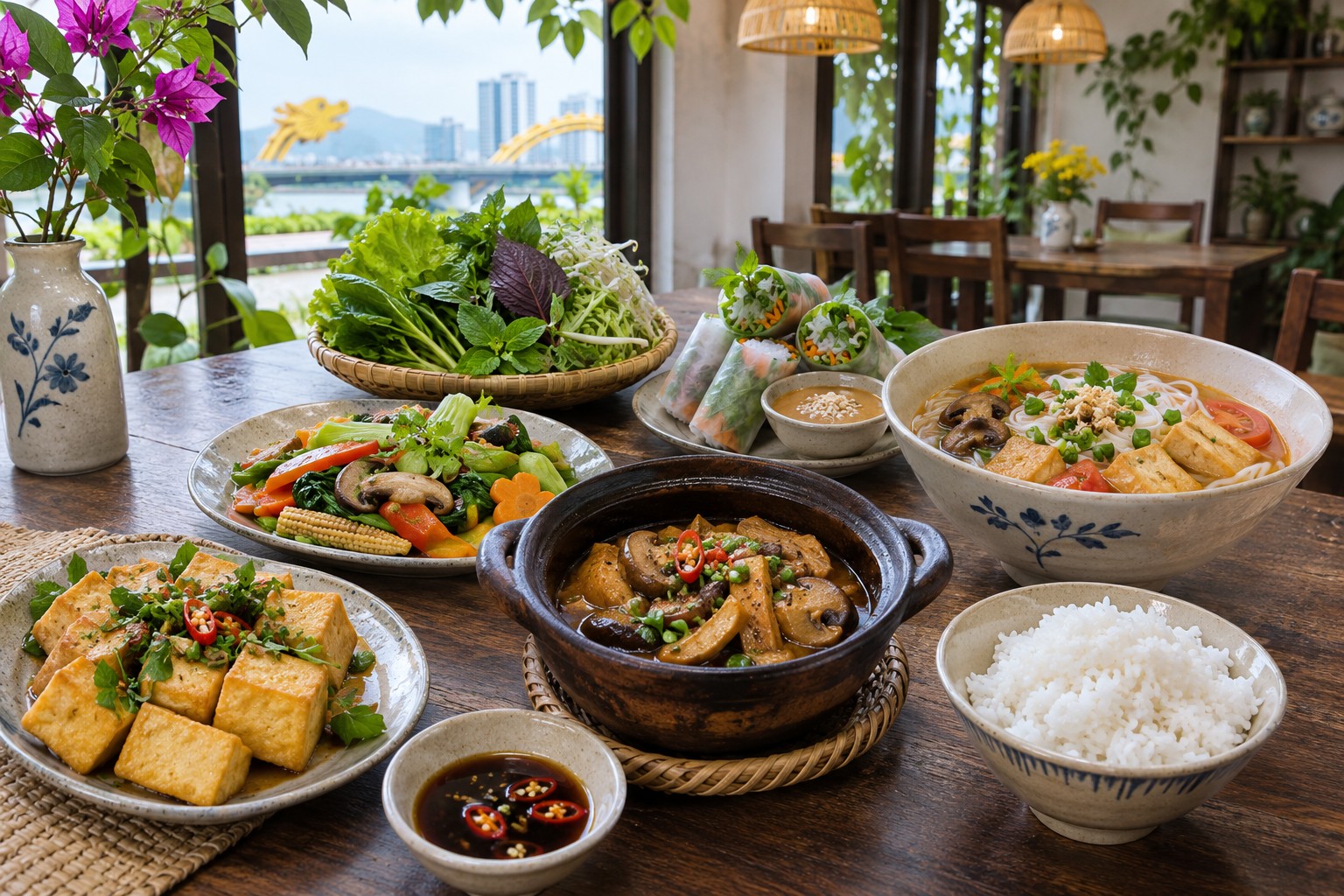
 Vegetarian and Vegan Food in Da Nang: A Practical Guide to Eating Well
Eating vegetarian or vegan in Da Nang can be rewarding, especially when you know how to distinguish a dedicated plant-focused kitchen from a standard restaurant offering one vegetable dish. Rice, noodles, herbs, tofu and mushrooms provide many possible meals, but a plate that looks meat-free may still contain fish sauce, stock or another animal-derived ingredient. The most useful skill is asking a clear question before ordering.
This guide helps you plan meals, understand menu language and build a reliable routine without reducing the trip to constant ingredient negotiations. Vegetarian and vegan preferences are not identical, so explain your own requirements rather than assuming a single label communicates everything. A little preparation can leave more time to enjoy the food and less time trying to decode it after it reaches the table.
Learn “chay,” then explain what it means for you
“Chay” is the key word to recognize when looking for vegetarian food in Vietnam. A “quan chay” is a vegetarian eating place, and the term can help you identify menus with plant-based versions of familiar dishes. However, you should still clarify whether you avoid eggs, dairy, honey or specific sauces, particularly at places serving a mixed menu.
Use a short message explaining what you do and do not eat. A vegan traveler might specify no meat, fish, seafood, eggs, milk or animal-based stock and sauces. Keep the wording focused on ingredients rather than presenting a complicated philosophy. If your needs involve an allergy or strict preparation requirement, communicate that separately; a dietary label alone does not establish how a kitchen handles shared equipment.
Dedicated vegetarian restaurants are a useful first base
A kitchen organized around vegetarian food can make the first meal easier because its menu and staff are more likely to be familiar with relevant questions. You may find dishes built around tofu, mushrooms, vegetables and plant-based interpretations of meat textures. The experience can be broader than simply removing protein from a conventional dish.
Still ask about the details you need confirmed. Some desserts and drinks may use dairy, and the ingredients of prepared sauces or imitation products can vary. A restaurant's general identity is a good starting point rather than a guarantee about every item. Once you find a few suitable dishes, keep them as reliable options while you explore more widely across the city.
Researched names to investigate
Da Nang's tourism food passport includes vegetarian dining names such as Maha Vegetariano, Sangha and Phuc An. These are useful starting points for your own shortlist, not a promise of a particular menu, opening time or suitability for every vegan requirement. Confirm the current location, service hours and available dishes before making a special journey.
Choose among candidates by the way you want to eat. A restaurant suitable for a leisurely dinner may not be the most convenient breakfast stop. A place near your accommodation can become a practical repeat meal even if another has a larger online following. Begin with one nearby option and one alternative in another area you intend to visit, rather than building a list scattered across the entire city.
Try vegetarian versions of regional dishes
A vegetarian mi Quang or another noodle dish can provide an introduction to regional flavors through plant-based ingredients. Ask what replaces the usual toppings and how the broth or cooking liquid is prepared. A thoughtful version should function as its own dish rather than feel like a standard bowl with the main ingredients removed.
Look for the contrast of noodles, herbs, texture and sauce. Mushrooms, tofu and other plant-based components can play different roles, from richness to chewiness. If mock meat is not your preference, ask for dishes centered on vegetables or natural tofu instead. You can explore local food while being selective about the style of plant-based cooking you enjoy.
A tofu dish can be a full meal, but ask about sauce
Tofu is versatile: it may be fried, simmered, served with vegetables or included in a noodle bowl. The important question is not whether the visible ingredient is plant-based but how the dish is seasoned. In a conventional restaurant, a tofu dish may still use an animal-based sauce or stock unless you specify otherwise.
Ask for a clearly described preparation and confirm accompaniments. Rice, a vegetable dish and a tofu or mushroom main can create a satisfying shared meal. If you want something less rich, ask about a lighter preparation rather than assuming all tofu dishes are similar. A kitchen's ability to explain the sauce matters more than the presence of a green leaf symbol on an abbreviated menu.
Broth is often the hidden decision
A noodle bowl can look full of vegetables while the liquid has been made from meat or seafood. Removing a topping does not change the stock already used. Ask whether the restaurant has a separate vegetarian broth before ordering. This is especially important when the standard dish is strongly associated with fish or meat.
If the answer is uncertain, choose a dish with ingredients the kitchen can explain more clearly or visit a dedicated vegetarian venue. Do not feel obliged to accept a bowl simply because someone has offered to leave the meat off. A short question at the beginning is easier for everyone than discovering the misunderstanding after the meal has been prepared.
Sauces need their own conversation
Fish sauce, fermented fish sauces and other animal-based seasonings can appear in dishes that do not visibly contain meat. A menu may translate an item as “vegetables with sauce” without explaining the preparation. Ask which sauce is used and whether a plant-based alternative is available. Avoid assuming that soy sauce can automatically replace everything without changing the kitchen's method.
A concise request works best: identify the dish and ask whether it contains fish sauce, seafood-based seasoning or meat stock. If staff need to check with the kitchen, give them time. Prepared sauces may be made in batches, so a restaurant may not be able to alter one serving. That is useful information, not a reason to pressure staff into giving a reassuring but uncertain answer.
Breakfast requires a little planning
A nearby vegetarian breakfast option can be worth identifying before arrival, especially if your hotel package does not include a suitable meal. Do not assume a restaurant that serves a good dinner also opens early. Check current hours and find a backup that fits your morning route.
For a sandwich, clarify spreads, pate, egg and sauces before assembly. For sticky rice, ask about toppings and any seasoning already mixed in. At a hotel buffet, speak with staff about preparation rather than relying only on the display labels. Fruit, bread and vegetables can contribute to breakfast, but the aim is a meal that keeps you satisfied, not merely a collection of items chosen because nothing else is clear.
Coffee and desserts may contain dairy
Vietnamese coffee made with condensed milk is not vegan, and some drinks that appear coconut-based also include dairy ingredients. Ask about the complete recipe if you want a plant-based version. A milk alternative is only relevant if the rest of the drink also meets your requirements. Do not assume the word “coconut” replaces every other milk component.
Desserts deserve the same care. A bean or jelly dessert may be suitable in one preparation and include dairy or another unsuitable topping in another. Ask about coconut cream, condensed milk, yogurt, custard and gelled components as relevant. Choose a simple item the vendor can explain rather than trying to reconstruct a multi-ingredient dessert after it has been mixed.
Build a useful restaurant message
Prepare a short translation with your requirements and keep the English version alongside it. Start by saying whether this is a preference, a strict dietary practice or an allergy-related concern, then list the ingredients to avoid. Ask whether the kitchen has a suitable dish rather than demanding a specific item be extensively redesigned.
For example, your message can request a meal without meat, fish, seafood, eggs, dairy, fish sauce or meat stock, followed by a question about which menu items fit. Keep separate concerns separate. If shared equipment matters to you, ask explicitly. A translation tool helps communication, but the restaurant still needs the knowledge and capacity to answer accurately.
Plan meals around the day’s route
Save suitable places near your accommodation, downtown and around any longer outing. You do not need a restaurant in every neighborhood, but one reliable option near the day's main activity can prevent a hungry cross-city search. Keep current map pins and note whether a place serves meals or mainly drinks and snacks.
For a trip to a resort or a longer excursion, ask about food arrangements in advance. A package menu may be fixed, while an independent restaurant visit allows more choice. Explain requirements before paying for an inclusive experience. If necessary, carry a practical snack as backup, without treating it as a replacement for planning a proper meal you can enjoy.
Use markets for discovery rather than assumptions
Markets can be interesting places to see produce, herbs and prepared foods, but ingredient communication may be harder in a busy stall. Look for items you can identify and ask about sauces or fillings before ordering. A visible vegetable filling is not enough to establish everything used in preparation.
If you want a deeper introduction, a cooking class able to confirm a vegetarian or vegan menu can be useful. Ask whether the recipe, stock and dipping sauce are all adapted, not just the main protein. Learning how a dish is built can make later ordering easier. It also helps you recognize which questions genuinely matter rather than asking an unfocused list at every meal.
Choose variety across several days
Mix noodle meals with rice dishes, tofu preparations, mushrooms, vegetables and suitable snacks. If you find one restaurant you trust, returning is sensible, but there is no need to eat the same dish every day. Ask staff for a different option that meets the same requirements. A smaller dependable shortlist can support more variety than a huge unverified collection of map pins.
Try one new thing at a time when you are unfamiliar with the cuisine. Keep the meal manageable and notice which flavors and textures you enjoy. Plant-based travel should not feel like accepting the least unsuitable item on the menu. With the right kitchens, it can be a positive way to explore the region's use of herbs, rice, tofu and vegetables.
Make the routine easy enough to repeat
Before the trip, identify a nearby breakfast, two reliable meal options and a clear translation of your requirements. Verify opening information and ask about complete preparation when necessary. Once you have those anchors, you can explore more spontaneously without making every meal a fresh logistical problem.
Use the guides to Vietnamese breakfast, local food and cooking classes to broaden the plan. Da Nang offers room for both familiar meals and new dishes, but the most useful approach is practical: clear questions, suitable kitchens and a route that works with the rest of the day. That gives you the confidence to focus on enjoying the food rather than repeatedly negotiating uncertainty.


