
 A Vietnamese Breakfast Guide to Da Nang: Noodles, Banh Mi and Easy Morning Plans
Breakfast in Da Nang can be a quick sandwich before the beach, a bowl of fish-cake noodles in the city or a slow meal followed by coffee. It does not have to resemble a hotel buffet, and it does not need to become an ambitious food tour before you have properly woken up. Choosing one satisfying dish and a convenient location is often the best way to start.
For first-time visitors, the main adjustment is accepting that a savory, substantial meal can be a normal morning choice. Rice noodles, broth, meat, herbs and bread all have a place. This guide explains the options and offers a practical way to fit them into a holiday without assuming every shop opens at the same time or every breakfast needs a famous address.
Start with your morning, not a ranking
Think about what follows breakfast. A light meal may suit a short beach walk, while a more substantial bowl makes sense before a long sightseeing outing. If you have an early pickup, reliability and location matter more than crossing the city for a heavily promoted restaurant. If the morning is free, you can allow more time to sit and try something unfamiliar.
Check the opening information for your chosen shop and keep a nearby backup. Individual vendors may finish service or run out of a popular item, and an old map listing is not a guarantee. A good breakfast plan should survive one closed door. Save the Vietnamese name of the dish and the place so you can ask for help without depending on a long English description.
Bun cha ca: a useful first noodle breakfast
Bun cha ca combines rice vermicelli, fish cake and broth, with accompaniments varying between kitchens. It is a strong option when you want a local-style savory breakfast with an easy-to-understand structure. You can order the standard bowl, taste the soup and add condiments gradually rather than making several complicated choices at once.
Fish cake may be steamed, fried or offered in a mixture. Ask what comes in the basic serving and whether extra fish is a separate addition. A smaller portion can work if you intend to eat again soon. Do not confuse the name with Hanoi-style bun cha, which is a different dish. Keep the full phrase visible when searching or showing staff your intended order.
Mi Quang: a different noodle experience
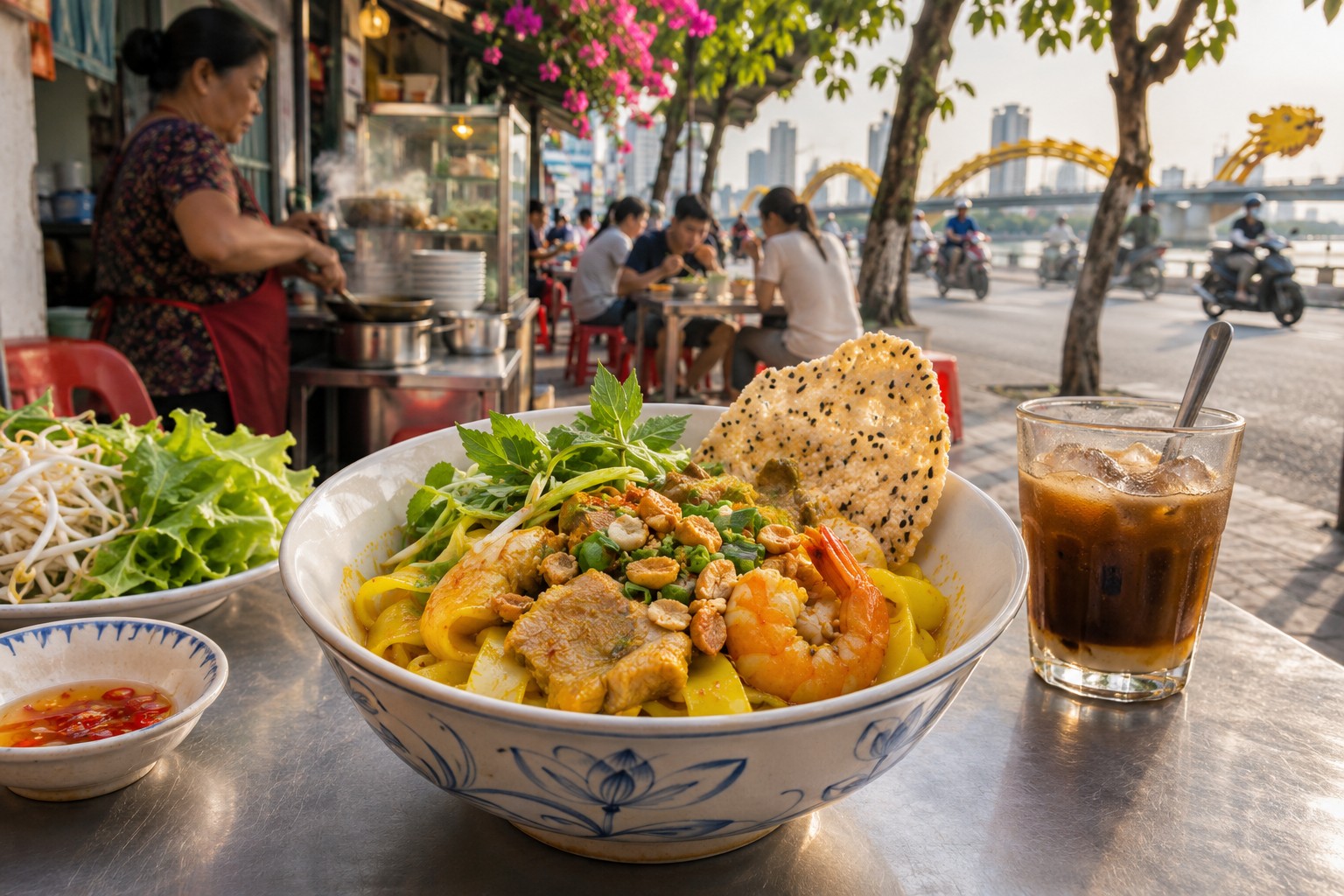
Mi Quang is another important regional choice, but it is not simply the same soup with wider noodles. The dish commonly brings broad rice noodles together with a relatively small amount of strongly flavored cooking liquid, toppings and fresh accompaniments. Versions vary by protein and preparation, so choose a specific menu item rather than assuming every bowl contains the same ingredients.
Ask what the standard version includes and note toppings such as peanuts or rice cracker where offered. Taste the bowl before adding more seasoning. If you prefer a milder breakfast, request chili separately when possible. Mi Quang can be substantial, so treat it as the meal itself rather than a small appetizer before a second full breakfast.
Banh mi: practical when time is limited
A Vietnamese filled baguette is useful for mornings when you want something portable or less liquid than noodles. Fillings and sauces vary widely. Look at the menu or ask what goes into the standard sandwich, particularly if you have preferences about pate, meat, egg, chili or fresh herbs. A familiar-looking bread does not establish a familiar filling.
Order before the last possible moment if you have a transfer to catch. Ask for chili separately or omitted before assembly, and clarify whether you want the sandwich to take away. Keep it easy to eat rather than adding every optional filling. If you plan to sit with coffee afterward, choose a location that actually permits you to bring the sandwich rather than assuming separate businesses share seating.
Xoi: sticky rice for a filling start
Xoi is sticky rice served with sweet or savory additions depending on the vendor. A savory version can make a compact, satisfying breakfast, while other preparations have a different role as a snack or sweet food. Ask what the displayed toppings are instead of selecting only by color or assuming all portions are equivalent.
Because sticky rice can be filling, begin with an ordinary portion if you are trying it for the first time. It can be useful before an active morning, but you may not want it immediately before another large food stop. Check sauces and toppings if you have dietary requirements. A rice-based dish is not automatically vegetarian or free from ingredients that are less visible once everything is mixed together.
Banh cuon and other rice-based options
Soft rice rolls or sheets may appear on breakfast menus, usually with a particular set of fillings and accompaniments. The exact preparation differs from the dry rice paper used to assemble pork rolls. If you are choosing between similarly named items, a short explanation from staff or a photograph of the finished portion can help.
Do not assume a pale, delicate-looking dish is necessarily a very light meal. Accompanying meat, fried shallots and dipping sauce contribute to the experience and the portion. Start with one standard serving, then decide whether you want more. There is no need to order several unfamiliar rice dishes at once simply because their names are new to you.
Coffee can be a separate stop
A meal and coffee do not have to happen in the same place. You may enjoy a simple noodle breakfast followed by a slower cafe visit. This separates the quick service of a food specialist from the time you want to spend sitting. Check the cafe's own menu rather than expecting every breakfast shop to prepare the coffee style you have in mind.
Vietnamese coffee can be intense, and drinks made with condensed milk are also sweet. Order according to your preference and pace, particularly if you are not used to a strong morning coffee. A small glass can still be a substantial drink. Water alongside it is a practical choice during a warm morning. You can also skip coffee entirely; the breakfast experience does not depend on ordering it.
Choose the location around the next activity
If you are staying near My Khe and plan a beach morning, begin locally rather than making breakfast a separate cross-city journey. If your day starts with a downtown museum or market visit, a central breakfast can fit naturally. Keep the actual walking route in mind, including shade and road crossings, rather than relying only on map distance.
Avoid creating a chain of far-apart “must-eat” stops. The travel between them can consume the morning and reduce your appetite for the food you wanted to enjoy. One well-chosen dish near the day's route usually provides a better start. Save another breakfast for tomorrow, when you will be hungry enough to appreciate it.
Order clearly in a small shop
Point to the dish, confirm the number of portions and ask about any change before preparation begins. Keep one question at a time if there is a language barrier. A translation app works best with short, specific requests rather than a paragraph combining allergies, spice preferences, payment and tourist questions.
If the menu has several sizes or optional toppings, clarify the total before agreeing. Carry a practical payment method and ask what the shop accepts; do not assume a particular card or transfer arrangement works everywhere. If you want a takeaway order, say so at the start. Small details help service flow smoothly, especially when regular customers are arriving for a quick meal before work.
Make the first breakfast easy for children
For families, choose somewhere close enough that you can change plans without a long return journey. Look at seating, the pace of service and whether the menu has something familiar enough for a selective eater. A plain component may be possible, but ask before assuming a kitchen can redesign its standard dish during a busy period.
Order a modest amount and let children try a little without making the meal a test. An unfamiliar breakfast can feel more challenging after a late flight or disrupted sleep. Keep one reliable fallback available. Parents can still enjoy regional food while allowing different appetites and preferences at the same table. A successful family breakfast is one that leaves everyone ready for the day.
Dietary needs should be handled before the meal
Stocks, pate, fish cake, sauces and toppings can contain ingredients not obvious from a finished dish. If a restriction matters, explain it before ordering and ask whether the kitchen can meet it. Removing visible meat does not make a meat-based broth vegetarian, and a vegetable sandwich may still use an unsuitable spread or sauce.
A dedicated vegetarian restaurant or a venue with clear ingredient knowledge may be a better choice for some travelers. Keep a concise written explanation of requirements available, but recognize that translation does not guarantee preparation conditions. If the answer is unclear, choose a dish or restaurant that can provide a confident response rather than guessing from appearance.
Three mornings that show the variety
On the first morning, choose bun cha ca and follow it with a gentle city walk. On the second, try mi Quang before a sightseeing outing, leaving enough time to eat without rushing. On the third, keep breakfast simple with banh mi and a separate coffee stop near the beach. These are flexible patterns, not a timetable tied to a specific restaurant's opening hours.
The variation helps you notice differences in noodles, broth, bread and fresh accompaniments. It also avoids the appetite problem of trying everything at once. If one dish becomes a favorite, returning to it is part of a good holiday. You do not need to complete a culinary checklist for breakfast to feel meaningful.
Decide when the hotel buffet is the right choice
Local breakfasts and hotel breakfasts solve different needs. A buffet can be useful before an early departure, when several family members want different foods or when you need an uncomplicated start. A neighborhood meal offers another kind of experience. You can use both during the same trip without treating either as a compromise.
Before paying for a breakfast package, check its cost against the number of mornings you will actually use it. If you plan several food outings, room-only accommodation may fit better; if your schedule is demanding, the included meal may be worthwhile. Read the local food guide and the individual bun cha ca and mi Quang articles for deeper exploration, then let appetite and the day's plans guide each morning.


