
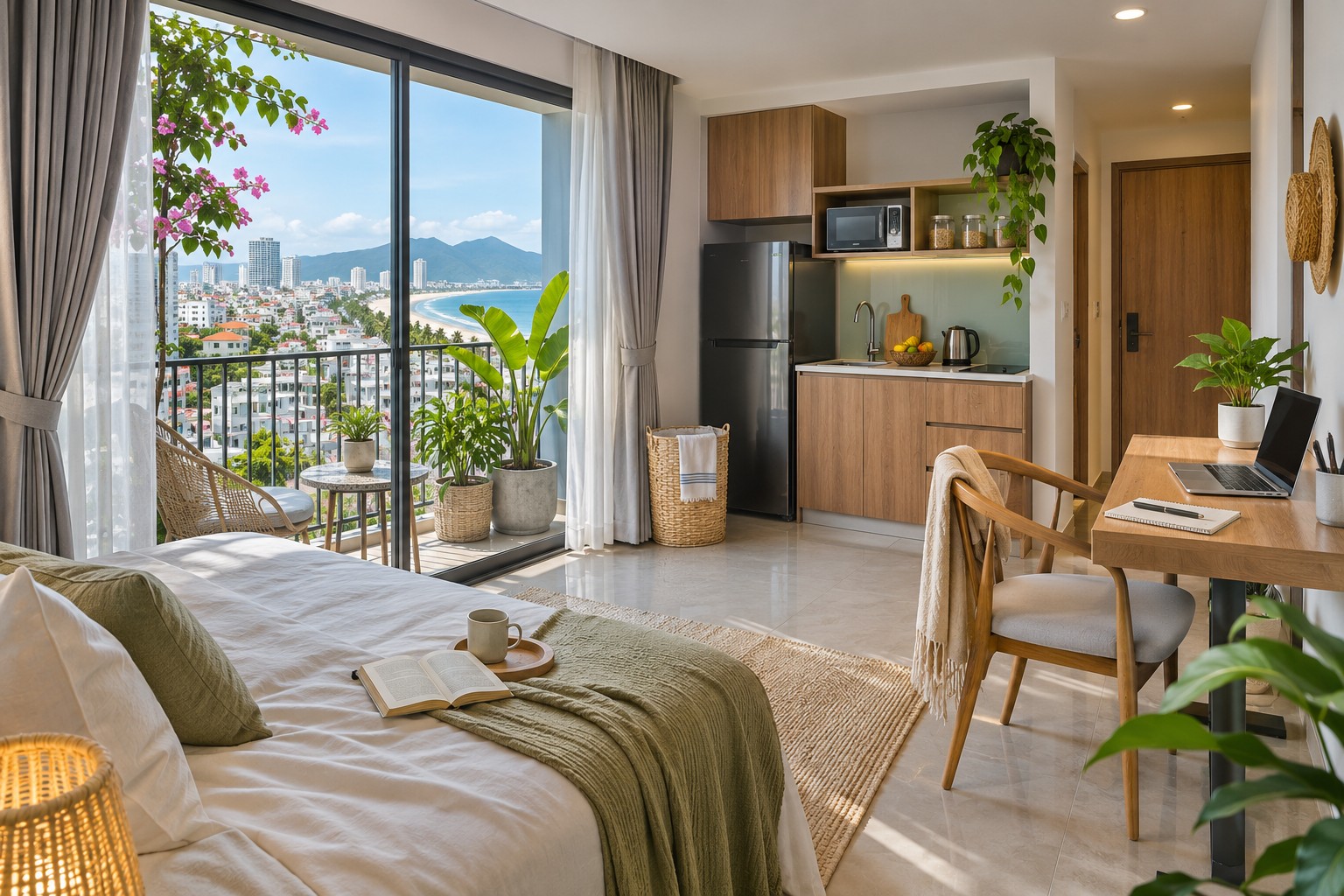
 Where to Stay in Da Nang for a Month: Neighborhoods, Apartments and Daily Life
A month in Da Nang is a different accommodation decision from a three-night holiday. The view that impresses you on arrival may matter less by the second week than a chair that supports your back, a reliable laundry arrangement or a quiet bedroom. Long stays reward attention to ordinary routines: buying food, joining calls, drying clothes and getting home when it rains.
The goal is to choose a base you can live in comfortably without committing too quickly to an unfamiliar building. This guide focuses on practical neighborhood and property decisions, not immigration or tenancy advice. Confirm the conditions of your own stay with the relevant official services and property manager. A room's availability for a month does not establish that every other part of your travel arrangement is settled.
Start with the life you expect to lead
Write a sample weekday before you search. Will you work in the room, use a coworking space, cook regularly or eat almost every meal outside? Do you want an early beach walk, a gym nearby or a quiet evening at home? A property that fits those habits will usually outperform one chosen because it is popular with short-term visitors.
Then set non-negotiable requirements. Examples include a separate work area, a lift, a washing machine, an exterior window or a kitchen that can handle more than instant noodles. Keep the list short and realistic. It is easier to compare locations when you know what your daily routine requires than when every attractive balcony changes your priorities.
An Thuong and the coastal neighborhoods
The An Thuong area and nearby coastal blocks are worth investigating if your routine revolves around the beach, cafes and a broad choice of meals. The appeal is convenience: everyday stops can be close together, and you may be able to combine a morning walk with breakfast without a vehicle. The exact street matters more than a neighborhood label.
Look for bars, active construction and commercial kitchens around the building. Visit at the hours when you intend to sleep and work, not only in a quiet afternoon. A room on a pleasant cafe street may feel different late at night. For a long stay, a side street with a slightly less impressive outlook can be a better choice than the busiest block near the sea.
Hai Chau and the central-city option
The central side of Da Nang can suit visitors who value markets, local food and city services more than immediate access to sand. A river-adjacent location may support enjoyable evening walks, while a more inland street can give you a different neighborhood rhythm. Evaluate the exact block for food, laundry, groceries and practical transport pickups.
This option works particularly well if the beach is an outing rather than a twice-daily habit. Compare the journey to the places you will use repeatedly, including any workspace. Do not choose downtown solely because it appears geographically central. A central map pin can still be inconvenient for your particular routine if most of your daily activities are on the other side of the river.
Quieter coastal blocks need closer inspection
Moving away from the busiest visitor areas can create a calmer stay, but it may also reduce the number of convenient food options and evening services. Check what is genuinely open nearby rather than counting map markers. A quiet residential street is useful only if you can comfortably manage meals, transport and the other tasks that repeat throughout the month.
For someone who cooks, a practical grocery route may matter more than a cluster of restaurants. For someone working evenings, a dependable late meal option may be essential. Try the routine before committing: walk for breakfast, arrange a pickup and return after dark. A neighborhood is best assessed by doing the things you will actually need, not just by taking a scenic walk through it.
Hotel, serviced apartment or independent rental?
A hotel can provide reception, frequent cleaning and a simpler short booking, but the room may have little cooking or working space. A serviced apartment may offer a more suitable layout while retaining some management support. An independent rental can provide flexibility, but you need clear arrangements for maintenance, deposits and access.
Compare the actual service rather than the label. Ask how often cleaning occurs, who supplies bed linen, whether utilities are included and how problems are reported. A serviced apartment with inconsistent management can be less convenient than a well-run hotel room. Conversely, a good apartment can reduce daily friction substantially if you need a kitchen, laundry and a separate place to work.
Book a test stay before a full month when possible
If you have not seen the building, consider a short initial reservation and inspect longer-stay options after arrival. This gives you a chance to test noise, the bed, internet and the immediate neighborhood. It also lets you compare the advertised layout with the real room. Keep enough flexibility and budget to move if the first choice does not work.
Do not assume that a room available for several nights can be extended for the rest of the month at the same rate. Ask about availability and the terms of a longer agreement. If you must secure a month before travel, seek a clear cancellation policy and detailed room information. A small amount of initial flexibility can be valuable, but it must be balanced against the risk of having to search during a busy period.
Test the work setup yourself
A room can advertise Wi-Fi and a desk while being uncomfortable for a full workday. Check chair height, desk depth, socket placement and whether sunlight creates glare on the screen. Test the connection from the exact room at the time you expect to use it. A lobby speed test does not establish the experience several floors away.
If calls matter, test upload performance and audio stability as well as a headline download figure. Ask whether the network is shared and what happens during an outage. A backup connection or nearby workspace can reduce disruption, but it should not excuse an unsuitable room. Position the desk away from a direct air-conditioning draft if possible, and make sure the space still works when the balcony doors are closed.
Understand utilities before comparing monthly rates
A monthly quotation may include everything or separate electricity, water, internet, cleaning and laundry. Ask for the complete arrangement in writing. If electricity is charged by consumption, request the unit rate and how the starting and ending meter readings are recorded. Do not compare an all-inclusive hotel rate with an apartment's base rent as if they represent the same total.
Clarify deposits, refund timing and acceptable payment methods. Ask what deductions can be made and how they are documented. Keep records of payments and photograph the room condition when you move in. These steps are about having clear shared expectations, not assuming that a problem will occur. A straightforward written agreement makes both budgeting and checkout easier.
Kitchens vary more than photographs suggest
Inspect the hob, refrigerator, extraction and cookware. A room with a sink and microwave may be marketed as having kitchen facilities without supporting the meals you intend to prepare. Check whether utensils, a cutting board and a usable pan are provided. Ask about rules for cooking odors, gas or additional appliances before buying equipment.
Plan for the way you actually eat. If you want breakfast and light lunches at home, a compact setup may be sufficient. If you expect to cook every evening, a better kitchen and washing area become important. Look at where groceries can be stored and how rubbish is handled. Small practical shortcomings become much more noticeable when repeated for thirty days.
Laundry, ventilation and dampness matter
Ask whether a washing machine is private, shared or unavailable. Check drying space and whether the room remains comfortable with wet clothing inside. A balcony is helpful only if its rules and layout permit the use you expect. If laundry is outsourced, understand the cost, turnaround and procedure for delicate items.
Inspect cupboards, bathroom corners and areas behind curtains for signs of persistent moisture. Test the bathroom fan and air conditioning. A room can look fresh in a photograph while feeling poorly ventilated in person. During less settled weather, the ability to keep bedding and clothing dry can be more valuable than a higher floor or a larger television.
Establish maintenance and access arrangements
Know who to contact if the air conditioner, hot water or lock fails. Ask how quickly urgent issues are normally addressed and whether there is assistance outside office hours. Confirm housekeeping access and whether staff give notice before entering. For a building with controlled entry, test how late-night arrival works and whether every registered guest has appropriate access.
Also ask how visitors and deliveries are handled. A building can have reasonable security rules that differ from a hotel lobby's arrangements. Understand them before planning regular meetings or food deliveries. If you need parking or bicycle storage, inspect it rather than assuming there is room. The easiest long stay is one where these minor arrangements are settled early.
Budget for the neighborhood, not only the room
A cheap apartment can become expensive if every meal and outing needs a car. A slightly higher rent may be worthwhile if it puts groceries, laundry, exercise and a workspace within a comfortable walk. Conversely, living directly on a visitor-oriented street can increase casual spending even when the room rate is attractive.
Track the first week's actual spending before deciding whether to extend. Separate rent, utilities, meals, transport and work-related costs. You do not need to optimize every purchase, but you should understand where the budget is going. Leave room for an occasional trip, a replacement cable or a more comfortable work arrangement. A long stay should feel sustainable rather than like a month-long negotiation over small expenses.
Choose a base that becomes easier over time
Before committing, verify the room, daily services, complete costs, deposit terms and maintenance contact. Test the neighborhood at several times of day. The right place is one where you can picture an ordinary Tuesday working smoothly, not just a beautiful first morning by the sea.
Use the guides to Da Nang travel costs, getting around and beach-versus-riverside hotels to refine the choice. Start with a manageable routine, then explore farther as you become familiar with the city. A successful month in Da Nang comes from a comfortable base and enough flexibility to adjust, rather than from locking every detail into place before you know what daily life there feels like.


